

























































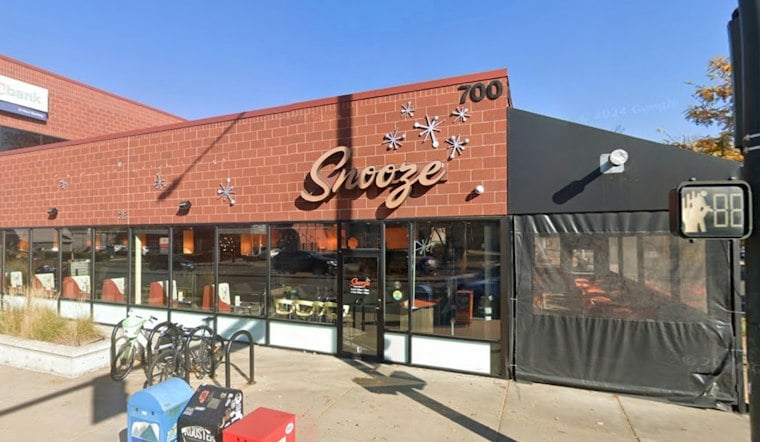
Behind a popular Snooze location at 7th and Colorado in Denver, a trailer has been quietly turning coffee grounds, eggshells and kitchen scraps into bottled plant fertilizer since July. The setup processes about 900 pounds of food waste a week, just shy of its 1,000-pound weekly capacity, and the fertilizer it produces now sells behind the restaurant's own cash register.
How the Backlot Biodigester Works
The biodigester is supplied by Ecotone Renewables, which according to The Colorado Sun provides a colorful shipping-container unit designed to fit in restaurant parking lots. An Ecotone employee loads bags of organic waste into the machine a couple of times a week, and the company processes scraps not just from Snooze but from Anthony's Pizza and other businesses on the same block. The resulting output is a concentrated liquid plant food marketed online as Soil Sauce, the same product Snooze now stocks for customers.
Adam Schlegel, chief growth and strategy officer for the Snooze restaurant group, said the city is requiring the chain to find a waste solution, and separately hauling the restaurant's food waste would have cost between $500 and $1,000 a month — Schlegel put the added annual cost at around $10,000. A waste hauler agreed to discount its service for Snooze, and the company is redirecting those savings to pay Ecotone Renewables for the biodigester arrangement instead, the report notes.
A Five-Year Commitment and a Smaller Pilot Ahead
Snooze and site landlord Kentro Group signed a five-year agreement to keep the trailer in place, according to the same account. The company is also negotiating to test a smaller version of the biodigester outside its RiNo location, with the goal, per the outlet's reporting, of showing more modest restaurants that the approach can work for them too. Schlegel said the smaller-footprint unit could enable broader participation among restaurants that might not have room — or budget — for a full-size setup.
Elsewhere, Ecotone's technology has been described in more detail. On a podcast hosted by pghtech.org, the company describes its Zeus system as a fully automated, on-site anaerobic biodigester that uses a vision system and machine learning to identify food waste and separate out contaminants before processing. That same account says the system can produce about 50 gallons of fertilizer from 500 pounds of food waste weekly, with the full conversion from scraps to finished fertilizer taking roughly two to three weeks.
Emissions Claims and the Bigger Diversion Picture
Ecotone estimates that its system is expected to avoid about 120 tons of CO2-equivalent emissions annually, a figure the company compares to the carbon captured by 5,000 mature trees, according to The Colorado Sun's reporting. Denver's waste diversion laws require landlords to provide recycling and composting services to businesses and apartment buildings, part of a broader push to improve Colorado's diversion rates, which have lagged behind those of other states.
That lag shows up in statewide numbers. Colorado's overall waste diversion rate sat at 15.7% in 2024, roughly flat from the year before, according to Waste Dive. Denver's own residential organics program fared better, boosting organics diversion by 55% in 2024 as expanded service plans grew to cover 75,000 homes, while statewide organics programs collected 375,000 tons of woody material that year, a 50% jump over the previous year. Waste Dive reports that coordinated statewide advancements, including a new packaging extended producer responsibility law, are expected to push the overall diversion rate higher still.
On the regulatory side, the City and County of Denver says it has adopted new rules and regulations implementing the voter-approved Universal Recycling and Composting Ordinance. For now, the Snooze trailer remains a small but visible example of that broader push — and for diners curious enough to ask, a bottle of Soil Sauce is sitting right by the register on the way out.





