

























































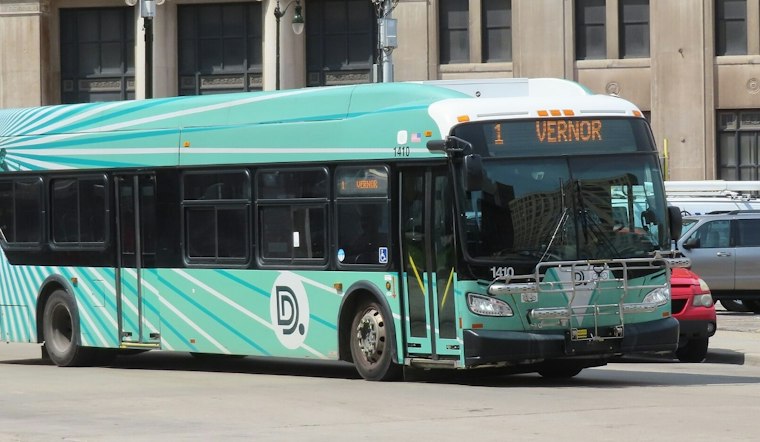
Detroit officials have not verified that two horses boarded a city bus, according to The Detroit News. The outlet reported that John Roach, a spokesperson for the mayor’s office, checked with Detroit Department of Transportation officials and could not confirm the event. DDOT had not returned a message left after business hours, the newspaper reported.
What the footage establishes
The Detroit News described a roughly 45-second clip showing three people with two dark-coated horses at an unidentified bus stop. In the outlet’s account, the group enters through the front doors after the wheelchair lift retracts, then leaves through the middle doors; one handler briefly gets back on as the others lead the horses away. The newspaper noted that the video offers no clear landmarks to identify the stop. These details are from its report, not independently verified here.
How Detroit’s animal rules apply
The city’s Transportation FAQ says service animals may ride buses, while animals kept solely for emotional support or comfort and dogs that do not qualify as service animals are not allowed.
The cited city guidance does not specifically address horses. Federal Transit Administration guidance, as described in the original article, says the Americans with Disabilities Act does not prevent transit agencies from choosing to accommodate pets or comfort animals; that choice is left to local agencies.
Transit agencies can set different rules for pets while still admitting service animals. Chicago’s CTA, for example, allows only small pets in closed, travel-ready carriers that can fit under a seat, while permitting service animals on its vehicles and property. The CTA’s published policy illustrates how a local system can draw a practical boundary around non-service animals—one Detroit’s cited guidance does not describe for horses.
Horses raise a separate legal wrinkle: a federal rule for public entities requires reasonable policy changes to permit a miniature horse individually trained to perform disability-related tasks, subject to an assessment of the animal’s size, the handler’s control, whether it is housebroken and safety needs. The Department of Justice’s Title II regulation does not make every horse a service animal; it addresses trained miniature horses and sets out factors for deciding whether one can be accommodated.
Federal transit rules distinguish task-trained service animals from animals whose only role is providing comfort. Transit providers may ask whether an animal is a service animal and what tasks it performs, but cannot require special identification or ask about a rider’s disability; an animal may be excluded if it is out of control or poses a direct threat. The Federal Transit Administration’s guidance also leaves transit agencies free to decide whether to allow pets or comfort animals.





