

























































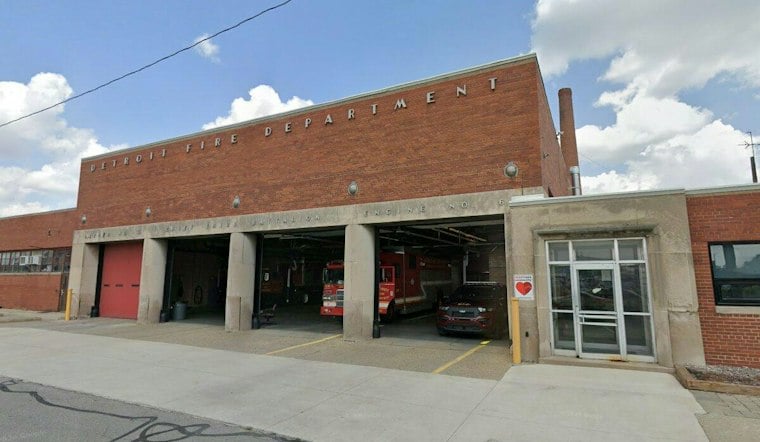
A Detroit man's wife performed chest compressions on her husband in their bathroom while the nearest fire engine, parked just two blocks away, did not come. Dispatch audio obtained by ClickOnDetroit reveals that Engine 54 stayed out of service for medical calls on Aug. 4 because its electronic patient care reporting tablet was broken, even as a dispatcher questioned why the crew could not simply perform CPR. George Walter Willis, who suffered an apparent heart attack at home, later died.
According to ClickOnDetroit, a resident called 911 at 11:34 a.m. that day reporting that a family member was unconscious and unresponsive. Emergency medical services and a fire apparatus were dispatched two minutes later, at 11:36 a.m. Dispatch records cited in the report say Engine 54, despite being roughly two blocks from the scene, was unavailable for medical responses because its ePCR tablet was out of service, and the crew told dispatch over the radio that they could not respond without it.
The dispatch audio captured a dispatcher pressing the point, noting Engine 54 was about a block from the cardiac-arrest call and asking why the crew could not at least start CPR. A fire department captain explained on the audio that crews can respond to a scene without a working tablet but cannot document the call without one — the distinction that kept the engine parked while a man nearby was dying.
Minutes That Mattered
At 11:39 a.m., a dispatch supervisor called the firehouse directly to ask whether Engine 54 could respond, by which point the two actual responding units had already been en route for about three minutes, the department said. Those units ultimately arrived approximately 8 minutes and 29 seconds after the initial 911 call — less than seven minutes after they were dispatched — and found the patient unresponsive, with signs of what the department described as a prolonged medical emergency. Responders performed CPR for roughly 20 minutes before Willis was pronounced dead.
Willis's wife, Madeline Willis, found her husband unresponsive in the bathroom and began chest compressions herself before help arrived. She has since questioned whether a malfunctioning tablet kept her husband's life from being saved.
Department Says Protocol Was Followed
A city representative told the station that the first responder was following protocol, and the fire department said it has since updated its policies so dispatch personnel are immediately notified when a crew's ePCR tablet is non-functioning. The department also said it communicates out-of-service tablet information to dispatch and ranking leadership, and that it maintains paper-based backup procedures for emergency communications and patient documentation. The department said it reviewed the response tied to the call and remains committed to evaluating its systems and procedures to improve timely emergency care.
Al Saade, who represents the Emergency Medical Service Officers Association, pushed back on the idea that a broken tablet should ever keep help from reaching someone in crisis. “In a life and death situation, there should be the ability to not sign into that tablet,” Saade said, according to the station's report.
A Pattern the Union Has Flagged Before
The Willis case is not the only one the Detroit Fire Department's medical response practices have drawn scrutiny over this year. Per Michigan Public, the city's EMS union said firefighters delayed responding to two separate Code 1 cardiac-arrest emergencies in July and August 2026. Police Officers Association of Michigan president James Tignanelli, who represents the union, said it has documented more than 5,000 incidents since January 2025 in which Code 1 patients received only basic life support rather than the advanced life support response he said they should have gotten.
Detroit's fire department has otherwise touted major gains in medical response speed. Detroit Executive Fire Commissioner Charles Simms said the department had slashed its average Code 1 response time from nearly 20 minutes in 2014 to about 7½ minutes, a trend also reflected in department data reported by Firehouse, which found the city's average Code 1 response time fell from 13 minutes and 28 seconds in 2014 to 7 minutes and 22 seconds in 2024. The department responded to more than 45,800 Code 1 calls that year alone, part of over 158,000 total EMS responses in 2024 — a 4.8% jump from 2023.
Detroit has also expanded its ambulance fleet in recent years, increasing daily availability from as few as 13 to 26 city-run ambulances and boosting contracted private ambulances from as few as three a day to 18, according to the Firehouse report. City officials have pointed to those investments, along with a planned nurse-navigation program meant to divert non-emergency calls away from ambulances, as evidence of a system under strain but improving. For Madeline Willis, the numbers offer little comfort against the two blocks that separated her husband from a fire engine that never came.





