

























































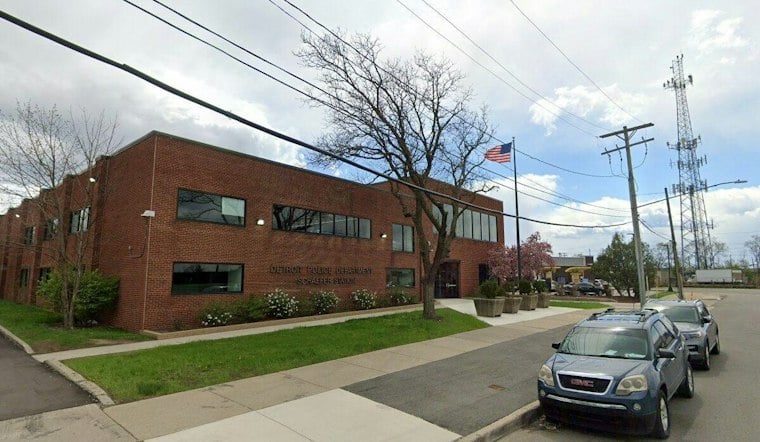
Larry Smith says he walked into a Detroit police station in 1975 with the name of the man who had just killed his brother. He says he walked out years later having been framed for a murder he didn't commit, convicted largely on the word of the very man he'd pointed to as a killer.
Smith's brother, a member of a rival gang called the Coney Oneys, was shot and killed on September 29, 1975, according to ClickOnDetroit. Smith says he went to police that same year with the name of his brother's killer. By then, Smith was already a prominent member of a chain gang in the city, the outlet reports.
What happened next, according to Smith, is the heart of his case. He says Detective James Harris tried to pressure him into becoming a police informant, and that when he refused, Harris pinned a separate murder on him. The station's report notes that the star witness against Smith at trial was the very man he had identified as his brother's killer — a man referred to in the reporting as Rimmer, who testified against Smith and remains incarcerated.
A Conviction, a Sentence, and Conflicting Records
Smith has said the testimony against him was untrue, and has described himself as a thief but not a murderer. ClickOnDetroit reports Smith was convicted and sentenced to two natural life terms without the possibility of parole. The National Registry of Exonerations, however, states that a jury convicted Smith of first-degree murder and felony firearm possession on November 29, 1994, and that he was sentenced to a single term of life in prison without parole — an account that diverges from the station's description of two life terms.
Even behind bars, the connection between Smith and the man who testified against him didn't end. The report notes that while Smith was still incarcerated, he exchanged letters with Rimmer — the same man he says killed his brother and who later took the stand against him. Rimmer has since sought release from prison citing Harris's involvement in his own case, but per the same account, those efforts have been denied, according to WCPO.
The Detective's Own Fall, Fourteen Years Later
Fourteen years after Smith's conviction, Detective Harris was arrested and sent to prison himself — one of 11 Detroit police officers swept up by the FBI in Operation Backbone, a federal investigation the station describes as having uncovered widespread corruption within the Detroit Police Department.
That bust wasn't an isolated event in the city's history. A 1991 Los Angeles Times report on an earlier Detroit-area corruption sting noted that investigation was the seventh major federal probe targeting Detroit police or city officials since 1976. That same report described eleven Detroit-area police officers arraigned on charges of accepting money to guard shipments they believed contained cocaine and cash, and said a Sgt. James Harris was a key figure in that scheme, having received more than $50,000 for organizing the protection squad.
Smith's decades-old allegations have drawn new scrutiny in light of later corruption convictions among Detroit police officers.
Family Fallout and a Hope to Reconnect
The toll on Smith has reportedly extended beyond prison walls. His daughters have called him a rat and a snitch, the station's report notes, a label that traces directly back to his decision to name his brother's killer to police in 1975. Despite that rift, Smith says he hopes to reconnect with his family.
Not everyone who policed Detroit's gang era views cases like Smith's with sympathy. Ike McKinnon, who led the city's gang squad during that era, has said some officers pushed boundaries to get gang members off the street, and said he had no sympathy for imprisoned gang members. McKinnon has also said that Benny Napoleon, who would go on to become a future police chief, was among those targeted by gang hits at the time — a detail offered as context for how volatile that era of policing and gang conflict in Detroit truly was.





