

























































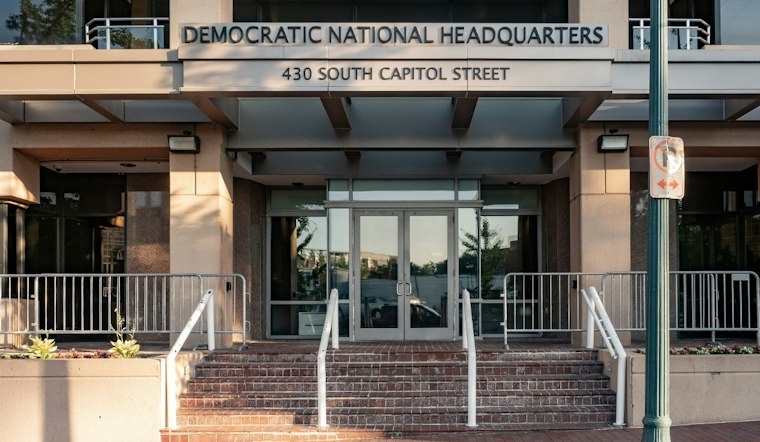
The Democratic National Committee is laying the groundwork for its next presidential primary, with plans for a long run of debates starting in the summer of 2027 and a new requirement that candidates publicly denounce super PAC and dark-money spending before they can take the stage. The move comes as Democrats look ahead to their first open nominating contest since 2020, and it arrives wrapped in a fresh set of rules aimed squarely at outside political cash.
According to CNN, the DNC says it will hold twelve debates for the next presidential primary starting in June. MS NOW, however, describes the plan as holding at least 12 debates in the 2028 presidential primary, starting in June 2027 — so while both outlets agree on the June 2027 start, the exact total isn't being presented as settled. Per NBC Palm Springs, the first two debates are planned for June and July, and organizers expect a large candidate field.
MS NOW reports that five of the debates will be held in 2027, beginning in June and July, and seven will be held in 2028, ending in March. Per the same account, NBC Palm Springs adds that each debate could span two nights, a format organizers may lean on if the candidate field turns out as crowded as expected.
A Pledge Against Super PAC and Dark-Money Spending
The headline change for 2028 isn't just the debate count — it's who gets to stand on the stage at all. Candidates will have to sign a pledge to denounce super PAC and so-called “dark money” spending in the primary, CNN reports. MS NOW adds that qualification will also include polling and grassroots fundraising benchmarks, along with signing and abiding by the party's Fair Campaign Practices Pledge.
The party is also building in a mechanism to police the pledge. CNN reports that candidates who want to join DNC debates must designate a representative who can complain to the committee about potential violations, and the DNC plans to launch an online tracker for public reports of potential violations, according to NBC Palm Springs. The same report notes the DNC's position that dark money groups are not required to disclose their donors.
Why The DNC Is Making This Move Now
The new rule is a response to longtime calls by progressives to ban super PAC spending in Democratic primaries, CNN reports, and NBC Palm Springs similarly notes that progressives have criticized outside spending in political campaigns more broadly. But the DNC itself appears to be acknowledging the limits of what a pledge can actually accomplish.
MS NOW quotes the committee acknowledging that when it comes to outside spending, “we don't have the power to do it.” NBC Palm Springs frames the same limitation as the DNC lacking legal authority to outright ban super PAC or dark money contributions. In other words, the pledge functions as a public accountability tool rather than an enforceable ban — the DNC plans to publish each complaint, how it was resolved and whether the candidate complied, according to MS NOW.
Looking Back To 2020
This isn't unfamiliar territory for the party. CNN notes that the DNC also held 12 debates for the 2020 primary, which it describes as the party's most recent open nominating contest — the sprawling field that eventually produced President Biden's nomination after a crowded, multi-night debate format not unlike what's being floated again for 2028.
With the first debate still roughly seven months away, much remains unconfirmed, including exact dates, locations and media partners beyond the broad June 2027 to March 2028 window described by MS NOW. For now, the party's early messaging suggests it wants transparency around outside spending to be part of the conversation from the very first debate stage onward.





