

























































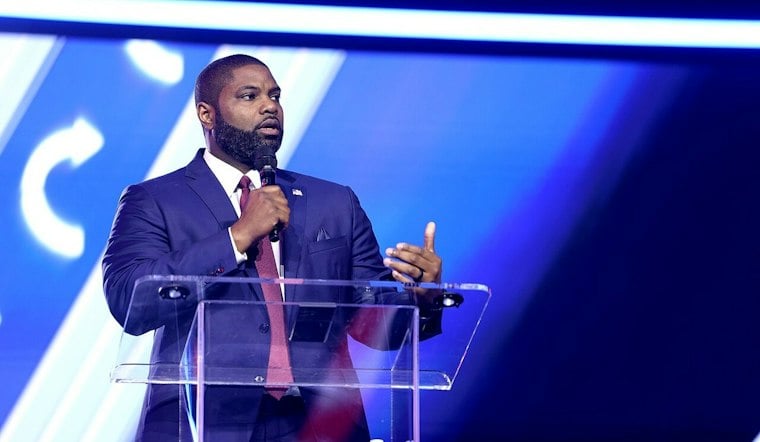
Republican gubernatorial candidate Byron Donalds cast his ballot with his family in Collier County on Tuesday, telling reporters he felt at peace with how his campaign team had run the race. With polls open statewide from 7 a.m. to 7 p.m. local time and any voter already in line by closing time guaranteed the chance to cast a ballot, Donalds used election day to repeat the message that has anchored his campaign for months: affordability, especially the cost of property insurance and the price of building a home.
Affordability as the Defining Issue
Donalds said affordability was the top issue for Republicans, independents and Democrats alike, and that Floridians simply want their cost of living to come down. He called it the number one issue in the state and said that if elected, his early priorities would include affordability, post-storm permitting reform, assistance for rural fire departments and mental health funding, according to WINK News. He also said he plans to grow Florida's economy with high-paying jobs and believes the state can work with its congressional delegation on national energy and health care policy.
On permitting specifically, Donalds has argued the process itself is driving up construction costs. In an interview with Naples Press, he said, “The permitting process alone adds 20% to 30% to the cost of building a home in Florida.” He told WINK News that local and state governments need to answer building permit requests more quickly, since delays themselves increase costs, and that after storms, permitting should become automatic rather than something homeowners have to fight through case by case.
Insurance Relief and the Bring Down The Bill Plan
Donalds said insurance relief could arrive before other changes take effect, though he indicated it may not show up until the renewal following a homeowner's current one. He told WINK News the measures under consideration include tapping the state's catastrophe fund, ending what he described as rapid cash buildup within the system, expanding home-hardening programs and making post-storm permitting automatic. Those ideas build on what he has called his Bring Down The Bill plan, which he told Naples Press he would move on from his first day in office, boosting insurer competition and offering optional binding arbitration to lower premiums.
He has also said he wants to build on Governor DeSantis's tort reform rather than overhaul the system, and on his campaign website he proposes an online insurance scorecard letting consumers compare companies side by side on price, claims-payment speed and how often they deny coverage, per Byron Donalds for Governor. The plan would require insurers to report accurate data or face fines, with the industry itself paying for the scorecard, and would trim state fees once reserves are full. Separately, Donalds told WESH in September, “We're going to reduce premiums 20 percent in this state,” framing it as a goal built on retaining tort reforms and pursuing regulatory changes.
A Starkly Different Approach From Jolly
Donalds's insurance approach stands apart from that of Democratic rival David Jolly, who has proposed converting the state's hurricane catastrophe fund into a primary insurer covering wind damage directly for homeowners, according to FOX 13 Tampa Bay. Jolly has said his state disaster fund could cut insurance premiums for homeowners by 60% to 70%, per WUFT's fact-checking coverage. Donalds, by contrast, favors keeping Citizens Insurance small, preserving existing tort reforms and layering in his proposed scorecard rather than restructuring the fund itself, FOX 13 reported.
Fact-checkers have pushed back on claims from both camps. PolitiFact found that a Donalds campaign ad describing Jolly's plan as costing each Florida family $1,000 annually relied on a study that examined a 2024 Florida House proposal rather than Jolly's actual plan, and that the $1,000 figure described a scenario where a catastrophic storm exhausted Citizens Property Insurance Corp.'s reserves rather than an annual, guaranteed outcome. That same report noted the Expanded Windstorm Coverage Feasibility Study cited in the ad cost $278,000 and was commissioned by Florida lawmakers two years ago, not by Jolly himself, according to WESH. Jolly's campaign has calculated that removing wind coverage from a $300,000 home's policy, where owners currently pay around $7,136 a year, could cut the bill to about $2,557, a 64% savings, though PolitiFact noted his plan would require the catastrophe fund to hold a minimum of $32 billion. Figures on the fund's current trajectory have also diverged: FOX 13 reported it is projected to hold more than $11 billion by year's end, while PolitiFact cited a $9.6 billion balance as of December 2025 with a $12 billion projection for the end of 2026.
Property Taxes and Amendment 3
Beyond insurance, Donalds told Naples Press his longer-term goal, through a future Tax and Budget Reform Commission, is eliminating homestead property taxes in Florida altogether. In the nearer term, he pointed to Amendment 3, which he said raises the homestead exemption on non-school property taxes from $50,000 to $150,000 in 2027 and to $250,000 in 2028.
Donalds told WINK News that larger counties would likely implement Amendment 3 without much difficulty, but that rural and fiscally constrained counties could need state help absorbing the change. He said fire departments operating within special taxing districts may require budget support and legal flexibility as a result, and that he has already discussed possible language with fire chiefs from around Florida to address those concerns quickly.
Mental Health and Campaign-Trail Reflections
Donalds identified mental health as a neglected issue in Southwest Florida specifically, pointing to the David Lawrence Center in Collier County as relevant to the concern, per WINK News. He said Florida faces a mental health crisis affecting veterans and many people cycling through county jails, and that he and the legislature would need to address it quickly if he becomes governor.
Reflecting on the campaign trail, Donalds said conversations with protesters sometimes revealed unexpected agreement once the initial anger faded, and that most people share the same underlying goals even when they disagree on how to reach them, WINK News reported. On a separate issue, Donalds's position on AI data-center development has shifted this election season: he previously supported such infrastructure as important to Florida's growth but has stepped back from that support in recent months, according to WUFT. He has said local communities, not the state, approve data-center construction, and that he would ensure data centers do not raise utility bills for customers served by rural cooperatives, per FOX 13 Tampa Bay. He has also said he opposes Medicaid expansion under the Affordable Care Act.





