

























































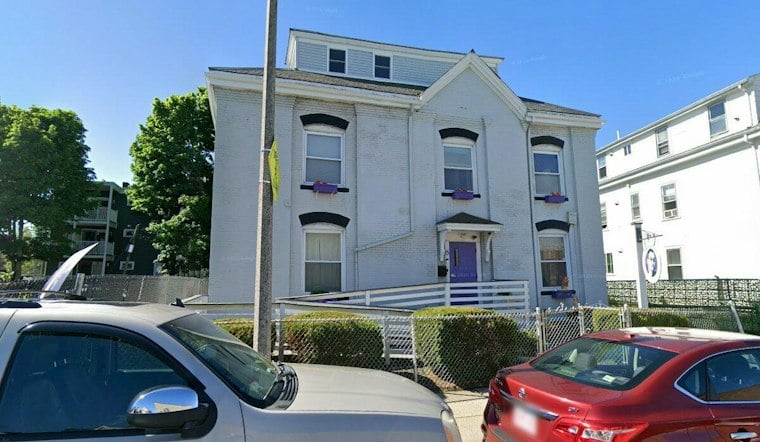
More than three decades after her 15-year-old son Louis D. Brown was gunned down in a Dorchester shootout, Chaplain Clementina Chéry is still searching for answers — and she's taking her case to the people with the power to reopen it. Brown was killed on Dec. 20, 1993, while walking to a Christmas party hosted by Teens Against Gang Violence when he was caught in the crossfire of a shootout near his home.
Chéry is scheduled to formally request that the Massachusetts Parole Board and state leaders reopen the investigation into her son's death, according to Boston 25 News. The timing is no coincidence: Charles Bogues, who pleaded guilty to second-degree murder in Brown's killing, is scheduled to appear before the same board to request termination of his lifetime parole supervision. Questions remain, the outlet reports, about who actually fired the fatal shot.
Bogues pleaded guilty to second-degree murder for Brown's slaying in March 1997, after his arrest on separate federal gun and drug charges, as reported by The Boston Globe archive. Accounts differ on how long he spent behind bars before moving under parole supervision — Boston 25 reports he served 15 years in prison, while WCVB reports the figure was 16 years.
A Ballistics Dispute That Never Fully Went Away
The doubts Chéry is raising aren't new. A 2023 report from Northeastern University School of Law, produced in partnership with the Louis D. Brown Peace Institute, examined the original investigation and raised questions suggesting Bogues didn't fire the fatal shot, per WCVB's reporting. An expert's view was that a bullet and shell casings came from different .45-caliber weapons.
Suffolk prosecutors have pushed back on that interpretation before. Then-District Attorney Daniel Conley said in 2007 that his office's review of the case found nothing to suggest anyone other than Bogues shot Brown, according to the Globe archive's account of that year's proceedings. A Superior Court judge agreed at the time, finding the ballistics evidence Bogues cited wasn't significant and declining to vacate his conviction. The case has drawn sharply different interpretations.
The case didn't end there either. In 2022, Suffolk County District Attorney Kevin Hayden said his office was actively looking into the case. That came more than a decade after Bogues first tried to overturn his guilty plea; a 2007 Globe report captured Chéry's own uncertainty at the time, with her telling the paper, “My fear is that he didn't do it.”
A Mother's Decades of Advocacy
Chéry founded the Louis D. Brown Peace Institute in her son's memory after his death, an organization built to honor his legacy and continue the peacemaking work he was walking toward the night he died. Her Mother's Day Walk for Peace has since become an annual event in Boston. More than 30 years after burying her son, she is still pressing the state for a fuller accounting of what happened to him — and for a definitive answer to the question that has followed the case since 1993: who actually fired the shot that killed Louis D. Brown.




