

























































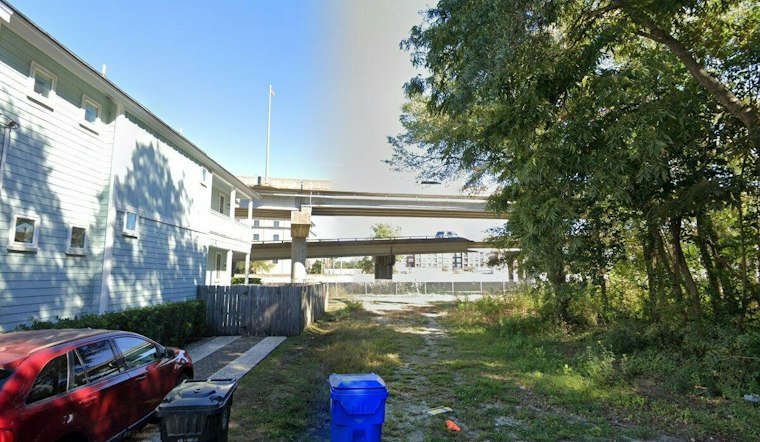
A developer building affordable apartments along Charleston's Lowline path is asking Charleston County for nearly $400,000 in financial help to get the project off the ground. Lowline Housing LP wants a $396,000 incentive package for a five-story, 55-unit building downtown, arguing that paying the full property tax bill would make the development too costly to pursue. Construction has already started on phase one of the project.
According to Live 5 News, the building would sit next to the Lowline path and just steps from the future Lowcountry Rapid Transit line, putting new housing within easy reach of planned transit and the activity already drawing people to the corridor. The station reports the five-story structure would be a mixed-income development in which every one of the 55 units is classified as affordable. The developer is seeking the assistance under Charleston County's Uniform Tax Exemption Policy for attainable rental housing.
The numbers at the center of the request are specific. The incentive package equals about 19% of the project's property taxes over 15 years, with that money earmarked to help pay for site development, the station's report notes. In exchange, Lowline Housing LP would still pay the county a fee equaling roughly $1.7 million over that same 15-year span.
County Says It Wants Housing Near Jobs, Not Just One Neighborhood
Anna Eskridge, Charleston County's community investment senior director, framed the project as part of a broader push to connect housing with employment. She said it would put housing near job centers and place residents closer to where they work. The station's report quotes her saying the county needs affordable homes everywhere, and that officials want to help residents across Charleston County rather than concentrate investment in a single area.
An older City of Charleston agenda document, filed for a site-plan review, lists a project called Lowline Affordable Apartments at 678 King Street as a new 55-unit multifamily affordable housing building on 0.7 acres, according to a City of Charleston agenda snippet. A separate set of city committee minutes describes a Lowline Affordable Housing Development with 55 rental units for people earning between 30% and 80% of area median income, per a City of Charleston committee minutes snippet. Those records offer earlier context on the Lowline site but do not spell out the terms of the county incentive now under consideration.
How This Compares to Other County Housing Deals
The Lowline request is one of several incentive arrangements Charleston County has weighed for housing projects this year. In North Charleston, the county approved tax incentives for Rivers Landing, a planned five-story, 165-unit apartment complex that falls under the county's Tax Abatement Program, which rewards developers who include workforce housing, Live 5 News reported in April. That project will include 18 affordable units out of its 165 total, far short of the all-affordable Lowline proposal, and the broader abatement program only requires developers to designate at least 10% of units as affordable.
Other deals in the county's pipeline look different still. A proposed 129-unit complex called Cordelia on Rivers would reserve 54 apartments for households earning 60% to 80% of area median income as attainable housing for 15 years, according to The Post and Courier. For that project, the county would forgo about $3.71 million, or 48% of the property taxes otherwise owed over 15 years, while the developer pays the remaining $4.05 million, with a 92% abatement in the first three years before a phased reduction. Those terms are considerably more generous than the 19% share tied to the Lowline request, underscoring how much incentive packages can vary from project to project.
The Tradeoffs Behind Tax Incentives
Charleston County has used incentive tools like Fee In Lieu of Taxes agreements and Special Source Credits for years to attract these developments, under a structure the county says must align with County Council's Uniform Tax Exemption Policy, per Charleston County Government's own program description. But those tools come with a cost to public coffers. From 2017 to 2024, the county's tax revenue loss through FILOTs and special source revenue credits totaled $20 million, while Charleston County School District's loss over the same period reached $207,480,601, the Post and Courier reported.
The county has also been building out other housing tools alongside these tax deals. It dedicated $4.8 million from its Housing Our Future Trust Fund to four projects expected to create 184 affordable or workforce housing units, including 137 units for households at or below 80% of area median income and 47 workforce units for those earning between 80% and 120%, according to the Post and Courier. Separately, a county housing committee has received progress reports on tax-abatement rules, a land-bank program and a housing trust fund, per Citizen Portal.
What Happens Next
The Charleston County Council Finance Committee is scheduled to hold the first reading of the special source credit agreement on Thursday. The agreement requires three readings in total before it can take effect, and county officials expect approval in early 2027, the station's report states. Whether the agreement clears all three readings on that timeline remains to be seen as the proposal moves through the council process.



