

























































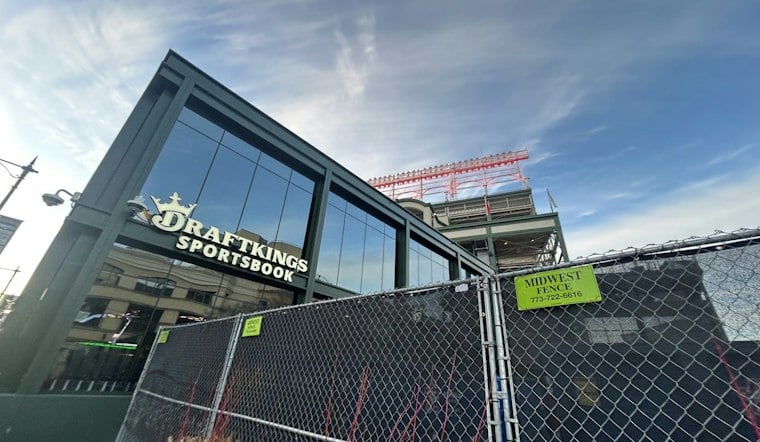
DraftKings shares collapsed Friday after the Boston-based sportsbook giant revealed it expects to pour as much as $700 million into its prediction-markets push this year, spooking investors who had not anticipated such a steep price tag. Shares fell 21.3% to close at $18.51, with the stock briefly plunging as much as 29% during the trading session.
A Costly Bet Disclosed in Earnings
The spending disclosure came during DraftKings’ third-quarter earnings report, as reported by The Boston Globe. According to Finance Magnates, the company raised its expected 2026 Adjusted EBITDA investment in its Predictions business to between $650 million and $700 million. At the same time, DraftKings slashed its full-year 2026 Adjusted EBITDA forecast to $175 million to $275 million, down sharply from its previous projection of $700 million to $900 million.
The retreat extended into DraftKings’ overall revenue outlook. The company set new 2026 revenue guidance of $6.35 billion to $6.55 billion, below its earlier estimate of $6.5 billion to $6.9 billion, per Sportico’s reporting. Bloomberg reported that DraftKings attributed the reduced profit forecast directly to continued investment in its prediction-market product.
Wall Street Reacts to the Scale of the Spend
Industry analyst Dan Wasiolek said the spending figure was a large number, bigger than expected, and that investors were questioning the company's aggressive strategy ahead of what he characterized as a binary event — a reference to a looming Supreme Court decision that could determine the future of prediction markets. DraftKings chief executive Jason Robins pushed back on the market's reaction, saying the company can recover its investments over time even if the Supreme Court bars sports wagering through prediction markets. Robins added that the company's team executed strongly and that DraftKings was not giving up ground.
Despite the sell-off, DraftKings reported third-quarter revenue of $1.33 billion, up 16% year over year, though its quarterly Adjusted EBITDA loss widened to $316.9 million, according to the same Finance Magnates report. The company said more than 1.6 million customers had interacted with Predictions since the start of 2026.
Looking Ahead to 2027
DraftKings projected 2027 revenue of $7.35 billion to $7.75 billion, which Sportico described as slightly below analyst expectations. Within that figure, the company expects its Predictions business alone to generate $650 million to $750 million in 2027 revenue while requiring another $250 million to $350 million in Adjusted EBITDA investment, per Finance Magnates.
Analyst Jordan Bender said DraftKings is playing from behind in prediction markets but aims to become the number one player in the space. That ambition comes as DraftKings' U.S. prediction-market share by notional volume climbed from roughly 0.01% during the World Cup to near 3.6% in October, Sportico reported. Finance Magnates noted that at October's pace, customer trading volume would annualize to $10.1 billion — almost three times July's rate.
Where DraftKings Actually Ranks
DraftKings has said its prediction-market exchange, known as DKeX, ranked third in the United States by notional volume, though Sportico cautioned that its placement depends on which metric is used. By actual dollars risked, the outlet reported DraftKings ranked fifth in October, trailing Kalshi, Polymarket U.S., Novig, and OG Prediction Markets, according to Aldrin Research. Sportico also noted that DraftKings' notional-volume figures include activity from its own affiliated market maker, and that in October, retail users accounted for just $840 million of DKeX's roughly $4.7 billion in notional volume, or about 18%.
Kalshi and Polymarket are prediction-market operators. Sportico reported that Kalshi had spent an estimated $32 million on national linear television advertising this year.
How Prediction Markets Differ From Sports Betting
Prediction-market app users buy and sell contracts linked to future event outcomes. CFTC-regulated prediction markets are subject to federal oversight. The Commodity Futures Trading Commission says federally regulated prediction markets can operate in all 50 states, and that each CFTC-regulated exchange must establish and enforce its own trading rules while monitoring for anomalies such as insider trading. A Federal Register notice confirms the CFTC has proposed amendments to rules governing these event-contract derivatives, though it remains unclear whether those changes have been finalized.




