

























































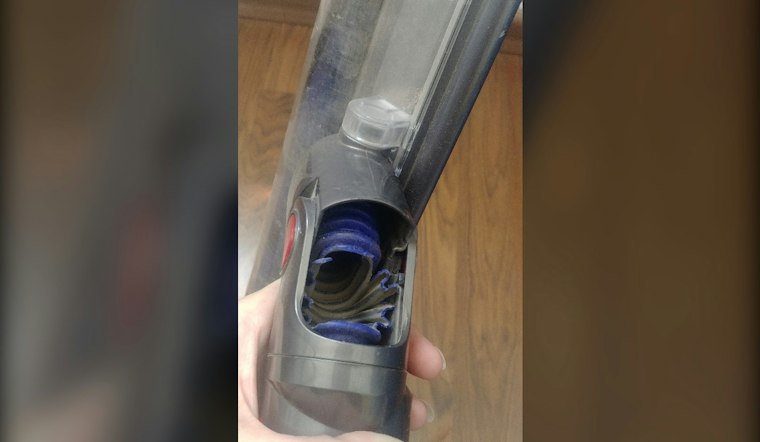
A lithium-ion battery pack from a Dyson cordless vacuum cleaner sparked a structure fire Monday evening in the Menands Fire District, damaging the building before a homeowner managed to put out the flames with a fire extinguisher. No injuries or significant damage to the home were reported, though firefighters still had to haul the smoldering battery out of the building in a heavy-duty container as a precaution.
According to News10, the battery pack tied to the Dyson vacuum was identified as the cause of the fire, and firefighters were able to safely overpack the damaged battery to contain its compromised components and reduce the risk of further hazards. Crews also conducted atmospheric air monitoring inside the home to make sure no hazardous or toxic gases lingered in the air. The exact location within the Menands Fire District was not immediately determined, and officials said more information was expected to be released later Tuesday, according to the Times Union.
West Albany Fire Department volunteers responded to the scene as mutual aid, the station's report notes, and the Menands Fire Department is now urging the community to take lithium-ion battery safety seriously. Officials said people should watch for batteries that overheat, swell, produce unusual odors, or make hissing sounds, and should evacuate immediately and call 911 if a battery starts smoking or catches fire.
A Deadlier Fire Just Days Earlier in Colonie
The Menands fire comes less than a week after a far more devastating lithium-ion battery fire in Colonie. A fire investigation completed Sunday determined that the blaze Friday evening at 93 Locust Park started when an e-bike's lithium-ion battery caught fire, per the Times Union. The fire killed 6-year-old Kavon Jr. and his 63-year-old grandmother, Zandra Artis, the station's report states.
Toxic smoke caused conditions inside the home to worsen rapidly, preventing firefighters from reaching Artis and her grandson, and a Fuller Road Fire Department volunteer firefighter was also injured in the effort, the same account notes. A separate firefighter who went into the home attempting a rescue was hospitalized and later released, according to WNYT.
Colonie fire coordinator Michael Romano said lithium-ion battery failures had caused small fires in the town before, and he described lithium-ion batteries as a common cause of structure fires. He said these fires burn rapidly and produce extremely lethal smoke. Romano advised residents to keep batteries unplugged and avoid charging them unattended, adding simply, “Keep them unplugged, don't store them in your house.”
A Hazard Found in Everyday Devices
Lithium-ion batteries power far more than e-bikes and vacuums — they're found in smartphones, laptops and power tools, and first responders warn they can pose a significant fire hazard if damaged, defective, improperly charged, or exposed to excessive heat, per News10. These fires can spread rapidly, release hazardous gases, and reignite even after being extinguished, as reported by CBS6 Albany, which also relayed officials' advice to stop using any battery that becomes excessively hot, swells, produces unusual odors, or begins smoking.
The pattern reflects a trend playing out well beyond the Capital Region. Lithium-ion battery fires have become increasingly common nationwide, and New York City has been hit especially hard. The Times Union reported more than 400 battery-caused fires occurred in New York City in 2026 alone, which it described as a 70% increase from 2025. The International Association of Fire Fighters offered a different count, reporting that as of late October, lithium-ion batteries had sparked 401 fires across the five boroughs in 2026, up from 292 in all of 2025 — injuring 74 people and killing six, compared with 51 injuries and one death the year before, according to the IAFF.
The Guardian cited still another set of figures, reporting more than 400 fires, 83 injuries and 12 deaths in New York City in 2026, compared with 292 fires, 51 injuries and one death in 2025, according to The Guardian. The same report noted a 2024 pilot program testing battery-swapping cabinets in the city, which recorded more than 12,000 swaps over six months and a 35% reduction in participants charging batteries at home — an approach aimed at keeping dangerous charging batteries out of living spaces altogether.



