

























































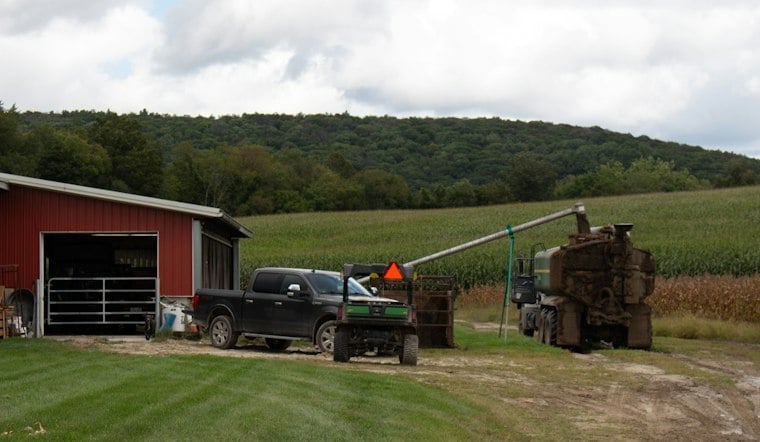
Nearly 200 acres of Connecticut farmland just got a new layer of protection that goes beyond keeping bulldozers away. The Freund family in East Canaan has added an Option to Purchase at Agricultural Value, known as OPAV, to 199 acres along Route 44 — land that was already shielded from development but is now also meant to stay affordable for the farmers who might one day buy it.
A Family's Decision to Go Further
The property already carried a Department of Agriculture easement preventing it from being developed, but as The Lakeville Journal reports, that protection alone doesn't guarantee the land stays within reach of working farmers. “While the fields were already protected from development, this additional agreement helps keep them affordable and available to farmers for generations to come,” according to the outlet's reporting. Ben Freund explained the family's reasoning plainly: “To honor our original intent of the easement, we donated the land to what is called Option to Purchase at Agricultural Value, or OPAV, to Connecticut Farmland Trust.”
The agreement is intended to help keep the land affordable and available to farmers, adding an affordability safeguard to its existing protection from development.
Connecticut's First OPAV, and Why It Matters Now
According to the Hartford Courant, Connecticut Farmland Trust partnered with Freund Farms to establish the state's first OPAV agreement, with Ben Freund, Matt Freund, and Theresa Freund signing on voluntarily. Keith Stechschulte of the trust said the tool gives the organization another way to conserve land, and that farmland preservation protects the environment, makes land more affordable for farmers, and protects the regional food supply, per the Courant's reporting. He noted that OPAVs are used routinely in other New England states but are new to Connecticut, and he expects their use here to grow as pressure to convert agricultural land increases.
Connecticut Farmland Trust, which says on its website it was started in 2001 by farmers, agricultural business owners, policy experts, and conservation-minded donors, describes its approach as buying a farm, conserving it, and then selling it at agricultural value — including an OPAV “when possible,” according to Connecticut Farmland Trust. The organization says it has permanently protected more than 7,700 acres of Connecticut farmland since 2002, though Connecticut Farmland Trust president Michelle Gittlen is cited by the Courant as putting the figure at more than 6,200 acres protected statewide.
The Economics Squeezing Connecticut Farmers
The push for affordability tools isn't happening in a vacuum. Connecticut farmland averages $14,200 per acre, among the highest prices in the country, according to American Farmland Trust. Separately, Hartford Business reports that the state's farmland acreage fell by about 65,000 acres in a decade. Connecticut Farmland Trust separately states that more than 87,000 acres have been lost to development since 1985.
The state's farmer population is also aging. Per USDA census data cited in the Courant's reporting, Connecticut farmers now average 58.5 years old, up from 57.1 in 2017, with 28% between the ages of 65 and 74 and another 23.6% between 55 and 64. Dairy farming illustrates the squeeze starkly: Connecticut had 817 dairy farms in 1975, a number that fell to 100 by 2018 and 85 by 2021, per USDA figures, with just 80 working dairy farms remaining as low federally set milk prices and high operating costs continue to bite. Stechschulte said a viable agricultural industry is ultimately the best way to preserve Connecticut farmland. Connecticut's agricultural sector includes floriculture, milk and dairy, egg, cattle, and turkey production, while farmers contend with flooding and other extreme-weather threats.
Lessons From Vermont and Massachusetts
Connecticut isn't inventing this idea — it's catching up. Massachusetts added OPAV to its Agricultural Preservation Restriction program back in 1994, and Vermont began including similar provisions in easements starting in 2003, according to a 2012 review by Land For Good. That analysis found the tool helped keep protected land in farmers' hands, but it did not necessarily make that land affordable to every sector of farmers, including those just starting out.
Vermont has since moved to strengthen the tool: a June 2025 policy from the Vermont Housing and Conservation Board allows funding for OPAVs on previously conserved farms specifically to preserve affordability for future generations of farmers, according to the Vermont Housing and Conservation Board.
Whether Connecticut's first OPAV in East Canaan ends up working the way regulators and conservationists hope remains to be seen. For now, the agreement stands as a marker — restricting any future sale of the Freund family's land to agricultural value rather than open-market real estate prices, and giving eligible farmers or members of farming families the chance to buy the property at that value if it's ever sold.





