

























































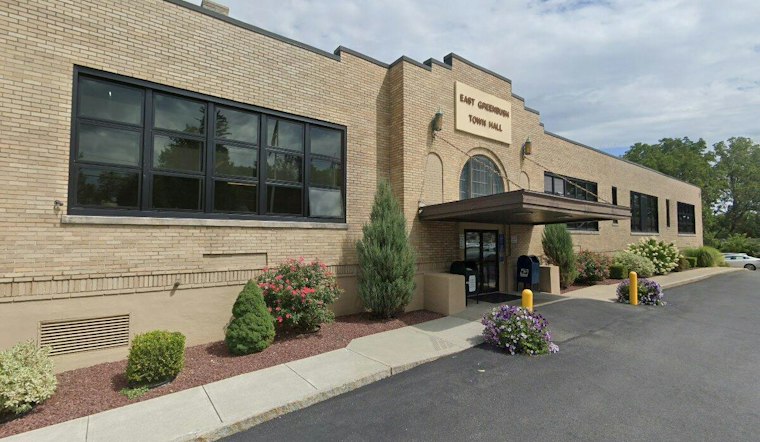
East Greenbush's town board voted 3-2 Wednesday night to keep the town's five Flock automatic license plate reader cameras running, rejecting a push from two members to pause the program amid mounting statewide scrutiny of the technology. Board members Hollie Kennedy, Liz Koenig and Jim McHugh backed continued use, while Supervisor Jack Conway and board member Rick Matters voted no.
A Divided Board, A Packed Room
Residents packed into town board chambers for the vote, according to a report from the Troy Record. East Greenbush's current contract with Flock doesn't expire until December 2027, meaning the board still had roughly 12 months of runway before any renewal decision was strictly necessary. Kennedy, Koenig and McHugh chose to keep the cameras active through that stretch rather than pull the plug early.
Conway, who serves as East Greenbush's town supervisor, said after the vote that he was disappointed but not surprised, calling it the wrong decision. He said his opposition wasn't about the police department he's supported and worried over for 11 years, and that he'd backed everything the department had asked for. But Conway argued the cameras infringe on constitutional rights and said he wanted board members to do their homework, hold hearings and workshops, listen to residents, and then make up their own minds, per the Troy Record's account of the meeting.
Supporters Cite Investigative Value, Push for More Data
Kennedy said she came around to seeing the cameras as a useful investigative tool for the police department after listening to law enforcement, and that East Greenbush residents are split between supporters and objectors. She and Koenig attended a demonstration in which the police department walked through how the cameras work and the safety protocols meant to prevent misuse. Still, Kennedy said the board should use the year remaining on the contract to gather data on how often the cameras actually help solve crime in East Greenbush specifically, and to establish policies covering data collection, access, retention and security.
Koenig echoed that caution even as she voted yes. She said unresolved questions remain about how many cases — felonies and misdemeanors alike — have actually been resolved with Flock's help, and said she wants other departments' access to town camera data shut off the moment an investigation wraps up. She told the board she wants Flock to explain its security protocols and protections against hacking or misuse of the data, and said she's willing to revisit the whole arrangement once more detailed police reports come in. For now, Koenig said she supports keeping the readers through the end of the contract and then reassessing.
Separately, East Greenbush police officers have argued the cameras provide critical leads in criminal investigations, according to CBS6 Albany, which reported that residents at a related hearing raised concerns about privacy, oversight and transparency — with some saying they'd back the cameras if officials could show the collected data was adequately protected from unauthorized access.
Matters Points to the Town's Data Center Moratorium
Matters, who voted against continuing the program, described the issue as complex for both residents and law enforcement to navigate. He pointed to the town board's own moratorium on data center development as a reason the board could justify pumping the brakes on Flock, too, arguing that a pause could be grounded in the same kind of caution and propriety that led to that moratorium.
Conway went further during the debate, claiming that cameras could cut domestic violence by 90% if placed throughout homes — a comparison he raised while making his broader case against expanding surveillance infrastructure without more scrutiny.
East Greenbush's Vote Lands Amid a Statewide Reckoning
The East Greenbush debate is unfolding as license plate readers face fresh scrutiny across New York. State lawmakers have pledged to pursue legislation tightening regulation of the companies behind the cameras and the data they collect, as reported by the Times Union. One proposal already introduced, Senate bill S9890, would require deletion of data within 48 hours, ban the sale of location data and restrict out-of-state access without judicial approval, according to the bill's page on the New York State Senate website; it's unclear whether that measure has advanced further.
Money is flowing into the technology even as lawmakers weigh reining it in. The first round of the state's Law Enforcement Technology Grant delivered $127 million to 378 agencies statewide, with more than a fifth of that total expected to fund license plate readers, the Times Union reported. Albany County, which runs 32 of its own Flock cameras, just renewed its contract for $61,000 a year using state grant money, per the same outlet — individual cameras typically run $2,500 to $3,000 apiece, plus a one-time installation fee.
Nearby Troy has already moved to rein in how its own camera network operates. The Troy City Council passed what NEWS10 described as New York's first law of its kind on October 1, limiting data retention to 72 hours instead of 30 days, with longer retention allowed under certain provisions when an investigation is active, and restricting searches to cases tied to a felony. The NYCLU noted that agencies across the country had searched Troy's camera data more than 12 million times between 2024 and 2026 without legal guardrails before that law took effect. Police in Troy reported 30 crimes during a 60-day monitoring period, with 29 reported within a 48-hour window and one within a 72-hour window.
Other Towns Have Gone Further — In Both Directions
Reactions elsewhere in the state have ranged from full retreat to full embrace. Auburn's city council voted 5-0 on Aug. 20 to terminate its Flock agreement outright, calling for policies on access, data sharing, security, retention and oversight before entering any future contract, according to FingerLakes1.com. Ithaca ended its own Flock contract back on March 4, citing privacy, civil liberties and governance concerns, the outlet reported.
Pew Research has found the median data-retention period among agencies with public transparency portals sits at 30 days, even after Flock lowered its own platform default to seven days in August, per FingerLakes1.com's reporting. The same analysis counted 2,033 Flock cameras mapped across New York — roughly 10 for every 100,000 residents — underscoring how widespread the debate playing out in East Greenbush has become across the state.





