

























































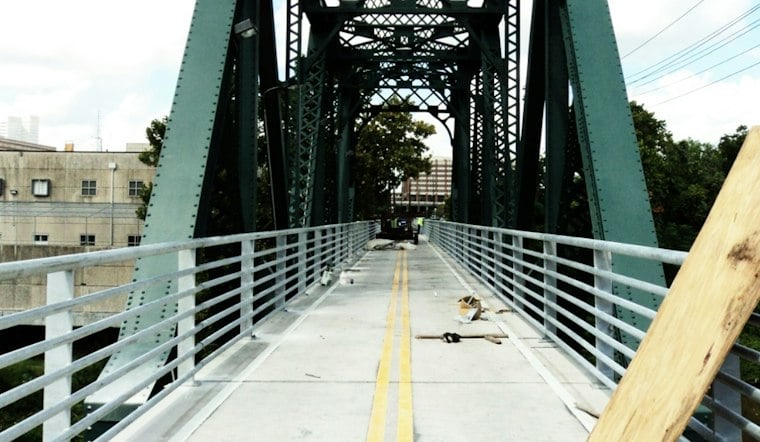
A railroad crossing on Lockwood Drive in east Houston is set to receive more than $10 million in federal funding, part of a push to finally untangle one of the city's most complained-about stretches of track. The money comes from the Federal Railroad Administration's Railroad Crossing Elimination/Crossing Safety Program, which selected the Lockwood crossing as a candidate for a future grade separation.
According to ABC13 Houston, Harris County Commissioner Adrian Garcia said the goal is to design an underpass so that one mode of traffic, either trains or vehicles, would pass beneath the other, eliminating the at-grade conflict that has snarled the crossing for years. But Garcia was careful to temper expectations about what the money actually buys. He told the station the federal funding covers only the design phase of the project, and that additional funding will need to be secured later to pay for actual construction.
That distinction matters, because there is currently no timeline for how long the project could take, the station reported. The FRA, for its part, said the project will improve rail safety by removing a crossing that is frequently blocked by trains, a problem that has caused delays not just for commuters but for emergency responders trying to reach the area.
Thousands of Complaints Concentrated on the East Side
The Lockwood project didn't materialize out of nowhere. Data reviewed by 13 Investigates and cited in the same ABC13 report found the FRA has received 23,000 complaints since 2021 about stalled trains blocking intersections across Houston, a tally echoed in an earlier ABC13 account of the same federal data. Most of those complaints, per ABC13, have come from the east side of town, at crossings on Eastwood Street, Leeland and South Lockwood, with a separate ABC13 post also naming Milby and Cullen among the frequently blocked locations.
The pattern isn't new or isolated to one dataset. A Houston Landing analysis found that during a 12-month stretch ending in early 2023, more stopped-train complaints were filed to the FRA about Houston's East End than about any other neighborhood in the country. The same outlet reported that FRA data showed 203 filed reports of stopped trains blocking Houston crossings in one January, a number that climbed to 463 complaints by that May.
Why Trains Keep Stacking Up
Part of the explanation lies in the freight industry itself. Houston Landing has reported that the average length of a U.S. cargo train grew by 25 percent between 2008 and 2017, reaching roughly 7,500 feet, and that the Association of American Railroads found 10 percent of trains exceeded 9,800 feet by 2021. Longer trains mean longer blockages when they stop, and east Houston's crossings sit squarely in that math.
Federal money alone hasn't historically been a guarantee of a quick fix. An Engineering News-Record review of the FRA's broader $1.24 billion grade-crossing grant package found the agency selected 91 projects nationwide, but only 37 of those selections had federally supported scopes that explicitly included construction. The other 54, the trade publication found, stop at planning, project development or final design, with their federally funded scopes not covering construction, the same category the Lockwood award appears to fall into based on Garcia's comments. ENR also pointed to a Caltrain crossing project as an example of how far off construction can remain even after funding is announced, noting that work there could begin in November 2028 if the remaining funding is secured.
Other East End Projects in the Pipeline
The Lockwood award is not Harris County's only recent move on east-side rail crossings. The county previously received up to $2 million for its East End Triangle Resilience Access and Improved Logistics for Safety Plan, which Houston Public Media reported will fund an assessment of 14 at-grade railroad crossings in the area, with Harris County and the City of Houston covering a combined 20 percent match.
Separately, Houston Landing reported that in 2023 the city received a $36.9 million federal grant for a different crossing-elimination effort, which, combined with a 20 percent city match, completed funding for a $123.6 million project to build four underpasses elsewhere in the city. That project, however, did not include the Lockwood crossing, meaning the blockages there continued even as other intersections moved toward relief. Houston's east side wasn't an outlier nationally when it came to winning federal attention this round either: Trains magazine reported that Texas had eight projects selected in the FRA's latest round of grade-crossing grants, the most of any state.
For now, residents near Lockwood Drive are left with a familiar holding pattern — federal recognition of a long-documented problem, design money to start drawing up a solution, and no firm answer yet on when trains and cars might finally stop competing for the same stretch of pavement.




