

























































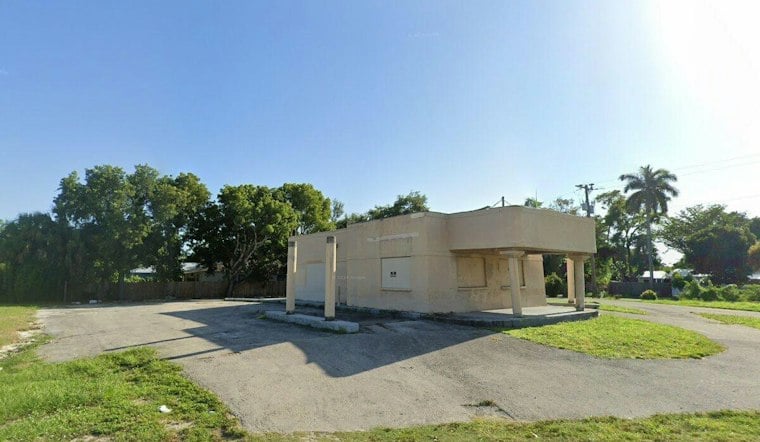
Collier County commissioners approved two affordable housing developments in East Naples at their October 27 meeting, adding a combined 62 units aimed at workers and young families priced out of the area, even as some residents and at least one commissioner raised concerns about parking, density and how the projects would affect nearby neighborhoods.
The first project, a 30-unit mixed-use apartment building planned for 3091 Tamiami Trail East, will rise at the intersection of Andrew Drive and Tamiami Trail East, about a quarter mile from the county government center, according to Coastal Breeze News. The site has housed an abandoned fast-food restaurant for 20 years and was more recently used as a homeless encampment, according to developers. Separate reporting from Gulfshore Business described the plan, advanced by property owner Nick Matar, as a proposal to rezone and redevelop the lot with 500- to 550-square-foot units largely intended for single occupants.
A Five-Story Build With a Rooftop Bar
The approved plan calls for a five-story apartment complex with a ground-floor restaurant and a rooftop bar and hookah lounge, per the Coastal Breeze News account. To make room, the project will expand onto dilapidated homes purchased to the north and east, extend an existing parking area, and add a 24-space lot across Andrew Drive for residents. Traffic will enter through Andrew Drive and exit onto Tamiami Trail. Gulfshore Business reported separately that the development would rely on two additional residential lots Matar purchased to satisfy county parking requirements.
District One Commissioner Rick Locastro pushed back, expressing concern that residents would still own cars and that the available parking and transit options might not meet their actual needs, according to the Coastal Breeze News report.
A Restaurant Owner's Objections
Siobhan Cleveland, a resident and owner of the Real Macaw French-Caribbean restaurant, told commissioners she supports affordable housing in principle but is worried about parking and how businesses will coordinate access to the new units. She said she was never contacted about the employer-housing arrangement despite having employees who could benefit from it, and claimed the plan would favor select local businesses rather than all of them. Cleveland also alleged that the building owner had written support statements for his own property, per the same account.
Board Chair and District Four Commissioner Daniel Kowal supported the first project as a piece of community redevelopment. He said the site had sat empty for 25 years and had become a predominant homeless hangout, and argued that Bayshore is changing rapidly as multimillion-dollar homes are built and businesses expand nearby. Kowal also said a future opera house in the area could someday employ more than 100 people, framing the housing push as part of that broader shift. Officials said the project aligns with the county's community redevelopment goals. Some residents have asked commissioners to reconsider the first project's approval over worries about effects on nearby smaller homes.
Naples Landing Replaces a Failed Hotel Site
The second approved project, called Naples Landing, will bring a 32-unit multifamily affordable housing development to 3467 Bayshore Drive. It will be entirely residential, with income-restricted units and no market-rate housing, replacing a failed boutique hotel site that sat as a vacant, partly built concrete framework after the original developer went bankrupt and left it unfinished. A concrete supplier later took control of the property for $100 after no other bidder came forward, the Coastal Breeze News account states.
Naples Landing has insufficient space to provide parking for every resident, and the commission agreed to mandate, through a later ordinance, that the property owner provide residents access to an off-site vehicle through employer agreements or other transportation arrangements. At the Collier County commissioners’ review of Naples Landing, developers cited a bus stop within 500 feet and employer-arranged parking or transportation for residents. Developers plan leasing agreements with local businesses to house employees directly. Some neighbors raised concerns about limited parking and resident density, with some residents estimating the 32-unit building could ultimately house roughly twice that number of people once couples and families move in. The commission approved Naples Landing despite those concerns.
Why Collier Keeps Approving More Units
Commissioners said the two projects aim to address housing needs for people who live and work in Naples, noting that the area has limited housing for service-industry workers even as mansions and multi-million-dollar homes continue to go up nearby. That tension tracks with broader data on the county: the Collier Community Foundation reports that Collier is among the top three most expensive counties in Florida, with 53,999 households classified as cost-burdened and a shortage of more than 9,000 rental units for residents earning between 0 and 60 percent of the area median income. The foundation also cites a 2023 median closed price of $735,000 for single-family homes in the county.
The county's own 2021-2025 Consolidated Plan, available through Collier County Housing, identified housing affordability as a high-priority need and found that median gross rent rose 48.3 percent between 2010 and 2019, climbing from $942 to $1,397. Those pressures echo across other recent county decisions: commissioners unanimously approved a separate 92-unit apartment project off Collier Boulevard near Hacienda Lakes on Oct. 28, with 30 percent of those units, or 28 total, designated as income-restricted, according to the Naples Daily News. Commissioners have also approved four vacant county-owned properties in Immokalee as possible affordable-housing sites, as reported by the Naples Press.
Together, the East Naples approvals bring the board's recent affordable-housing activity to several hundred units across multiple sites, even as individual neighbors continue to press commissioners on parking, traffic and density before construction begins.





