

























































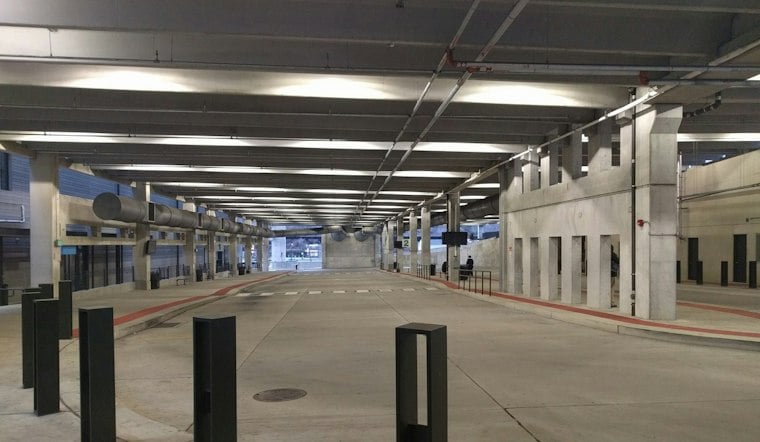
Easton's Historic District Commission unanimously rejected a developer's plan to demolish the former Easton Bus Terminal on Bushkill Street and replace it with a six-story apartment building, following more than an hour of public comment. The vote included one abstention, and it deals a setback to developer Kevin Serfass, who wanted to tear down the 1946-era terminal building at 102 Bushkill St. to make way for a 74-foot residential project.
A Landmark Versus a New Vision
Serfass had pitched the project as six stories with five floors of apartments sitting above first-floor parking, according to WFMZ.com. He argued the terminal, long owned by Dorothy Varju and Mary Sue Tumminello, was not viable for renovation and claimed the structure sits outside the city's National Register boundary. Serfass told the commission his design would be transformative, describing it as a future city landmark drawing inspiration from pre-war Upper East Side Manhattan architecture, the outlet reported.
The terminal operated as a working bus depot from 1946 through 1975 and is counted as part of Easton's historic district on the National Register of Historic Places, which recognizes buildings worthy of preservation. Commission consultant Christine Ussler pushed back hard against the demolition request, calling the terminal iconic and a contributing resource to the city's historic character. Per the same account, Ussler said the application simply did not meet the requirements laid out in city ordinance and the historic district's guidelines.
Commissioners Grill the Application
Commissioner Paul Felder was especially skeptical of the paperwork itself, saying the application lacked any illustration showing how the new building would fit into its surroundings. He went further, questioning aloud whether a human or artificial intelligence had actually prepared the submission, and said many of its assertions were, in his words, off kilter. Still, Felder acknowledged the broader question deserved careful consideration before any final decision.
Commissioner Christopher Mitman urged his colleagues to reject the demolition outright and protect the city's historic building stock, the report notes. Some members of the public who spoke during the hourlong comment period suggested the terminal could instead be repurposed rather than knocked down. Under the city's rules, demolition applicants in the district must present evidence that tearing a building down is the only feasible option and that renovation is not possible — a bar Ussler indicated this application failed to clear.
How Easton's Historic Review Actually Works
Any exterior work visible from a street, sidewalk or public way inside Easton's Local Historic District requires what the city calls a Certificate of Appropriateness, according to the City of Easton. The Historic District Commission reviews such proposals and then makes a recommendation to City Council on whether to grant or deny that certificate; the ordinance establishing the process dates back to August 2005 and covers a swath of the city roughly bounded by the Delaware River, Bushkill Creek, Sixth Street and the Lehigh River. City code adds procedural teeth to that review: the Code Administrator cannot issue a demolition permit until Council has either issued a Certificate of Appropriateness or granted administrative approval, and the commission itself must render a written recommendation within 20 working days of its hearing, according to City of Easton Code. An applicant denied that certificate can appeal to Northampton County Court of Common Pleas within the time allowed by law.
State law backs up that local framework. Pennsylvania's Historic District Act bars permit-issuing agencies from approving covered building changes until a Certificate of Appropriateness has been issued, and requires the governing body to weigh any proposed change's effect on a district's historic and architectural character, per the Pennsylvania Historical and Museum Commission. Easton has been tightening its preservation posture in recent years; the city's 16-member Historic Conservation District Committee was formed in 2019 after Easton adopted a comprehensive plan in 2017, and a proposed West Ward ordinance would treat demolition of any pre-1940 building as a last resort, requiring an adaptive-reuse analysis and proof that no sale, rental or reuse was possible over a twelve-month period, per WFMZ.com's earlier reporting on the planning process. That West Ward measure remains a proposal and has not been confirmed as adopted.
A Different Outcome Down the Street
Serfass is no stranger to Easton's review boards. He previously developed The Lynden, a seven-story complex now under construction that followed a markedly different path through city approvals. That project, a seven-story mixed-use condominium building planned for 101 S. Third St. with 73 units and 20,542 square feet of retail space, required demolishing a two-story building that housed Fidelity Bank, according to lehighvalleylive.com. The Historic District Commission approved that design on Oct. 14, and City Council issued its Certificate of Appropriateness ten days later, the outlet reported. Serfass Construction had first proposed that condo project in September 2025, and the Easton Planning Commission voted 4-2 to recommend conditional approval to the Zoning Hearing Board, even as preservation advocate Toni Mitman argued at the time that the project would damage the character of Easton's historic district, lehighvalleylive.com reported.
Whether the Bushkill Street site will eventually see any construction, repurposing or a renewed application remains unclear. What's certain for now is that the commission's unanimous stance — with that single abstention — has preserved the 1946 terminal building, at least for the moment, against the kind of towering replacement that cleared the way for Serfass's project just blocks away.





