

























































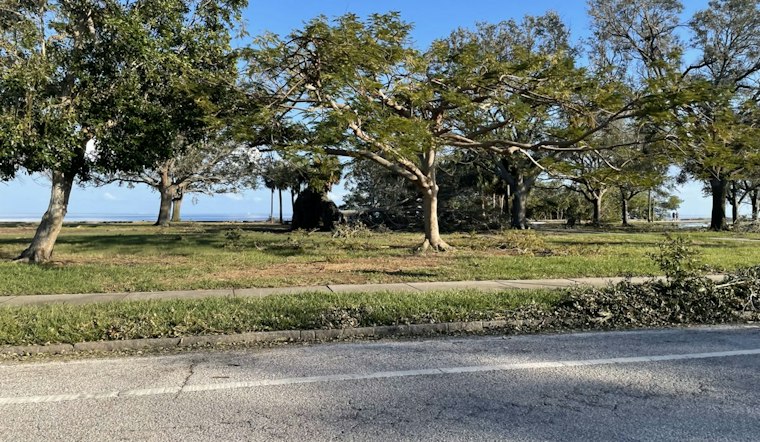
Eckerd College lost around 80 or more trees during Hurricanes Helene and Milton, and the St. Petersburg campus has spent the past two years trying to grow that canopy back. Now, with new grant funding in hand, students and faculty are planting a microforest, while plans call for more than 150 additional trees across at least seven campus areas, with work expected to continue through spring 2027.
Environmental science and biology professor Beth Forys said people on campus noticed the heat difference almost immediately after the storms. According to a report from Bay News 9, the college mapped shade coverage before and after the hurricanes and found it had lost almost 15% of its shade. Forys said funding could help replace large canopy trees, particularly native species that support biodiversity, and that the college aims to provide an oasis for wildlife as coastal areas around it become more developed.
Two Grants, One Rewilding Push
The rewilding plan centers on the college's first microforest alongside the broader tree-planting campaign. The microforest was funded by a $20,000 grant from the William R. Hough Endowed Fund, which covered the microforest's design, plants, landscaping materials and a storage shed that now holds equipment and research tools for the Eckerd College Conservation Corps, the station's report notes.
More than 60 students installed the microforest in September, and more than 200 plants went into an area that had previously been lawn, creating habitat for pollinators and other wildlife. Separately, Eckerd received a $75,000 grant from the Florida Department of Agriculture to plant more than 150 trees. Assistant professor of environmental studies Tyler Cribbs said that grant will let the college not just replace what it lost, but double the number of trees lost to expand its canopy beyond what existed before the storms.
Students Lead the Dig-In
Eckerd College students are helping lead the rewilding effort themselves, handling much of the planting, monitoring and upkeep. Cribbs said students install, monitor and weed the plants to help them take root and grow for years to come. The first 22 trees are set to go into the ground in early December, part of a planting schedule intended to keep expanding wildlife habitat on campus.
Student Tate Mullineaux, who is gaining hands-on field experience in urban forestry and hopes to pursue the field after college, said the project ranks among the most substantial mass plantings the campus has seen outside of invasive-species removal events. Mullineaux said students watch for overwatering, infections, diseases and invasive insects that could harm the new plants as they establish themselves. Eckerd Conservation Corps interns and student volunteers also help maintain the microforest on an ongoing basis.
Tracking What Grows Back
College officials plan to monitor the new trees and track which types thrive best as the plantings mature, according to the same report. The rewilding work is designed to restore shade, support wildlife and rewild campus areas that were stripped bare by the 2024 storms.
Eckerd's campus was among the hardest hit locally when Helene and Milton struck in quick succession. The school required evacuations on Sept. 25, 2024, and students did not return to in-person classes until after a month of online learning, according to WUSF. Campus housing suffered only minimal damage overall, though some residence hall lounges needed repairs for water damage, the station reported at the time.
A Broader Pattern of Canopy Repair
Eckerd's push to rebuild tree cover echoes earlier campus efforts to green the surrounding city. The college's St. Pete Center for Civic Engagement and Social Impact previously partnered with faculty and student interns on an initiative aimed at increasing the quality and quantity of canopy cover citywide, according to Eckerd College. A related community event, Saving St. Pete — One Tree at a Time, drew more than 120 students and community members.
That same initiative noted a recurring obstacle to urban tree planting: residents' worries about storm damage and the upkeep costs that come with new trees in neighborhoods and backyards. It's a tension Eckerd's own campus has lived through firsthand, having lost dozens of trees to hurricane winds before beginning the work now underway to bring its shade, and its wildlife habitat, back.





