

























































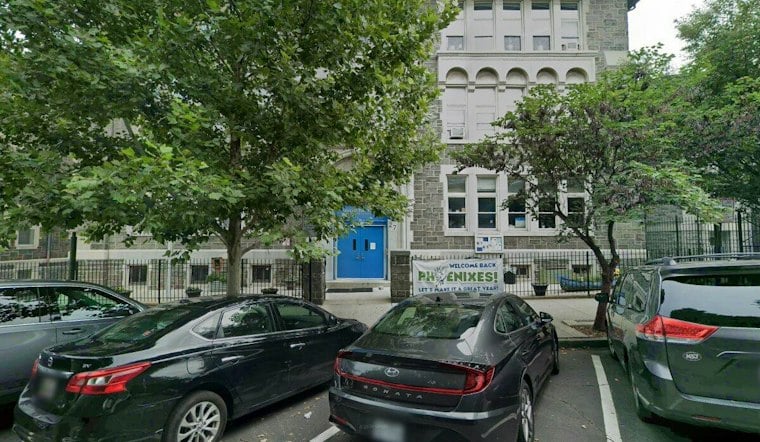
Eight eighth graders from Paterson Park Public Charter School are trading their East Baltimore classrooms for icebergs and penguin colonies this month, departing for South America on November 15 before boarding a ship bound for Antarctica as citizen scientists. The two-week expedition has the students, who call themselves the Polar Explorers, set to return home on November 28.
A Teacher's Idea Becomes a Free Trip for Eight Students
The expedition began as an idea from the students' teacher, Sabina Sully, according to WMAR-2 News. Community support made it possible for the students to go at no cost, the station reports, though the full list of contributors and a complete trip budget were not detailed in that account. To earn a spot, applicants had to complete a paper-based application, secure a teacher letter of recommendation, and sit through a panel interview, per Sully.
The eight students didn't arrive at this moment cold. During sixth and seventh grades, the group worked with the National Aquarium, the Maryland Zoo, and other local partners to learn about Antarctica and complete volunteer work tied to the continent, the same report notes. That groundwork is now feeding directly into their fieldwork: once in Antarctica, the students plan to conduct thermal imaging and build virtual-reality simulations in partnership with Towson University, while also observing penguin colonies firsthand.
Students Describe Their Own Reasons for Going
Several of the student explorers framed the trip in their own words before departure. Daniel Pallchizaca and Tamryn Taylor-Wood said the group will learn about Antarctic life and how to help preserve its climate, while Frida Verta and William Barrow said they hope their journey will inspire others. Aria Singletary and Joseph Gomez said the students aim to understand problems facing Antarctica and how to address them while including people around the world in that effort.
Sully herself described the program as a chance to challenge narratives about who gets to travel and explore, and to connect what's happening in Antarctica to people back home. She hopes the trip will help Baltimore City children see themselves in spaces like Antarctica, and that lessons from the ice will eventually make their way back to local students.
Sully's Own Path to Polar and Patagonian Classrooms
Sully is a 2005 graduate of Allegheny College who now teaches middle school in Baltimore, according to a profile from Allegheny College. She was also named to the 2024 Grosvenor Teacher Fellowship cohort, a group of 35 educators recognized by the National Geographic Society, underscoring a track record of bringing far-flung field experience into her classroom well before this expedition took shape.
What the Students Will Find Waiting on the Ice
The penguin colonies the students plan to observe are themselves shifting in ways scientists are still working to understand. A decade-long study used a network of 77 cameras to track breeding patterns across 37 penguin colonies on the Antarctic Peninsula and sub-Antarctic islands, according to Smithsonian Magazine. That research found penguins are now arriving at nesting sites almost two weeks earlier, on average, than they did just a decade ago, with Adélie and chinstrap penguins shifting their breeding earlier by about ten days and gentoo penguins starting their nesting season an average of 13 days earlier.
The population trends behind those shifting timelines are stark. Gentoo penguin numbers on the Antarctic Peninsula have more than tripled at many sites over the past three decades, the magazine reports, while chinstrap and Adélie populations have declined by as much as 75 percent at some of those same colonies. Similar monitoring efforts exist elsewhere in the field: Penguin Watch, a citizen science project founded by researcher Tom Hart more than 15 years ago, tracks penguin populations using drones and time-lapse cameras, offering a model for the kind of observational work the Baltimore students hope to contribute to.
The Paterson Park expedition has grown from a Baltimore City classroom idea into a science trip for eight middle schoolers. Their preparation has included classroom learning and hands-on work with local partners, and they are now set to take that work into the field as citizen scientists.





