

























































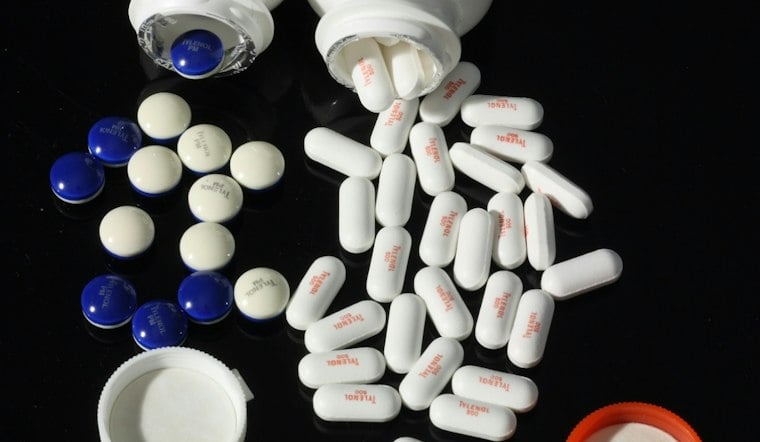
An Enfield mother has been arrested and charged with risk of injury to a child following the death of her 12-year-old daughter, Eve Rogers, who was found dead in her bedroom on March 18. According to an arrest warrant, Eve had 23,000 nanograms per milliliter of diphenhydramine in her system when she died — a level the warrant describes as roughly five times the lethal dose.
Melanie Federline was taken into custody in October, according to police. As reported by NBC Connecticut, the warrant states that approximately 119 pills from a recently purchased bottle of diphenhydramine sleep aid could not be accounted for. A separate account from Yahoo News described the missing pills as about 119 of 176 taken from a recently purchased 250-pill bottle of diphenhydramine — the two reports differ on how the count was framed, and the underlying warrant was not independently reviewed for this article.
Federline told police she purchased a bottle of 50-milligram sleeping pills on Amazon in February and sometimes gave her daughter one when Eve had trouble sleeping, the station's report notes. When investigators recovered the bottle on April 8, only three pills remained, and another 14 sleeping pills turned up in Eve's bedroom. Per the same account, Federline was responsible for ordering, managing and dispensing medications in the household and refilled pill organizers every Sunday.
Medical Examiner Cites Three Drugs, Can't Determine Intent
The state medical examiner's office found that Eve died of acute intoxication involving diphenhydramine, fluoxetine and bupropion, though her manner of death was ruled undetermined — meaning investigators could not establish whether the overdose was accidental, intentional or otherwise. According to the warrant, Federline often gave Eve diphenhydramine, sold under brand names like Benadryl, to help her sleep, and she told Enfield police in March that Eve sometimes took it for that purpose.
The warrant also describes Federline contradicting herself and her husband when investigators questioned the family about medication use in the home, and it states she said she was unsure whether Eve had taken a sleep aid the night before she died. Police reported finding loose medication or vitamin pills in Eve's room, along with loose medication in other children's rooms in the home. The warrant additionally describes hundreds of used pill capsules with medication removed and loose, unused medications not stored in containers, as well as a household with old and moldy food, old food left in pans, and old milk and cereal sitting in bowls. Household members reportedly used lorazepam, Wellbutrin, Adderall, sleep-aid medication and melatonin.
A Prior Complaint and a Separate Assault Charge
A 2017 Massachusetts child welfare complaint alleged that Federline had given her daughter NyQuil to make her sleep, though that incident predates the Connecticut case by years. Eve had a documented history of self-harm and suicidal thoughts, and in March she reportedly left home without her parents' knowledge and stole a drink from a gas station — an incident that prompted Connecticut's Department of Children and Families to investigate. DCF said it interviewed all adults and children in the home in person and contacted collateral sources regarding allegations in a March 11 report before closing its investigation into that specific incident, according to a DCF statement.
Separately, Eve's stepfather, Anthony Federline, was charged in April with first-degree sexual assault and risk of injury to a minor following her death, according to WTNH. Police reported finding evidence of an assault along with Anthony Federline's DNA on Eve's body. Melanie Federline appeared in Hartford court for arraignment and posted bond, the Yahoo News report states, with a return date set for Dec. 14.
State Officials and Pediatricians Point to Wider Risk
Eve's aunt, Rebecca Smith, attended a vigil for her niece in Hartford in July. State Sen. Saud Anwar has called for comprehensive prevention of accidental medication overdoses among children, and he said Child Advocate Christina Ghio's office could examine whether DCF visited and assessed the home, with legislative solutions potentially following depending on what Ghio's office finds. Ghio, whose office investigates suspicious child deaths, said medicines taken above recommended dosage can be dangerous to children. As the original report from CT Mirror notes, the role medication access played in Eve's death remains unclear.
Pediatrician John Brancato said Benadryl should not be given to children as a sleep aid, warning that an overdose can cause hallucinations, agitation and seizures. He pointed to cetirizine as a safer second-generation antihistamine with the same allergy-treating benefits and a better safety profile, and noted that cold medicines are not recommended for children under 2. Brancato advised parents to keep medicines out of children's reach, store them in a lock box or other inaccessible place, and recognize that flavorings added to children's medicine can increase the risk of accidental overdose. He also recommended keeping screens away from children before bedtime, having kids eat earlier in the evening, and ensuring they get fresh air and activity during the day to naturally support sleep. Connecticut Children's hospital treated around 40 children for Benadryl overdose over a recent six-month span, and the state's children visit emergency rooms for self-harm or suicidal ideation at an average rate of 16 per day.
Diphenhydramine Overdoses Have Climbed Statewide
Eve's case arrives amid a broader rise in diphenhydramine-related harm among Connecticut youth. According to Connecticut Public, three Connecticut children died in the two months before June 8 after apparently overdosing on the active ingredient in Benadryl, prompting the state Department of Public Health to urge pediatric providers to advise families to identify and safely store products containing diphenhydramine. The outlet reported that the Office of the Child Advocate did not confirm whether those deaths were connected to a social media challenge circulating online.
Nationally, the numbers tell a similar story. Good Morning America reported that poison centers logged 6,179 calls involving diphenhydramine alone among teens ages 13 to 19 in the first five months of 2026, more than double the same period in 2025. America's Poison Centers recorded 10,068 such teen calls in 2024, rising to 13,284 in 2025 — a nearly 32% increase — and the outlet reported that 13.2% of teen diphenhydramine-only cases in 2026 were linked to intentional abuse, up from 7.3% in 2020.




