

























































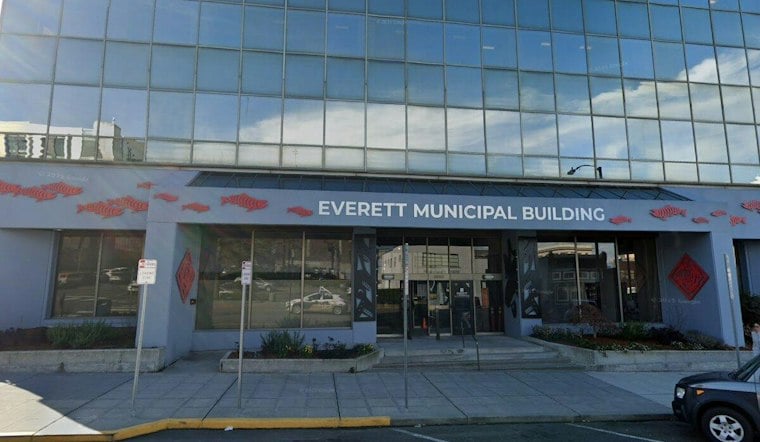
Everett Mayor Cassie Franklin and a coalition of community partners have proposed a $7 million fund aimed at keeping South Everett residents and small businesses from being priced out as light rail service approaches the neighborhood. City officials say the money is meant to get ahead of the kind of real estate speculation that often follows major transit investments, before rents and property values start climbing in anticipation of new stations.
According to KOMO News, the city plans to contribute $5 million of the total: $2 million drawn from the consolidation of Everett Transit and Community Transit, and another $3 million from affordable housing funds generated through the city's inclusionary zoning program. LISC Puget Sound, the nonprofit that will manage the fund, has committed to raising an additional $2 million in philanthropic contributions to round out the $7 million goal.
The numbers behind the push are stark. Per the announcement, 65% of South Everett households currently rent, and more than half of those renters are considered cost-burdened. Organizers say the fund is designed to make investments before speculation around light rail accelerates, with the goal of preserving affordable housing and business spaces that might otherwise disappear once development pressure sets in.
What the Money Is Supposed to Do
City leaders describe the fund's mission broadly: it is intended to support affordable housing, local businesses, community organizations and public spaces across South Everett. Plans tied to the fund include building and preserving affordable homes, helping existing businesses stay and grow, developing community leadership, and investing in parks, public art and gathering places.
A Community Investment Council made up of residents, business owners, community organizations and other partners will help set the fund's priorities going forward. Partners named alongside the city include Stations Unidos, Connect Casino Road, philanthropic groups and the Housing Authority of Snohomish County, the station's report notes.
Officials Frame the Stakes
Franklin cast the fund as a matter of protecting people who already call South Everett home. “It is important that we act now to protect existing residents and businesses from the displacement pressures that often come with transformative projects,” she said, according to the same outlet. She added that “South Everett families should benefit from the historic investment of light rail, not be pushed out by rising rents.”
Snohomish County Executive and Sound Transit Board Chair Dave Somers echoed that framing, saying the fund could help residents and businesses share in the benefits of light rail while preparing for rising costs. “It gives this community a way to get ahead of rising costs: to keep homes affordable, help small businesses stay and grow, and make sure the people who built this neighborhood share in what comes next,” Somers said.
Lauren McGowan of LISC Puget Sound, the organization set to administer the fund, said it will help protect the homes residents already have, build new homes they can afford, and keep local businesses growing as light rail arrives.
A Separate, Larger Plan Also on the Table
The $7 million fund is distinct from an earlier, much larger proposal Franklin floated earlier this month. As My Everett News reported, that $73 million community investment plan included $54.5 million negotiated through an interlocal agreement with Community Transit and an estimated $18.5 million in repurposed Everett Transit funds, with $2 million of it earmarked for a separate community investment fund called the South Everett Futures Fund aimed at the same displacement pressures.
Concerns about transit-driven displacement are not unique to Everett. Seattle's Office of Planning and Community Development has pointed to its own experience with light rail in Rainier Valley, noting on its Equitable Transit-Oriented Development page that the city has seen increased displacement pressures tied to transit investment in low-income neighborhoods and communities of color. Seattle's broader anti-displacement framework similarly describes using a range of tools meant to help communities remain in place amid development pressure.
For now, the fund in South Everett remains a proposal built on commitments rather than dollars already in hand: $5 million pledged by the city and a $2 million fundraising goal set for LISC Puget Sound. How quickly that money comes together, and how the Community Investment Council ultimately decides to spend it, will shape whether South Everett's renters and small business owners see relief before, or after, light rail changes the neighborhood around them.





