

























































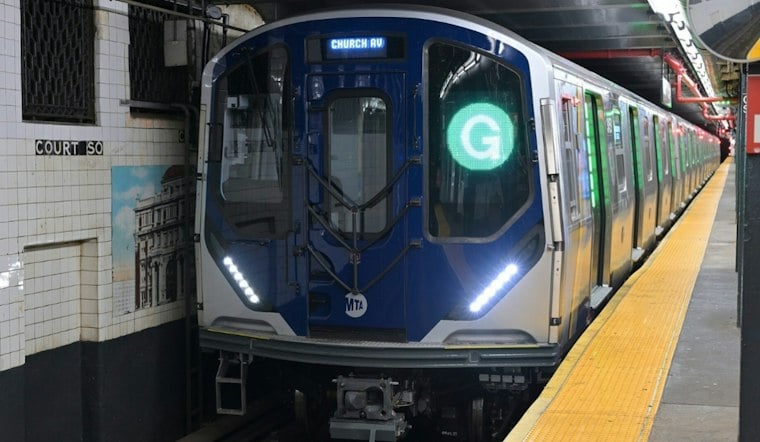
Friday night's commute across Brooklyn turned into a standstill when signal problems knocked out F and G train service, leaving riders stranded at stations and forcing many to give up on the subway altogether. The MTA reported no F service between Brooklyn and Manhattan and no G service between Church Avenue and Bedford-Nostrand Avenues, paralyzing two of the borough's key connector lines during peak rush hour.
Signal Trouble Spreads Delays Across the System
According to Gothamist, the MTA said signal issues caused F and G trains to grind to a near halt, with the disruption rippling into delays throughout the transit system. City and state officials attributed the breakdown to the signal issues that hit during the Friday night rush, leaving commuters without reliable options just as they were trying to get home.
The fallout was visible above ground as well as below it. Passengers spilled onto streets at stations along the F and G lines in Brooklyn, the outlet reported, as riders abandoned the wait for trains that weren't coming.
Earlier Trouble on the 4 and 5 Lines
The F and G meltdown wasn't the only subway headache Brooklyn riders faced that day. Officials said 4 and 5 trains had already experienced delays earlier in the day after a passenger was struck, compounding an already rough Friday for anyone trying to move around the city by rail.
The timing made for an unusually bad day for transit nationwide. The Federal Aviation Administration separately issued a nationwide ground stop for all U.S. airports on Friday, citing a communication issue, according to the same Gothamist report. The air travel disruption and the Brooklyn subway signal failure were distinct events, but together they underscored how fragile the country's transportation networks can be when systems falter simultaneously.
A Signal System Already Running Years Behind
Friday's breakdown lands against a backdrop of chronic signal troubles on the F and G lines. An MTA consultant has reported that four subway signal-upgrade projects currently underway face delays ranging from nine months to three years, as detailed in a separate Gothamist report. The consultant estimated that signal upgrades on the F line in southern Brooklyn won't be finished until September, three years later than originally forecast, while work on the G line isn't expected to wrap until July 2029, two years behind schedule.
The MTA's approved five-year construction plan sets aside another $5.4 billion toward upgrading these aging systems, per that same reporting. The agency's push for modernization isn't new: back in November 2021, the MTA announced Brooklyn F and G service changes tied to the Culver Line Signal Modernization Project, a press release that said the work was meant to improve the reliability and resiliency of subway service in the borough.
A Familiar Pattern on the F and G Lines
Friday's disruption also echoes other signal-related headaches that have plagued the same corridor. Boro Park 24 has reported on a signal problem near Carroll Street in Brooklyn that caused severe delays and significant service changes on the F and G lines, though it's not established whether that incident is connected to Friday's breakdown. In a similar disruption detailed by PIX11, some uptown F trains ran express from Church Avenue to Jay Street-MetroTech while others were rerouted via the D line, and some Church Avenue-bound G trains turned around at Bedford-Nostrand Avenues toward Court Square — a reminder of how quickly service patterns can unravel when the signals fail along this stretch of Brooklyn.
For now, the exact cause of Friday's signal failure and how long it took crews to restore normal service remain unclear. What's certain is that another Friday rush hour on the F and G lines ended with packed platforms, frustrated commuters, and yet another entry in a long history of signal trouble across Brooklyn's subway network.



