

























































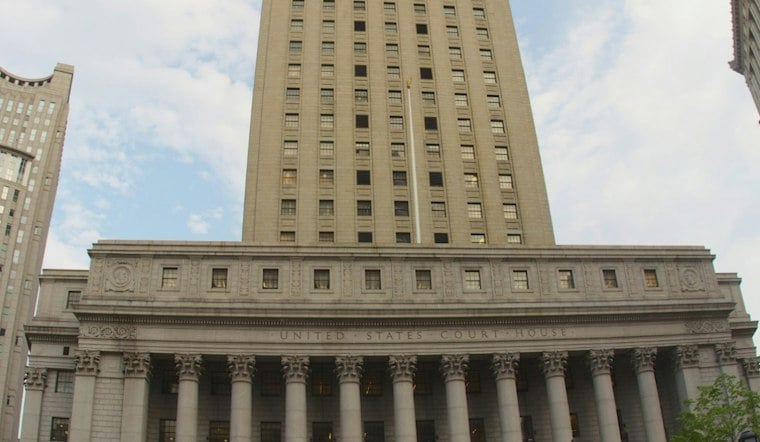
A Manhattan federal judge sentenced Meceo Ray McEaddy to six and a half years in prison on Wednesday for posing as a senior Sony Music Latin executive and convincing 20 people to wire him a combined $1.2 million for concert bookings that never existed. McEaddy pleaded guilty to fraud and aggravated identity theft after prosecutors said he used fabricated industry connections, false paperwork and even a forged signature from an unidentified prominent musician to pull off the scheme.
U.S. District Judge Gregory H. Woods imposed a 78-month sentence, according to Billboard, which reported the judge also ordered three years of supervised release and directed McEaddy to return the $1.2 million he collected from victims. The sentence landed between the two sides' requests: prosecutors had asked for seven years, while McEaddy's defense attorney urged the court to impose just three, according to Law Commentary. Woods landed six months below what the government wanted but more than double what the defense sought.
A Pattern Prosecutors Say Started Right After Prison
According to prosecutors, McEaddy's Sony Music Latin impersonation scheme got underway in 2018, not long after he was released from state prison in 2017. He had served four years there for a similar scheme in which he was convicted of falsely promising investors he could book performances by Rihanna, Lady Gaga and Justin Bieber, per Billboard's reporting. The government argued McEaddy returned to fraud like clockwork once he was out, resuming the booking schemes almost immediately after his release.
Aspiring concert promoters were the targets this time around, persuaded to wire money for bookings McEaddy claimed he could deliver through his supposed position at Sony Music Latin. He is also known by an alias that the two outlets covering the case spell differently — Billboard lists it as Ray Annes, while CBS News reports it as Ray Annis.
Defense Says Client Took Responsibility
McEaddy's defense argued in court that he had made efforts to take responsibility and atone for his conduct, and contended that he genuinely believed he could secure performances from major recording artists even though he lacked any actual arrangements to do so. That argument did not persuade Woods to go as low as the three years the defense requested, though the final sentence still came in under what prosecutors sought.
Not an Isolated Tactic in the Music Industry
McEaddy's case fits a broader pattern of fraud built around claims of access to famous performers. In a separate New York case, prosecutors said two men posing as representatives for pop stars pocketed about $1 million after promising Brazilian promoters they would book a series of Rihanna concerts in Rio de Janeiro, according to CBS News. Elsewhere, federal authorities have pursued similar bogus-booking schemes: the Justice Department announced the sentencing of a fake concert promoter to 57 months for a nearly $3 million fraud scheme involving identity theft and bogus music concerts, while the FBI reported charges against a man who claimed to promote concerts for artists including Beyoncé and Nicki Minaj. A more recent case detailed by the Justice Department involved a Missouri man indicted on a wire fraud count tied to roughly $270,000 in alleged losses from false concert claims.
Federal authorities indicted McEaddy in May 2025, and he pleaded guilty a few months later. With sentencing now behind him, McEaddy faces more than six years in federal custody followed by three years of supervised release, with the court-ordered return of his fraud earnings still hanging over the case's financial resolution.




