

























































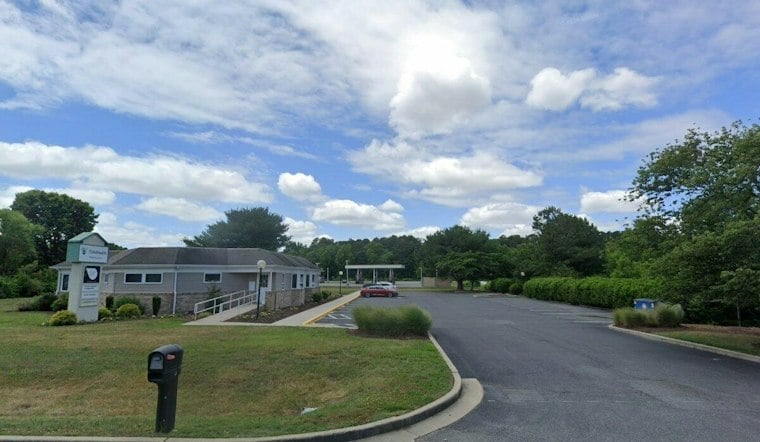
TidalHealth's primary care clinic in Federalsburg closed effective Nov. 15, 2026, cutting off a source of local medical care that patients say had served the small Eastern Shore town as a private practice since 1995. The health system said it would connect displaced patients with its offices in four other communities, none of them within easy reach of Federalsburg.
According to Becker's Hospital Review, TidalHealth said patients from the shuttered Federalsburg office are being connected with its primary care locations in Bridgeville, Seaford, Delmar and Georgetown. That means trading a hometown clinic for a drive to one of those offices, at a time when the health system's own finances are strained: TidalHealth's operating margin slid from -3.4% in fiscal 2025 to -3.8% in fiscal 2026, Becker's reported.
The distance isn't trivial for a rural population that already struggles to reach specialists. WMDT reported that patients now face a trip of at least a dozen miles from town to reach the replacement offices. WBOC, which first detailed community reaction to the closure, noted that longtime patients remember the practice opening in Federalsburg back in 1995, long before it became part of the TidalHealth network.
A Region Already Short on Doctors
The Federalsburg closure lands in a part of Maryland where primary care access was already thin. The University of Maryland School of Medicine has said nearly the entire Eastern Shore is designated by the federal government as a medically underserved area and a health professional shortage area. The five Maryland counties with the fewest primary care physicians per capita are all in the Eastern Shore region, with Caroline County — where Federalsburg sits — having just one health provider per 2,500 residents, per the university.
Donna Parker, quoted in the same University of Maryland report, said some Eastern Shore residents skip important appointments altogether or travel an hour or more to Annapolis or Baltimore for treatment. The Banner has reported that Maryland overall has fewer than 80 primary care providers for every 10,000 residents.
Why Rural Towns Pay a Health Price
The stakes of losing local care go beyond inconvenience. A University of Maryland School of Medicine study found that people living in towns of fewer than 2,000 residents were 10 percent more likely to have a heart attack, 5 percent more likely to experience heart failure and 4 percent more likely to have end-stage kidney disease than people in large cities. Those figures underscore why losing a clinic in a town the size of Federalsburg carries real medical risk, not just logistical hassle.
In response to the broader shortage, the University of Maryland School of Medicine has launched the Rural Health Equity and Access Longitudinal Elective, known as R-HEALE, to train and place medical students in Eastern Shore practices. The program has received $1.4 million in state funding, along with support from university partners, the Rural Maryland Council and philanthropic donors. Its first cohort accepted six first-year medical students, three of whom received full-tuition scholarships in exchange for committing to work on the Eastern Shore for four years after completing residency.
For now, residents of the small Caroline County town are left navigating a system with fewer local options than they had a few weeks ago.




