

























































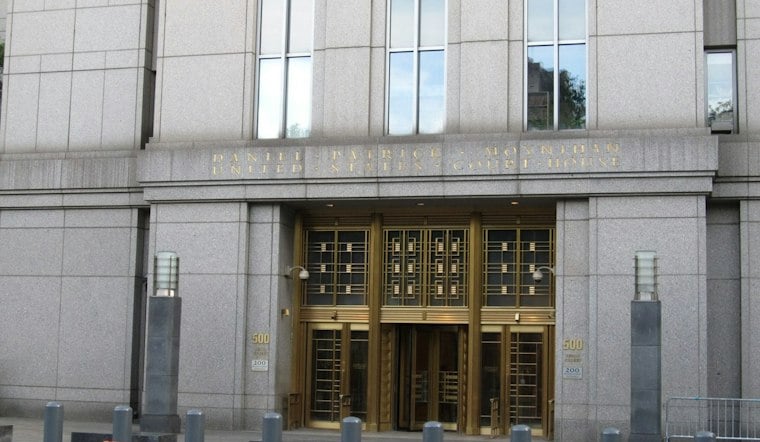
Three foreign nationals are facing federal charges after prosecutors say they used so-called super intelligence technology to impersonate real people and trick corporate executives into wiring roughly $129 million into fraudulent accounts. Jacob Soall, Sharon Hazan and Guy Sheetrit were arrested and charged in the scheme, which federal authorities describe as an alleged AI-enabled fraud case.
According to the US Attorney SDNY
, the three defendants allegedly used what prosecutors called groundbreaking super intelligence technology to impersonate real people and deceive corporate executives into sending them and their co-conspirators approximately $129 million. That allegation comes from the
U.S. Department of Justice, Southern District of New York
, which announced the arrests and charges against Soall, Hazan and Sheetrit this week.
U.S. Attorney Jamie McDonald said the case reflects a broader concern among federal law enforcement about criminals exploiting emerging technology. McDonald said that some people seek to use emerging SI technology to pursue criminal goals, and encouraged individuals and the business community to consider ways to protect themselves from the threat of SI-enabled crime. McDonald also said the office and its law enforcement partners will continue to identify, investigate and prosecute criminals who use new technologies to defraud Americans.
How AI-Driven Impersonation Scams Typically Operate
The SDNY case arrives as federal agencies and private security researchers warn that generative AI is increasingly showing up in fraud schemes aimed at businesses. The FBI's Internet Crime Complaint Center has noted that generative AI tools can synthesize new content from examples fed in by a user, and that this capability can correct for human errors that might otherwise tip off a target that something is wrong, according to the FBI Internet Crime Complaint Center.
Separately, Microsoft has documented a pattern of AI-assisted executive impersonation and invoice fraud aimed at corporate accounts-payable departments. In one campaign detected between August 3 and 5, Microsoft identified more than a million emails targeting enterprise users, with 87.7% of that volume sent to recipients in the United States, per the Microsoft Security Blog. In that scheme, attackers impersonated company executives in an attempt to convince accounts-payable staff to process an Automated Clearing House payment of nearly $50,000.
Microsoft was careful to note the limits of what its researchers could confirm. The company said that while certain email-template features suggested generative AI involvement, those indicators did not independently establish how much of the campaign content was actually AI-generated.
The Alleged Fraud Scheme
The SDNY case centers on an alleged $129 million fraud scheme.
No additional details on the specific charges, arrest circumstances or the defendants' backgrounds were included in the information released so far. The scope of the alleged fraud and the warnings from McDonald's office underscore how seriously federal prosecutors are treating the intersection of artificial intelligence and corporate fraud as the technology becomes more accessible.





