

























































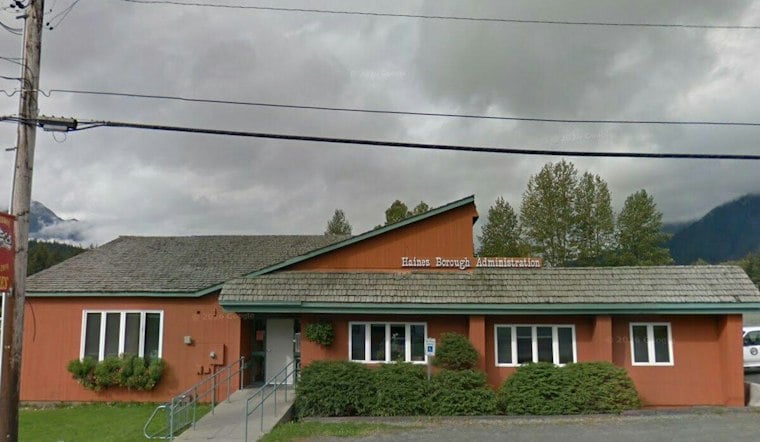
Federal officials are expected to lift development restrictions on roughly 205,000 acres near Haines in the coming weeks, a move tied to a much larger plan to open 28 million acres across Alaska to new development and land ownership. The change would strip away decades-old land-use protections covering about 14% of the Haines Borough, according to the Juneau Independent.
The anticipated action is part of a broader Trump administration push to spur resource development across the state, as reported by the Chilkat Valley News. The protections at stake, known as D-1 withdrawals, trace back to the 1971 Alaska Native Claims Settlement Act and have long withheld certain land parcels from resource development and transfer out of federal ownership, according to the Juneau Independent. In Southeast Alaska, the D-1 lands affected are concentrated in the Upper Lynn Canal and Yakutat areas, per the same report.
A Policy With a Long, Tangled History
This isn't the first time Washington has tried to unwind these protections. The Department of the Interior reportedly prepared a nearly identical withdrawal-removal policy during the final week of the first Trump administration, only to have the incoming Biden administration reverse that unfinalized decision, the Juneau Independent reports. In early 2025, Donald Trump issued an executive order titled Unleashing Alaska's Extraordinary Resource Potential, directing the Interior Secretary to revoke withdrawals across the same 28 million acres, according to the outlet.
That acreage figure has been a moving target for years. The Northern Alaska Environmental Center notes that about 28 million acres remained protected after earlier withdrawals were revoked in 2018 and 2019. Interior issued five Public Land Orders in January 2021 that would have revoked the remaining withdrawals across five planning areas, but reversed course in 2024 with Public Land Order 7947, which rescinded those earlier revocation orders and kept existing protections in place, per the Northern Alaska Environmental Center. A June 2024 announcement from the U.S. Department of the Interior said a final Environmental Impact Statement had analyzed revoking those same withdrawals across 28 million acres of BLM-managed land statewide.
Consultation Questions and a Fast Timeline
The Bureau of Land Management cited the Biden-era public process — which drew roughly 15,000 public comments and included sessions in affected communities statewide, including Haines — in a May email to tribal entities, according to the Juneau Independent. But Kimberley Strong told the outlet the consultations feel like box-checking, and said BLM had not answered questions about timing, implementation, and justification for the policy. Strong also said the administration appeared to be fast-tracking the rollback ahead of a new Congress and governor, per the same report.
That frustration echoed in a resolution passed last month by the Alaska Federation of Natives, which said BLM intended to remove the D-1 withdrawals before the end of the year, the Juneau Independent reports. The resolution demanded limits on which withdrawals get lifted and on the impacts to subsistence uses, and called for land transfers owed to Alaska Native corporations and Native allotments to take priority over, or at least equal, state transfers. Not every Alaska Native organization opposes the move, though — Doyon Ltd. has advocated for lifting the D-1 withdrawals, while its representatives separately proposed in 2024 comments that any changes be evaluated region by region rather than through one statewide action, according to the outlet.
Subsistence Stakes in the Chilkat Valley
Federal lands generally prioritize rural subsistence users over other groups, while Alaska state government makes no distinction between rural and nonrural subsistence users — a gap that matters because lifting the D-1 withdrawals could facilitate a shift of land from federal subsistence management to state management, according to the outlet. Lands currently top-filed by the state would become state-selected almost immediately once the withdrawals are lifted, and in the process would lose federal subsistence priority, the report notes.
Land conveyed to the state would lose that federal subsistence priority. Federal lands also provide tribes more formal government-to-government consultation opportunities than state lands do, the outlet reports — even though state-selected lands are governed by state fish and game regulations even before the state formally takes ownership.
What Could Follow on the Ground
BLM concluded in 2024 that removing the Chilkat Valley withdrawals would make expansion of the Palmer mineral project and new timber sales in the Haines State Forest reasonably foreseeable outcomes, according to the Juneau Independent. Anthony Crupi told the outlet that increased heli-skiing activity or mineral development could affect brown bears in the Haines area. A photo accompanying the Chilkat Valley News report shows Haines State Forest land along the western bank of Lynn Canal, captured July 14, 2025.
The Alaska Department of Natural Resources did not respond to questions about the status of Chilkat Valley land, the Juneau Independent reports. A spokesperson for Jonathan Kreiss-Tomkins said questions about D-1 lands and state selections should be addressed after the election, according to the outlet. Alaska Department of Natural Resources land-status maps reportedly indicate that nearly all local D-1 lands are already selected by the state.
A Larger Pattern Across Alaska
The Haines-area action fits a pattern seen elsewhere in the state. In February, the Trump administration announced it would revoke decades-old protections covering 2.1 million acres along a Dalton Highway corridor in Interior Alaska, managed by the Bureau of Land Management, according to the Alaska Beacon. That action would revoke Public Land Orders 5150 and 5180 through a new order, Public Land Order 7966, and the administration said it would allow Alaska to make land selections in the corridor and potentially open it to development, the Beacon reported. The Tanana Chiefs Conference said at the time that the move puts the region's lands, animals, waters, and subsistence resources at real risk.
The Bureau of Land Management told the Ahtna region that the state would begin relinquishing some of its land selections, and state government has announced plans to relinquish portions of those selections, including a fresh 5 million acres this week, per the outlet. Many Ahtna region D-1 lands are among those the state lists as high priority for acquisition, the report notes. Kathryn Martin said Ahtna hunters would have to compete with urban residents on their own hunting lands if the changes proceed, and said Ahtna does not believe BLM is taking tribal consultation input seriously. Martin has spoken in favor of evaluating the D-1 withdrawals region by region rather than through a single statewide change.
The legal basis for the underlying environmental review traces back to a notice published in the Federal Register, which said the draft ANCSA 17(d)(1) Withdrawals Environmental Impact Statement was issued in compliance with the National Environmental Policy Act of 1969 and the Federal Land Policy and Management Act of 1976, both as amended.



