

























































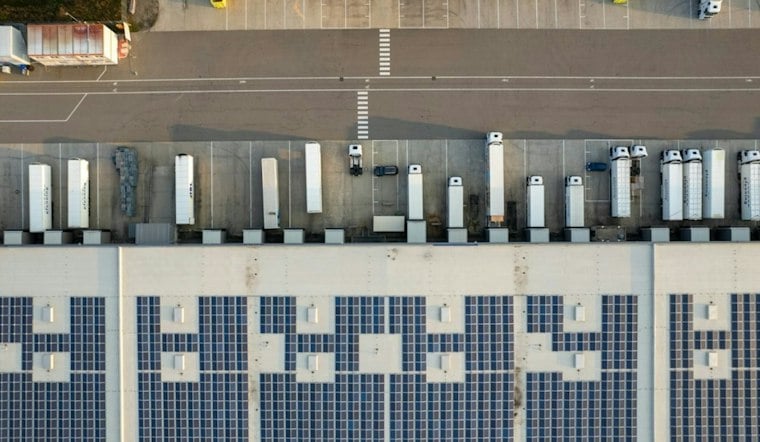
Warehouse owners in Fife could soon be paying a new tax tied directly to square footage, with the money earmarked for the city's streets and transportation projects. The Fife City Council approved a three-tier version of the tax unanimously, moving the proposal a step closer to becoming law even as business groups push for more time to adjust.
According to The News Tribune, the tax is based on warehouse square footage, with a 4,000-square-foot minimum exempting the smallest spaces, and nonprofit corporations using otherwise taxable warehouse space would also be exempt. The council's unanimous vote builds on an earlier version of the measure, which passed unanimously on first reading on Nov. 10, as reported by Yahoo News. That earlier version set quarterly rates of $0.15 per square foot for the first 25,000 square feet, $0.12 per square foot for the next tier up to 100,000 square feet, and $0.05 per square foot beyond that, per an earlier report from the same outlet. Separate reporting on the more recent council action describes a somewhat different structure — 12 cents per square foot for the first 25,000 square feet, 10 cents for the next tier up to 100,000 square feet, and 5 cents above that — and it is not clear from available reporting whether that reflects a revision to the earlier rate schedule.
Where the Money Would Go
Under the plan described in the newer council action, tax proceeds would first cover the costs of administering the tax, followed by a one-time payment of $600,000 to the transportation benefit district fund, before payments to the city street fund sufficient to eliminate the general fund subsidy; any surplus revenue would be restricted to transportation projects on the city's six-year transportation improvement program. Capital facilities would not be an eligible use of the revenue.
The plan directs revenue toward transportation needs. Fife officials have framed the overall goal as tightening the connection between warehouse activity and the city's infrastructure costs. “This tax is designed to create a closer link between infrastructure demand and funding,” the city said, per Yahoo News.
Timeline, Revenue Estimates and a Possible Delay
The tax is set to begin Oct. 1, 2027, with fourth-quarter returns due on or before Jan. 1, 2028. But Yahoo News reported that the official start date could still be pushed into 2028, following council discussion. Fife's council discussed the measure for nearly two hours on Nov. 24 and has also considered adopting it at its Jan. 12 meeting with further revisions or discussion.
Under an earlier version of the model, the city estimated annual revenue ranging from $2.6 million at a 10-cent quarterly rate to $3.9 million at a 15-cent rate, a projection tied to more than 100 businesses with at least 10,000 square feet, according to Yahoo News. The tax ordinance as described would allow prorating the tax for space that sits vacant during part of a billing period, and it would also allow for a potential referendum petition seeking an ordinance-repeal ballot measure.
Why Fife Says It Needs the Money
City officials have tied the push to the state's broader shift away from origin-based sales tax, which Washington changed to a destination-based system in July 2008. That shift prompted the state to create a mitigation account meant to reimburse warehouse-heavy areas like Fife for lost revenue, but the Washington State Department of Revenue says the last such mitigation payments to local governments will be made on June 30, 2026. Fife's own sales-tax mitigation payments ended earlier this year. The warehouse tax is intended to help bolster city finances in the wake of those changes.
Fife isn't alone in turning to this kind of levy. The News Tribune reported that as of January 2025, Auburn, Bellevue, Des Moines, DuPont, Kent and North Bend all had square-footage taxes in addition to gross-receipts taxes. Auburn's own city page describes its tax at 10 cents per square foot per quarter, or 40 cents annually. Fife City Manager Derek Matheson said neighboring Sumner does not currently have a square-footage tax, though the same report notes city officials there are watching Fife closely.
Businesses Push Back on Timing and Measurement
Not everyone in Fife's business community is sold on the approach. Tom Muñoz, senior vice president of global sales and marketing at Regal Logistics in Fife, said square footage does not necessarily correspond to truck traffic. He pointed to companies including Gensco, Murrey's Disposal and FedEx, which he said have 60 to 70 vehicles entering and leaving their buildings — a contrast, he argued, with Regal Logistics' own combined million square feet, much of which is used for storage and isn't always at capacity.
Port and shipping interests have also weighed in. The Northwest Seaport Alliance and Port of Tacoma sent a letter, signed by NWSA CEO John Wolfe and Port of Tacoma executive director Eric Johnson, calling for a delay in implementation and more outreach and information for affected businesses, Yahoo News reported. Fife council members have said the tax is meant to address broader infrastructure and business-space costs, not just road impacts tied to truck trips.
Council member Pat Hulcey urged Fife businesses to stay engaged with the council as the process continues, saying the council's work on the tax is not finished. The city has also said it will audit compiled warehouse-space information going forward, though the frequency and details of that process have yet to be determined.




