

























































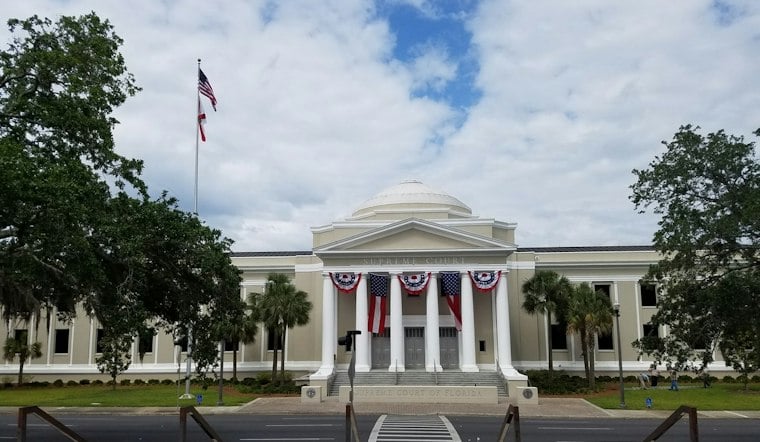
Florida's Supreme Court has reinstated Deangelo Robinson's attempted murder and firearm convictions, overturning a quarter-century-old precedent that allowed defendants to seek discharge when prosecutors missed a filing deadline. The ruling caps a case that stretched back to a 2015 arrest at a Suwannee County music festival and ends with Robinson facing a 20-year prison sentence for attempted murder, plus a concurrent 15-year term for possession of a firearm by a convicted felon.
According to the Tampa Free Press, the Jacksonville Sheriff's Office had obtained an arrest warrant for Robinson on attempted murder and firearm charges back in April 2015. Months later, on November 2, 2015, Florida Department of Law Enforcement agents and local deputies tracked Robinson down at a music festival in Suwannee County, where officers found a gun, illegal mushrooms and other drugs in his pocket and vehicle. He was booked into the Suwannee County Jail on local drug and gun charges, and Duval County placed a hold on him tied to the outstanding Jacksonville warrant.
A Nearly Two-Year Gap Before Formal Charges
Robinson was transported to Jacksonville on April 28, 2017, one day before Duval County prosecutors formally filed the attempted murder and firearm charges against him, per the same Tampa Free Press account. That meant prosecutors had delayed filing the Jacksonville charges for nearly two years after the warrant was issued — and Robinson was still serving a 20.4-month prison sentence stemming from the festival arrest.
Robinson's defense team argued that his 175-day felony speedy-trial clock began the moment he was handcuffed at the music festival, not when formal charges were later filed. A trial judge rejected that speedy-trial argument, and Robinson went on to enter a best-interest plea while reserving his right to appeal.
Appeals Court Sided With Robinson, Supreme Court Reversed Course
The Fifth District Court of Appeal agreed in 2024 that a 2001 precedent, State of Florida v. Freddie Lee Williams, required Robinson's convictions to be tossed, but that same appellate panel also urged the Florida Supreme Court to reconsider the old speedy-trial standard altogether. The Supreme Court did exactly that: it quashed the Fifth District's 2024 ruling and rejected the automatic-dismissal precedent Williams had established back in 2001.
Justice Renatha Francis, writing for the majority, said Williams had recognized a right to discharge based solely on a failure to meet procedural charge-filing deadlines — a standard the court has now abandoned. The justices ruled that prosecutors do not automatically lose a criminal case simply because they miss the initial deadline to file formal charges, finding that the state had not lost its chance to prosecute Robinson. Chief Justice John Couriel and Justices Carlos Muñiz, Jamie Grosshans, Meredith Barrios and Adam Tanenbaum all joined Francis' opinion.
Justice Jorge Labarga concurred in the result, making the court unanimous on the outcome, agreeing that Robinson had failed to follow the required steps to have his case dismissed. Under the prior rules in effect at the time, a defendant whose 175-day speedy-trial window expired was required to file a specific court notice that would trigger a hearing and a 10-day period for prosecutors to start trial — and Robinson never filed that notice.
2025 Rule Overhaul Extends Beyond Robinson's Case
The court's decision leans on a broader overhaul it made to Florida's speedy-trial framework in 2025, and the justices extended that 2025 interpretation of the rule to older cases still governed by the prior version. As The Florida Bar reported, the rewritten Florida Rule of Criminal Procedure 3.191 now starts the speedy-trial period from the date formal charges are filed rather than the date of arrest.
That 2025 overhaul also made the prosecutor's grace period mandatory in future cases and extended the so-called recapture period from 10 days to 30 days, according to the Bar's reporting. The amendments further allow prosecutors to refile most dismissed charges, since dismissals under the rule are now without prejudice unless a defendant's constitutional speedy-trial right was violated. A related change amended Rule 3.134 to require the state to file formal charges against defendants on pretrial release within 60 days.
Justice Labarga opposed the 2025 rule overhaul, saying the changes further relax Florida's speedy-trial rule even as he agreed with the outcome in Robinson's specific case. The Supreme Court's decision becomes final once the window for filing a rehearing request expires, closing out a case that began with a warrant issued more than a decade ago in Jacksonville.





