

























































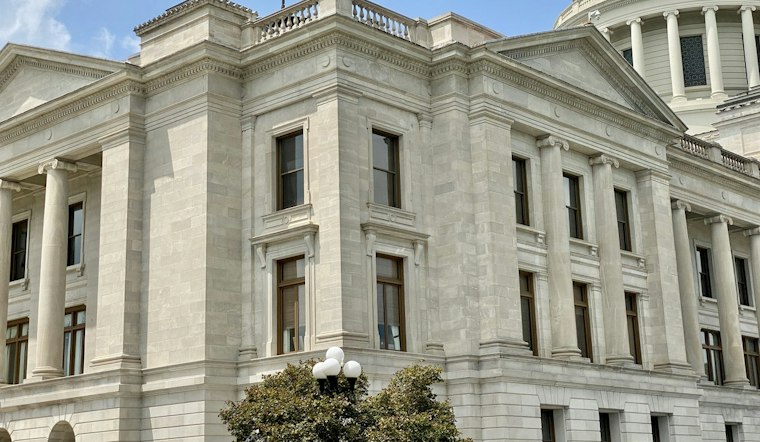
Conway resident Floyd Brantley, 101, is the November subject of Gov. Sarah Huckabee Sanders’ Faces of Arkansas series. The Mountain Home Observer reports that Brantley is the series’ 11th subject and that his portrait will be displayed at the entrance to the governor’s office at the Capitol.
The governor’s office describes Faces of Arkansas as a monthly series featuring portraits and stories of Arkansans, with honorees chosen for contributions such as helping sustain their communities or overcoming obstacles. A March 2, 2026, office announcement called that month’s profile the series’ fourth installment. That record confirms earlier profiles existed but does not name them or explain how the count relates to Brantley’s November recognition.
Service beyond the portrait
Brantley’s military service spanned several conflicts. The Mountain Home Observer reports that he served as a Navy medical corpsman in World War II, later served in Korea as an Air Force transportation officer, and was also a Vietnam veteran. He retired from military service in 1982 after 22 years.
His service also continued in civilian life. The Observer reports that, in retirement, he volunteered with the American Red Cross and helped build wheelchair ramps and porches for families. Those community efforts provide a local dimension to the public recognition, alongside his military record.
What the wider records can—and cannot—show
The Arkansas Department of Veterans Affairs lists 196,713 veterans living in the state, but that total does not identify how many served in World War II. The U.S. Department of Veterans Affairs describes VetPop2023 as a model projecting veteran populations from fiscal year 2023 through 2053, not a direct count of living veterans. The available figures therefore do not establish how many World War II veterans remain in Arkansas or how that number has changed.
The University of Central Arkansas Archives preserves interviews with Arkansans who served in World War II, offering a separate record of veterans’ experiences. The collection does not establish how representative any one account is. Brantley’s Capitol portrait, by contrast, is a public recognition of one Arkansan’s documented military and community service.




