

























































A lithium-ion battery fire before dawn on Aug. 15 destroyed 433 batteries inside a PopWheels shipping container in Fort Greene and caused roughly $500,000 in damage. No one was injured.
The harder question showed up with the investigation. On Saturday, the New York Post reported that FDNY investigators found PopWheels had violated its safety agreement with the city by charging and storing battery packs in unapproved cabinets. The department could not determine whether that violation caused the fire.
What Burned on Carlton Avenue
News 12 Brooklyn reported a 911 call at 4 a.m. for a lithium-ion battery fire inside an unattached shipping container behind the facility at 1 Carlton Ave. The Post described the site as a PopWheels storage unit near Flushing and Carlton avenues, with hundreds of batteries in the container.
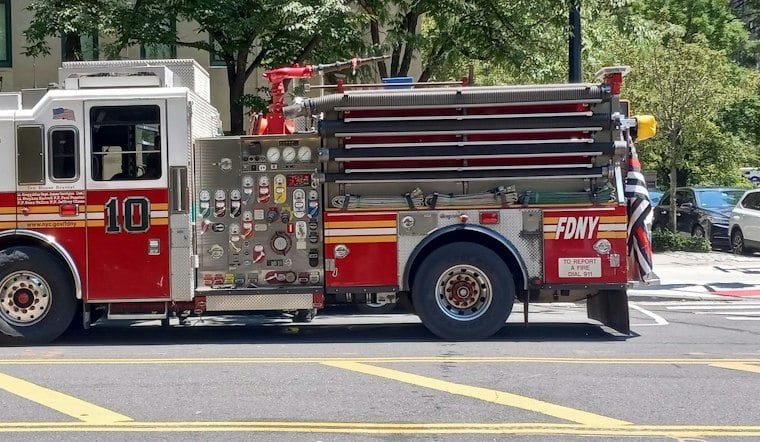
FDNY called it an all-hands fire and said the response fit the severity and the hazard from damaged lithium-ion batteries. News 12 reported that no injuries were reported.
Co-founders David Hammer and Baruch Herzfeld told the Post there was no charging or discharging inside the container when the fire began. A dead charger is not automatically a safe battery. City figures cited by Streetsblog found that 59 percent of lithium-ion battery fires in 2023 started when the batteries were not charging.
A City Partner, Then a Cabinet Finding
PopWheels was already inside the city's fix for this problem. It partnered with City Hall on a publicly funded e-bike charging and battery-swapping program. In 2024, the Post reported, the FDNY and the Department of Transportation authorized PopWheels and two other companies to run certified outdoor swapping kiosks, which the city promoted as a way to curb deadly lithium-ion battery fires.
The early record looked clean. A report on the PopWheels pilot said no fires were reported at its charging stations, or involving its batteries, from February 2024 through February 2025. Patch reported that officials described a Hudson Square hub as the first of its kind in the United States.
The wider 2024 city pilot, as The Guardian reported, logged more than 12,000 swaps by delivery workers over six months. Among participants, home charging fell 35 percent. That was the point of moving the packs out of apartments. Fort Greene was a storage container behind a facility, not a certified sidewalk kiosk.
Whizz Packs, Summonses and Zanzibar
The FDNY agreement, the Post reported, authorizes PopWheels to service Arrow e-bike battery packs only. Video obtained by the paper showed Whizz packs being charged at outdoor kiosks across the city. On Aug. 31, PopWheels was shown serving Whizz batteries at an unauthorized public kiosk at 286 Hudson St. The company contends Whizz batteries are compatible with its charging cabinets.
In October, PopWheels received numerous FDNY summonses at its outdoor charging kiosk sites. Hammer and Herzfeld characterized the citations as ticky-tack violations involving littering, rodent droppings and outdated fire-extinguisher tags. They said they were correcting the citations that applied and contesting those that did not. They also described the safety record as impeccable and pointed to more than 500,000 UL-certified battery swaps without an in-service incident.
An investor memo gave the August fire a name: Zanzibar. The company told investors nobody was hurt and its relationship with the FDNY was good. It also said losing more than 400 batteries effectively froze its growth, and that hazardous-materials cleanup cost $150,000 not covered by insurance. The cabinet finding and the memo's tone are both in the Post's account. They do not read like the same document.
A Hearing While the Toll Climbs
The container fire landed in a year when the citywide count was already rising, though the published tallies depend on the date and the category. By July 22, amNewYork reported, the FDNY had investigated 235 lithium-ion battery fires, compared with 138 at the same point in 2025, an increase of more than 70 percent. The New York Daily News, citing FDNY data, put the 2026 total at 401 as of the week before its Nov. 6 story. The Guardian, writing Saturday, counted more than 400 fires, 83 injuries and 12 deaths.
In 2025, FDNY figures reported by The Guardian showed 292 fires, 51 injuries and one death. Fatalities tied to the batteries had fallen from 18 in 2023 to six in 2024 and one in 2025, amNewYork reported. Outdoors, a separate FDNY count cited by FireRescue1 listed 137 non-structural battery-related fires in 2026, against 48 at the same point in 2025.
The Post reported that lithium-ion battery fires killed 10 people in two fires in the South Bronx and Sunset Park earlier this month. Phil Wong, a Queens Democrat who is leading opposition to a proposed NineDot Energy lithium-ion storage site near a Middle Village school, said companies' profits continue to come before public safety while New Yorkers die in fires. Robert Holden, a former Queens councilman and a critic of the city's green-energy initiatives, said PopWheels allegedly endangered New Yorkers with battery-related misrepresentations.
The Council has an emergency hearing set for Nov. 20 to seek answers from city agencies, fire-safety experts and stakeholders. By then the Fort Greene loss will be three months old, the unapproved-cabinet finding will already be public, and this year's battery-fire deaths, on The Guardian's Saturday count, will already stand at 12.



