

























































Fort Myers City Council is set to vote on ending two procurement programs that give minority-owned firms and local businesses a preference in city purchasing. The votes are planned separately, one on the Minority Business Enterprise Program and one on the Local Vendor Preference Program.
The move is framed as compliance with state rules that ban diversity, equity and inclusion programs, not as a fresh fight over whether local firms should get city work. Gulfshore Business reported the planned votes on Nov. 17. The council already put the same repeal on a public agenda once, then stepped back.
What the Preferences Actually Do
Fort Myers created the Minority Business Enterprise Program in 2019. A qualifying vendor has to be more than 50% minority-owned and managed. The city set a goal of directing 15% of spending on goods and services to those businesses.
The preference is a price window, not a set-aside. Under the reported rules, an MBE proposal could qualify if it came within 6% of bids for services over $25,000, or within 7% for services from $3,000 to $25,000. The Local Vendor Preference Program is the companion track for local businesses.
Recent activity is modest next to that 15% spending goal. Gulfshore Business reported nine active contracts that included MBEs, and 46 responses to solicitations involving MBE participation, over the prior 12 months.
One Gulfshore report said 15 contractors received Local Vendor Preference Program benefits in that same period. A later Gulfshore report said 15 contractors received benefits through the city's local vendor program.
A June Repeal That Did Not Happen
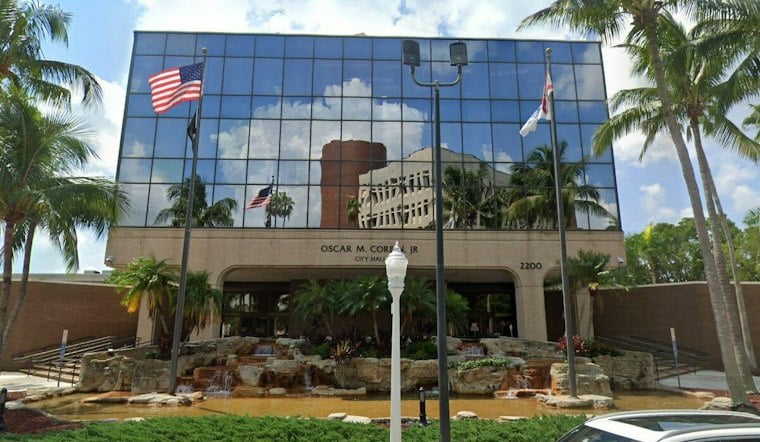
The council had already scheduled a public hearing on repealing both programs for 5:15 p.m. on June 15 at City Hall, which houses the council chambers. Members took public comment that day. They did not take the repeal votes.
They tabled the hearing after then-Mayor Kevin Anderson suggested waiting while the city looked at replacement programs. A June 18 News-Press report said the council kept the minority business law in place for the time being. That account covers June. It does not describe what happened to the programs between then and this month's planned votes.
Amber P. Ware, sworn in on Nov. 16 as the city's 63rd mayor, had argued on June 15 that a decision of this size should rest on data. She also said Fort Myers should adopt a race-neutral small business enterprise program that prioritizes businesses inside city limits. Council members questioned whether the state mandate intruded on local governments' home rule authority. The council considered replacements that would still boost local businesses while fitting state and federal rules. No replacement text, motion or vote count is in the reporting.
Staff's Compliance Argument
City staff recommended ending the programs. Their stated reason was a conflict with state and federal rules already in place or about to take effect. Staff also said repeal would keep Fort Myers compliant with federal and state grant requirements, which is the practical stake: preference rules that jeopardize outside money are a different problem from a policy debate inside City Hall.
Federal executive orders, as described in the local reporting, directed agencies to end what those orders called illegal DEI mandates and to revoke affirmative action policies. That federal pressure sits beside the Florida statute the city is citing.
The January State Deadline
A Florida Senate bill analysis says Senate Bill 1134 takes effect Jan. 1, 2027. As described in the local reporting, the bill treats DEI programs as discriminatory and bars local governments from participating in them or using public funds for them. The analysis supports that effective date. It is not a full reading of every program the enacted text might reach.
Other cities are already testing how wide the law runs. The South Florida Sun Sentinel reported Nov. 13 that officials and community leaders were weighing unintended effects on festivals and cultural programs. In Delray Beach, officials first said the city would not host the next Pride event or the St. Patrick's Day Parade, then said the parade would proceed with outside, private funding.
Fort Myers is dealing with procurement preferences, not a parade. The same question still applies: what counts as a banned program, and what a city can still do for local firms once race-based preferences are off the table.
Two Votes, No Result Yet
The votes scheduled for Dec. 7 are two votes, not one package. Ending the MBE program and ending the local vendor preference are scheduled separately. That split matters if council members want to drop the minority-ownership preference and keep some form of local preference, or the reverse.
Whatever they decide, the reporting does not include a result, a vote count or the text of a replacement. The last firm pause was June, when Anderson's suggestion bought time to look for a compliant alternative, and Ware's June comments pointed at data and a race-neutral program aimed at businesses inside the city. The state date on the Senate analysis is Jan. 1.





