

























































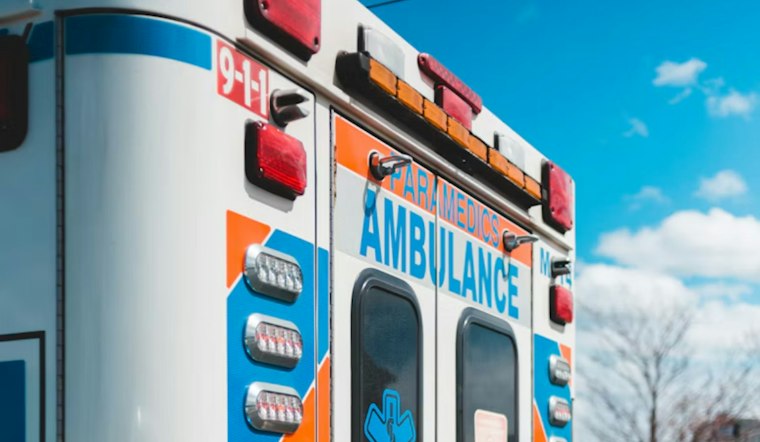
Matt Ward felt tightness in his chest and feared he might be having a heart attack. He had never experienced one before, so he wasn't sure what he was feeling. But instead of calling 911, Ward got in his car and drove himself to the emergency room.
Ward said he hesitated to call an ambulance because of cost concerns, according to Gulf Coast News and Weather. He said he decided quickly, weighing the benefit of faster treatment against what the ride might cost him. In his words, it was the cost — and not knowing the cost — that shaped his decision to drive himself rather than wait for paramedics.
Ward's choice reflects a broader pattern playing out around Fort Myers, where ambulance costs are causing some residents to reconsider calling for emergency medical transport, per the same report. Dr. Sue Hook, who is affiliated with Samaritan Health and Wellness Center, said patients commonly tell her they cannot afford an ambulance. Her estimate, as cited in the report, is that roughly eight out of 10 patients she sees express that same concern.
Why the Bills Add Up So Fast
Ambulance rides are expensive even for people who have insurance, the outlet reported, and those without coverage or with high deductibles may receive a bill as high as $10,000. Thomas Felke, a professor of social work at Florida Gulf Coast University, estimated that an ambulance ride in the region typically runs $900 to $1,000, a cost that includes a base fee plus mileage charges of roughly $10 to $12 per mile.
Those regional estimates sit well above Florida's standard ground ambulance fee schedule. The state's 2025 emergency fee schedule lists a standard charge of $213.37 for Advanced Life Support transport and $152.73 for Basic Life Support, according to the Florida Agency for Health Care Administration. Higher-level transport, such as ALS2 or Specialty Care Transport, is listed at $280.74 and $331.28, respectively, per that same fee schedule. Those figures represent standard schedule rates rather than what any one patient was actually billed.
Insurance Costs Are Climbing Too
Felke pointed to broader financial pressure on households already stretched by housing, health care, child care and transportation costs. He noted that Affordable Care Act premiums rose roughly 58% after the loss of federal tax subsidies at the end of 2025, and he expects another 15% increase this year. For people in lower socioeconomic brackets who rely on the ACA, Felke said he expects little change in their circumstances despite those shifts.
National data lends some context to those premium pressures. The nonpartisan health policy research organization KFF reported that average monthly ACA Marketplace premium payments climbed 58%, from $113 to $178, in 2026, while average deductibles rose 37%, or $1,027 per person, to a record $3,786. KFF also estimated that average monthly effectuated Marketplace enrollment could fall to about 17.5 million people in 2026, down from 22.3 million in 2025.
Felke said greater access to health care could help bring down costs like ambulance charges. He did not elaborate on what specific policy changes might achieve that, according to the original report.
When to Call 911 Anyway
Medical guidance still emphasizes calling for help in a true emergency. WebMD advises calling 911 if someone is choking, unresponsive, bleeding heavily, or may be having a heart attack or stroke. The site also notes that ambulance rides may cost thousands of dollars, though insurance might cover some or all of the bill, and that if someone having a possible heart attack is closer to an emergency room, calling an ambulance or driving them there directly are both options.
In Lee County, where Fort Myers is located, emergency ambulance service is handled by Lee County EMS, which delivers advanced life support care and transport to residents and visitors across the county, according to Lee County government. Paramedics and EMTs respond around the clock using ground ambulances and the LeeFlight air medical program, and calls requiring ambulance service in Cape Coral, unincorporated Lee County, Fort Myers Beach, Estero and Bonita Springs are routed to Lee Control calltakers for dispatch.
For now, stories like Ward's illustrate the calculation some Gulf Coast residents say they're making in real time: weighing the urgency of a medical scare against the price tag of getting help fast.





