

























































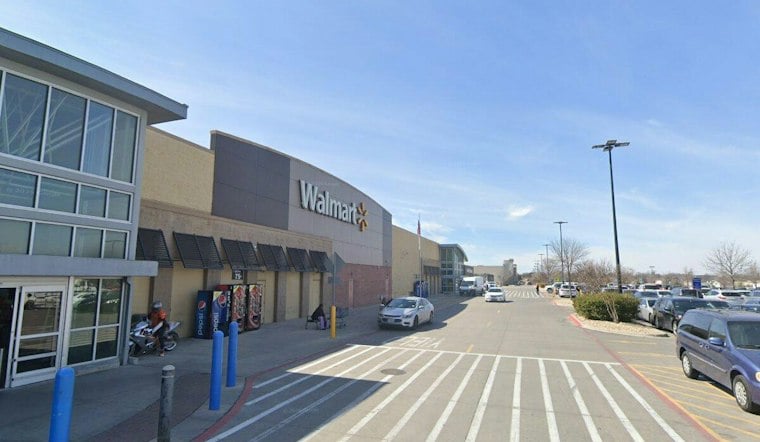
Trinity Metro has approved changes to its on-demand microtransit service that will shrink several service zones across Fort Worth starting in January 2027, and riders who depend on the vans say the cuts will upend their daily routines. Among the changes, the Walmart Neighborhood Market at 717 W. Berry St. will be removed from the Southside zone, while the South Tarrant zone is being cut in half.
Paul David Williams, a 70-year-old south Fort Worth resident living on fixed Social Security income, is one of the riders who will feel it directly. Once the changes take effect, he will need to walk two blocks with his groceries from the Berry Street Walmart to reach the new pickup point, according to a report by the Fort Worth Report. The new Southside plan instead includes the Walmart at 2900 Renaissance Square, which sits about four miles from Williams' home. Williams told the outlet he cannot afford Uber or Lyft as an alternative.
Robert Liggett, another rider, said the changes will affect him greatly. He currently uses on-demand service for $2 per ride but will need to walk up to a mile to reach a pickup point under the new boundaries, per the Fort Worth Report's reporting. Liggett said van recalls and driver shortages had already caused longer wait times that pushed him toward Uber, and he said the rideshare costs left him broke, with only pennies remaining by the end of the month. He has requested that his zone be amended to include his home.
Why Trinity Metro Says It's Narrowing the Zones
Tara Crawford, Trinity Metro's vice president of planning, said the zone consolidation aligns service with demand, improves vehicle productivity and reduces overlap, the agency's reporting shows. On-demand rides cost about $28 per ride on average to operate, and Trinity Metro spent $8.9 million on the service in fiscal year 2025 before budgeting $8.6 million for fiscal year 2026 — a cut of nearly $1 million. The on-demand program affects the Alliance, Northside, Mercantile, Southside, Southeast and South Tarrant zones, and the TCC Northeast microzone will remain unaffected.
Southside on-demand funding has been sliding for several budget cycles: $3.1 million in fiscal year 2024, reduced to $2.3 million in fiscal year 2025, budgeted at $2.2 million for fiscal year 2026, and set at about $1.46 million for fiscal year 2027. A Trinity Metro budget summary published in September 2026 shows Southside on-demand spending actually totaled $1.42 million in fiscal year 2026. Jeff Davis, chair of the Trinity Metro board of directors, said on-demand is popular but can only move a limited number of people per hour — the Southside on-demand service averaged 2.7 riders per hour, compared with 7.1 riders per hour on the Southside bus route.
Board Members Push Back on Specific Cuts
Davis said maintaining on-demand at its current level would force cuts to bus routes instead, and that the bus remains the most efficient way to travel. Trinity Metro is aiming to serve more people per hour through shorter rides in more condensed areas and is encouraging bus use wherever current routes can complete a trip. Under the changes, Texas Motor Speedway will lose on-demand service entirely and will have no bus route serving it either.
Not every board member is on board with every detail. Michael Crain, a Fort Worth City Council member who sits on the Trinity Metro board, questioned cuts to the Southeast zone north of Martin Luther King Jr. Freeway to Lake Arlington, an area Trinity Metro says had low demand for on-demand service. Chris Nettles, another council member on the board, questioned the removal of an adult high school near Tarrant County College's Southeast campus from the Southeast zone. Crawford said staff would examine that issue.
Ben Robertson, a Trinity Metro board member, called the decision to cut on-demand service difficult, saying the agency is trying to balance responsible use of funds with impactful service. Davis said resources are being directed toward where customers ride most often in order to improve both the rider experience and overall transit efficiency, while stressing that on-demand will remain an essential part of Trinity Metro's mobility offerings. Rich Andreski, Trinity Metro's president and CEO, said on-demand could eventually be expanded into a door-to-door citywide model. On-demand vans currently drop riders at the closest intersection to their destination rather than at the door. Trinity Metro will also review proposed fare changes in spring 2027.
Riders Say the Numbers Don't Tell the Whole Story
Some transit users have pushed back on the idea that low ridership numbers alone should drive which zones get cut, arguing that service problems depressed the figures used to justify the changes. Riders questioned whether ridership data may be skewed by van shortages, technical and personnel issues, booking problems and long waits, according to the Fort Worth Report's account. More broadly, riders have questioned cuts to on-demand zones that would force them to either walk farther to catch a bus or pay for private transportation they can't easily afford.
Frustration with the on-demand system isn't new. In a Reddit thread about the service, one commenter wrote that “sometimes the 15-minute drive takes half an hour,” while another said they regularly see on-demand vans in their neighborhood despite living outside any listed service zone. A third commenter noted that disabled riders who are unable to use a fixed bus route rely on the on-demand system precisely because it can be summoned from a much larger area than regular bus service covers.
Similar concerns surfaced in an earlier Reddit discussion about Trinity Metro cutting its low-performing Dash route, where one rider said, “I need something that goes to a grocery store without having to transfer,” and another flagged the elimination of the monthly pass as a blow to budgeting predictable transportation costs. A separate commenter in that thread argued the Dash route's elimination made sense because “the vast majority of its route is already serviced by the Molly and the 2.” Trinity Metro's Southside ZIPZONE service area and hours were previously expanded back in March 2021, according to a Trinity Metro Facebook announcement at the time, though that earlier expansion does not reflect the zone boundaries now being scaled back.
The on-demand overhaul comes weeks after Trinity Metro broke ground on the TEXRail Near Southside/Medical District extension on October 29, part of the agency's broader push to expand its rail and bus network even as it narrows its van-based microtransit footprint. Trinity Metro is a financial supporter of the Fort Worth Report, and Davis and Robertson both serve on the Report's business advisory council.





