

























































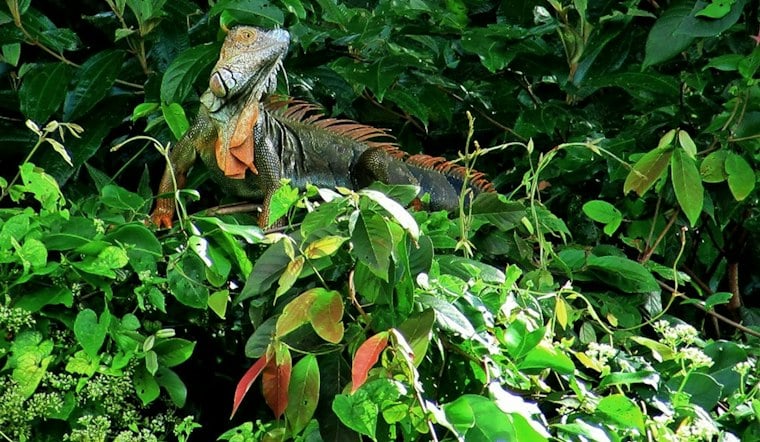
On Saturday, Nov. 14, 33 Jamaican rock iguanas went back into Jamaica's Hellshire Hills, and the batch carried a number Fort Worth conservationists have been counting toward for decades. The release brought the program's total to just over 1,000 animals returned to the wild.
The Fort Worth Zoo has contributed expertise and support since 1993, the Fort Worth Report reported, working with Jamaican and international partners. The aim is to recover one of the Caribbean's most endangered reptiles, a lizard that now survives only in the Hellshire Hills.
A Boat, Then a Hard Walk
Nearly 30 representatives from partner organizations took part. The Jamaica Defence Force Coast Guard provided transportation for the team and the iguanas.
WFAA reported that the crossing came through calm seas, then the group trekked more than two hours over rough terrain to the release site. The zoo and its conservationists described the day as the return of their 1,000th Jamaican rock iguana. The Report's accounting is the batch of 33 and a cumulative total just over 1,000 since the program began.
Written Off, Then Found Again
The species was thought extinct for nearly half a century before a small surviving population was rediscovered in the remote Hellshire Hills in 1990, the International Iguana Foundation notes. Fort Worth's partnership in the recovery effort began three years later.
Young iguanas still do not get an easy path home. Hatchlings are raised at the Headstart Facility at Hope Zoo in Kingston, then returned to the hills once they are better able to face introduced mongooses, cats and dogs. Habitat loss and degradation remain the other standing threat.
Headstarting has also gotten shorter. A 2021 account in Oryx said improved methods had cut time in captivity to 4.5 years, from a historical range of seven to 15. The 33 iguanas released on April 22, 2024, had spent three to four years at Hope Zoo. How long Saturday's animals were held is a separate question.
From 300 to Just Over 1,000
Dr. Stesha Pasachnik joined the Fort Worth Zoo and the program in 2016, when the tally still looked modest. "When I joined the Fort Worth Zoo and this program in 2016, we had just reached 300 iguanas reintroduced into the wild," she told Discover Wildlife.
The 500th individual went back in March 2021. On April 22, 2024, another release of 33 headstarted iguanas brought the total to 700. The International Iguana Foundation then described a goal of 800 released by the end of 2024 and 1,000 by 2026. Saturday is that 2026 mark, reached with the same batch size used for the 700th.
WFAA reported that over the last 10 years the zoo's conservation team improved field work and grew the headstart program. The milestone is that stretch of work, not a single Saturday.
What the Hills Get Back
The iguanas are more than a headcount. As they eat fruit and disperse seeds, they help forest regeneration in hills that support nearly 400 plant species and 18 animal species, seven of them found only there. WFAA put the same relationship in plainer terms: the lizards help the plants and animals that depend on the island ecosystem.
Researchers are also seeing the wild population add animals on its own. More females are nesting, more nest sites are being protected, and more hatchlings are emerging each year. They have observed natural recruitment, and iguanas dispersing over longer distances.
Predator control is the less photogenic half of that progress. Ahead of the release, the Jamaica Observer reported that the International Iguana Foundation was monitoring more than 280 live predator traps, and that more than 1,500 predators had been removed from the iguana's core habitat over time.
Still One Patch of Forest
The species still has exactly one wild address. Conservation teams continue working to strengthen the population there. The recovery program pairs habitat protection, population monitoring, predator management and headstarting, and Saturday did not turn that into a finished job.
A release total counts animals returned through the program, not every iguana still alive in the hills. What the day does confirm is narrower: another 33 headstarted iguanas are back in the only forest where the species still lives.



