

























































Four MedStar Health hospitals now offer contrast-enhanced mammography, an exam built to flag breast cancers that can hide on a standard image. The expansion covers the Washington-Baltimore region, where dense breast tissue already complicates a large share of screening.
MedStar Health announced the wider availability Thursday in a release carried by Newswise. The system says the exam may be used when a screening mammogram needs a closer look, and that it can be especially helpful for patients whose dense tissue makes findings harder to see.
Four Hospitals, One Exam
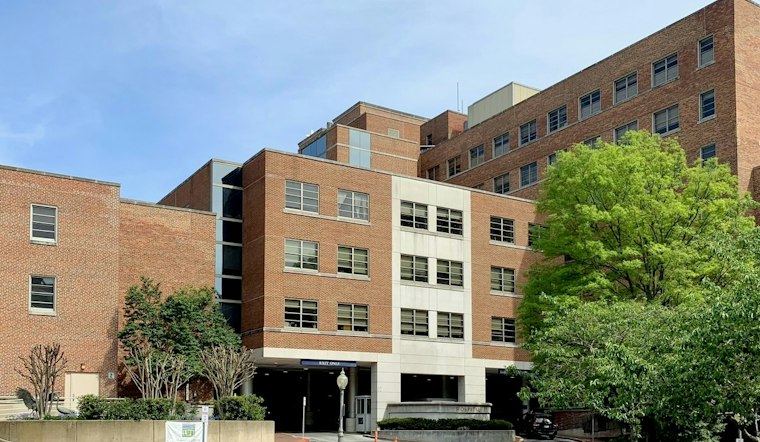
The sites now listed as offering it are MedStar Georgetown University Hospital, MedStar Washington Hospital Center, MedStar Union Memorial Hospital and MedStar Good Samaritan Hospital in Baltimore. Images with the announcement show a technologist preparing an exam and a workstation at Georgetown, and the mammography suite at Washington Hospital Center.
Union Memorial was first in the system. MedStar has said the hospital launched contrast-enhanced mammography in 2024, and that three women received it there in late September as part of diagnostic breast imaging workups.
Michelle Townsend Day framed the added sites as a way for more women to get advanced imaging in their communities, and to reach expert breast care closer to home. That is a scheduling claim as much as a technology one: the exam no longer has to mean a trip to a single hospital.
What the Contrast Does
The exam pairs a standard digital mammogram with an intravenous contrast agent. The contrast goes in through an IV before the pictures. MedStar says it then flows into the breast and helps mark areas of increased blood flow, which can highlight a concern that gray tissue might otherwise swallow.
Patients stand for the images, which are taken in a mammography suite rather than an MRI scanner. At Union Memorial, the imaging portion typically takes about eight to 10 minutes after the contrast is administered, according to the hospital's radiology page. MedStar says the exam may also be an alternative to breast MRI for some patients.
Brooke Wolvin called contrast-enhanced imaging another option when a standard mammogram cannot supply enough information. She said the technique can help identify cancers that might otherwise be difficult to see and move patients more quickly toward answers and next steps.
Why Density Changes the Picture
MedStar's announcement says about half of women age 40 and older have dense breast tissue. Density is a description of how the breast looks on a mammogram, not a diagnosis by itself. On the image, dense tissue and a tumor can both read as white, which is how a cancer gets lost in an otherwise routine screening.
That is the practical stake of the new sites. A mammogram that cannot settle the question often leads to more imaging, and MedStar says contrast-enhanced mammography is one tool clinicians may use for that next look. Patients interested in the exam are told to speak with their physician. People with dense breasts are advised to ask whether additional imaging is recommended. The system is not presenting the scan as the right choice for every patient.
More Cancers Found, More Callbacks
Research outside MedStar gives the tradeoff a shape, though not a MedStar-specific scorecard. A 2025 study of women with dense breasts and a normal screening mammogram, summarized by the American Academy of Family Physicians, found higher cancer detection and smaller tumor diameters with MRI and contrast-enhanced mammography than with automated whole-breast ultrasound. Those gains came with higher recall and biopsy rates.
A Lancet report on interim results from the BRAID trial put a related comparison more sharply: abbreviated MRI and contrast-enhanced mammography detected three times as many invasive cancers as automated breast ultrasound, and the cancers were half the size. The AAFP review also says CEM may be a less expensive option for large-scale screening programs, while noting a small risk of a contrast reaction.
Already on the Local Map
MedStar is not the first hospital in the area to add the exam. Northwest Hospital in Randallstown implemented contrast-enhanced mammography in May 2024, the Daily Record reported that October. Farther afield, University Hospitals has said it was the first medical center in Northeast Ohio to offer it, and MUSC Health offers it at its West Ashley Medical Pavilion for patients who need advanced imaging but cannot safely undergo breast MRI.
For patients along the Washington-Baltimore corridor, the nearer change is simpler. Four MedStar hospitals now have the exam on site. Whether it is the right next step still starts with a physician.





