

























































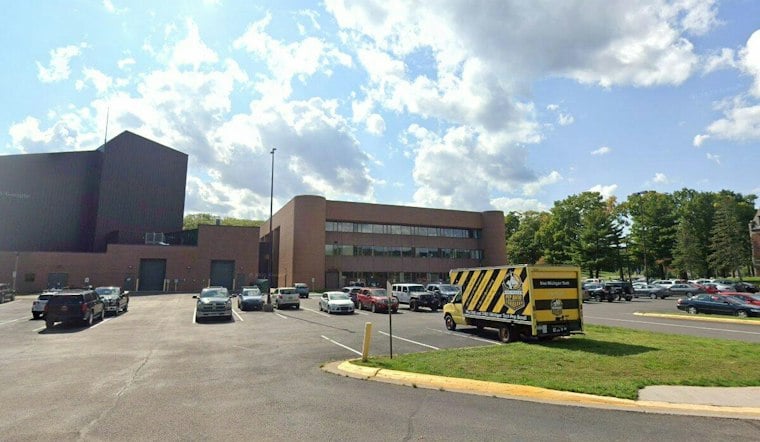
Four of Michigan's public universities want the same deal their local community colleges already get: free tuition for students chasing an associate degree. Northern Michigan University, Lake Superior State University, Michigan Technological University and Ferris State University are lobbying state lawmakers to be included in the Community College Guarantee, a scholarship that currently covers tuition and fees only at Michigan's community and Tribal colleges.
A Tuition Gap With Real Stakes for Students
The central policy question is which institutions may participate, not whether the four universities offer two-year credentials. As reported by CBS News Detroit, Northern Michigan University, Lake Superior State University, Michigan Technological University and Ferris State University say students pursuing associate degrees at their campuses cannot access a benefit available at community and Tribal colleges. All four universities have offered associate degrees and skills certificates for decades; Ferris State has done so since the early 1950s. They are the only four among Michigan's 15 public universities that offer associate degrees.
Ferris State University President Bill Pink, according to the same reporting, has described the four universities as being in “community college deserts,” where students lack nearby access to the guarantee. Pink co-chaired the higher education subcommittee of the Growing Michigan Together Council, convened by Gov. Gretchen Whitmer. In 2023, the council recommended two years of free college for all Michigan residents. Pink said its original proposal did not distinguish between two-year and four-year institutions and that he planned to prioritize expanding the scholarship program after the following week's elections.
Why Rural Communities Say the Fix Matters
The universities also frame the request as a regional workforce issue. Michigan Rep. Tom Kunse has not introduced legislation to expand the Community College Guarantee, but said expanding it makes sense for rural students. In Marquette, Northern Michigan University's home, local officials point to the need for younger workers in nursing, law enforcement, construction and plumbing as the population ages and more properties go to second-home buyers or people without school-age children. Zack Sedgwick said retaining current and future workforce talent in Marquette matters and that the university has a role in doing so.
Sarah Dixon said access to free associate-degree tuition at four-year institutions matters for rural students' career options and regional economies. Daniel Hurley described expanding state aid access to Michigan's public universities as a strategic move, particularly for Ferris, NMU, LSSU and Michigan Tech. Dave Murray said Ferris and the other associate-degree-granting universities are seeking equal access to quality education for local students. University officials say their proposal is not about declining enrollment at their own schools.
Who Qualifies—and What the Regional Outlook Shows
The program's institutional rules define the current boundary of the debate. Michigan Student Aid's 2025-26 packaging guidance lists Michigan community colleges and Tribal colleges as eligible institutions for the Community College Guarantee. The four universities are seeking to change that institutional eligibility boundary for students pursuing associate degrees. Employment projections provide regional context, but do not show whether an expanded scholarship would meet specific credential needs. The Michigan Center for Data and Analytics forecasts 2.4% employment growth from 2022 to 2032 in both the Upper Peninsula and Northwest Michigan, the strongest proportional growth projected among the state's regions.
The Money Question
The Community College Guarantee, launched in fall 2024, is a last-dollar scholarship: it covers remaining costs after federal aid and other scholarships are applied. It offers eligible in-district students free tuition and fees, and reduces costs for out-of-district students. In 2024-25, the program delivered nearly $46.6 million to 20,007 students, for an average award of $2,327. A separate Michigan Achievement Scholarship, first offered in 2023, provides up to $5,500 annually to students at four-year institutions. Together, the state's scholarships reached 153,924 students and totaled nearly $558.9 million in 2024-25.
The potential cost of extending the guarantee to associate-degree students at the four universities is a central uncertainty. State House Fiscal Agency reports cited in the reporting show that annual tuition for 30 credit hours at universities costs about three times as much as at community colleges; universities that offer associate degrees charge those students the same rate as students pursuing four-year degrees. Extending free tuition to associate-path students at the four universities could cost an estimated $18 million to $20 million annually, though exact figures remain unknown. Brandy Johnson said expansion would be very expensive, while Chris Olsen said officials do not know how many students would use the program if made eligible. Ryan Fewins-Bliss suggested universities could discount associate-degree tuition in exchange for expansion, describing the arrangement as a possible tradeoff that could be fair without breaking the state budget.
Michigan's Enrollment Slide Adds Pressure
The proposal is being debated amid a longer statewide enrollment decline. Michigan's 15 public universities enrolled 254,107 students in fall 2026, the lowest total in at least a decade, according to Higher Ed Dive. Enrollment fell by 5,223 students, or 2%, from 2025 to 2026, and by 12.6% since 2017—a loss of nearly 37,000 students. Lake Superior State's enrollment fell 14.4%, from 1,440 to 1,232 students. Michigan State lost 897 students, the largest single-year decline among the state's public universities. Only the University of Michigan, University of Michigan-Flint and Wayne State University avoided a year-over-year decline. The outlet also reported that Michigan's population of high school graduates is projected to drop by a fifth between 2023 and 2041.
A separate preliminary report cited in the original reporting found enrollment fell from the previous fall at most Michigan universities, with LSSU, NMU and Ferris especially affected. The four universities' share of associate degrees remains small: Michigan awarded 21,353 associate degrees in 2024, and the four schools together accounted for 5%. Ferris State awarded 750, ranking 12th among 35 degree-granting institutions; Northern Michigan awarded 245, Lake Superior State 158 and Michigan Tech 16. Wayne County Community College District alone awarded 875. In the Upper Peninsula, NMU, LSSU and Michigan Tech together awarded 419 associate degrees in 2024—a figure the Associated Press reported as nearly matching the 429 awarded collectively by Bay College, Gogebic Community College and two Tribal colleges, Bay Mills Community College and Keweenaw Bay Ojibwa Community College, though confidence in that comparison is lower.
A Statewide Credentialing Goal Still Out of Reach
Michigan's goal is for 60% of residents to hold a postsecondary credential by 2030; roughly 52% currently do. Ryan Fewins-Bliss said at Bridge Michigan's Issues Summit that the state is not on track to meet that goal. Whether lawmakers expand the Community College Guarantee to the four universities remains unresolved. Pink has signaled he intends to take up the proposal after the current election cycle concludes.





