

























































More than 50 zero-emission trucks, buses and off-road machines filled the Carnival Lot, Industry Commerce Building and Pavilion at the Big Fresno Fairgrounds Wednesday, giving Fresno-area fleet operators, ranchers and school district staff a hands-on look at life after diesel. The free Drive Forward Expo ran from 9 a.m. to 3 p.m. and let attendees climb into and test-drive machines running on electric and hydrogen power instead of fossil fuel.
Organizers said the showcase featured over 50 clean vehicles and machines, according to YourCentralValley.com. The event, held at the Big Fresno Fair grounds, was formerly known as the Zero-Emissions Showcase + Ride & Drive before organizers rebranded it as Drive Forward. Catalyst Mobility and the California Air Resources Board helped organize the gathering, which drew community members, businesses, ranchers, public agencies and school district representatives.
According to the event's own description on the Drive Forward Expo website, operators and decision-makers could experience and test drive the latest zero-emission on- and off-road vehicles and equipment. Attendees could explore displays of medium- and heavy-duty commercial trucks, commercial vans, off-road equipment, school and transit buses, and mobile charging and infrastructure solutions, the station's report notes.
A Local Produce Company's Electric Semi
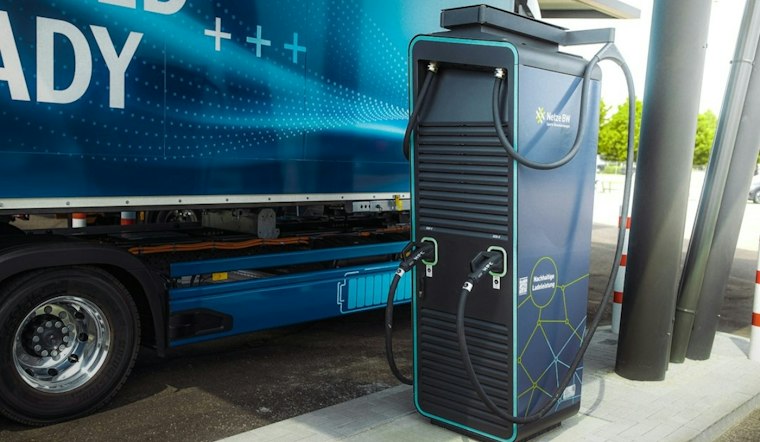
Among the vehicles on display was one of OK Produce's zero-emission semi-trucks. The Fresno-based fresh produce company has already implemented zero-emission semis into its operations, and it brought one of those trucks to the fairgrounds for attendees to see firsthand, per the same account.
Industry expert Valerie Thorsen, identified by that name in YourCentralValley.com's coverage, told the station that cleaner technologies for moving goods and freight matter for the region. She said zero-emission machines are being implemented to improve air quality and benefit the environment, and that clean school buses and zero-emission semi-trucks can benefit Fresno specifically. Ahead of the expo, KVPR also interviewed the same expert ahead of the event, though that outlet spelled her first name Valarie rather than Valerie.
Making the Case on Cost
Thorsen's pitch to fleet operators centered on the bottom line as much as the environment. She said zero-emission vehicles cost less to operate than their diesel equivalents and that clean technologies are cost-effective over the long run, the article notes. She also said zero-emission vehicles can match diesel vehicles in service life, pointing out that battery packs in some school buses have lasted more than 10 years.
Attendees at the expo could also explore purchasing the displayed vehicles on the spot. Resources from California HVIP and California CORE were on hand to help lower individual vehicle prices, according to the same report, alongside broader information about technical assistance and funding programs meant to help fleets move toward zero-emission technology, per the Drive Forward Expo's own materials.
Federal Dollars Already Flowing to Local Fleets
The expo's funding pitch lands against a backdrop of federal money already reaching Central Valley school districts. The EPA's Clean School Bus Program was allocated $5 billion to convert the nation's bus fleet away from gasoline and toward zero- or low-emission vehicles, GV Wire reported, and a separate Clean Heavy-Duty Vehicles grant program offered up to $932 million, with 70% of that reserved for new zero-emission Class 6 or 7 school buses.
Fresno Unified was reported to be receiving $6.625 million in rebate funding to buy 25 school buses through that EPA program, GV Wire reported. Selma Unified was set to get nearly $1.4 million for four buses, Sierra Unified $800,000 for four buses, and Caruthers Unified $345,000 for a single bus, according to the same report.
For fleet managers weighing whether the switch pencils out, the International Council on Clean Transportation offers a calculator built to compare the lifetime costs of zero-emission battery-electric and diesel commercial vehicles. The tool factors in vehicle purchase price, fuel, maintenance, charging infrastructure and residual value, using inputs like vehicle type, annual mileage, charging strategy and available incentives, per the organization's own description.





