

























































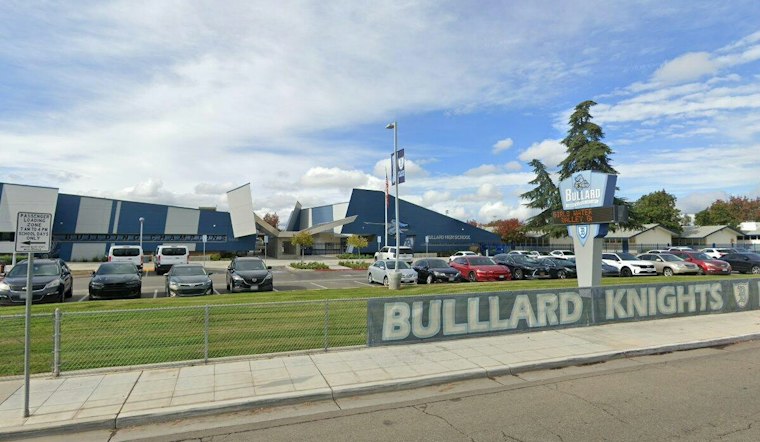
Seventeen teachers across Fresno Unified are instructing 730 students in personal finance this year, putting the district years ahead of a statewide requirement that hasn't even taken effect yet. At Bullard High School, where the elective has been offered since 2024, students aren't just filling out worksheets — they're trading stocks, gold, and government bonds in a simulator designed to teach them how money actually grows, or disappears.
A Teacher Pipeline Built From Scratch
Since the 2023-24 school year, Jeff Allen has led the creation and implementation of personal finance courses across Fresno Unified, according to EdSource. His work caught the attention of state officials: the California Department of Education selected Allen to lead the statewide rollout of personal finance education, the outlet reports. Most Fresno Unified high schools now offer the course as a yearlong class, and the district has emerged as an early adopter of what will soon become a state financial literacy initiative, per the same report.
Bullard High and McLane High adopted the coursework early within Fresno Unified. At Bullard, teacher Chris Reynolds brings a personal story to the subject. He previously taught U.S. history before moving into personal finance, and he told KQED that money management was something nobody discussed when he was growing up. “It was a taboo subject,” Reynolds said. He became financially troubled after moving out of his parents' home at 18, and he recalled being talked into signing up for a credit card at a San Francisco Giants baseball game in exchange for a promotional item. “I ended up putting thousands of dollars of junk on that card for a 'free' t-shirt,” he said.
Stocks, Gold, and a $10,000 Legal Bill
The centerpiece of Bullard's course is STAX, an investment simulator in which players start with $4,000 and try to grow their wealth over a simulated 20-year span. The nonprofit Next Gen Personal Finance developed the tool and also trains teachers nationwide through its FinCamps, KQED reports. Students can put their virtual money into seven options, including savings accounts, CDs, index funds, individual stocks, government bonds, cotton, and gold.
The simulator lets students make investment decisions as they try to grow their virtual wealth. Students start out competing against the computer before later facing off against classmates. One student, Abram Maynard, accumulated $395,000 in the simulator, exceeding the computer's own savings by about $85,000. Another student, Azzariah Holley, said she believes everyone should take a personal finance course at least once.
Bullard measures the course's impact with identical exams given at the beginning and end of each semester. Students' personal finance content knowledge grew by about 20% over the course's first two years, according to KQED's reporting. Reynolds said he hopes the lessons stick before students fall into the same traps he did, warning that students may become victims of credit card companies if they aren't prepared.
A State Deadline Still Taking Shape
California's broader mandate is still phasing in. KQED reports that Assembly Bill 2927 makes financial literacy a graduation requirement by 2030. The legislation requires courses to cover 13 personal finance topics, including budgeting, taxes, loans, bank accounts, credit card use and management, consumer protection, college financial aid, and retirement accounts, according to the bill text filed with the California Legislature. Teachers credentialed in social science, business, mathematics, or home economics are eligible to teach the course.
California became the 26th state to require a personal finance course for high school graduation when Gov. Gavin Newsom signed AB 2927, according to K-12 Dive. Other states had adopted personal-finance requirements before California. NEFE puts the figure at 29 full requirements after updating its methodology, according to the National Endowment for Financial Education. NEFE says that when it began tracking the issue in 2020, only five states had such laws on the books.
Beyond Fresno — and the Open Questions Ahead
Other districts across California are moving in similar directions. Elk Grove Unified in Sacramento County has offered a personal finance course since 2021, with enrollment growing each year, EdSource reports. Central Unified and Clovis Unified have taken steps to align with AB 2927's criteria by folding finance concepts into existing math or economics classes.
Not everyone is convinced the rollout will be smooth everywhere. A UC Berkeley Haas School of Business analysis in 2025 praised the law as an exciting step forward but cautioned that its benefits depend on each school district's funding and resources, KQED reports. Jennifer Sturdy, cited in that same analysis, warned that outcomes will hinge on district funding, resources, and equitable implementation.
For now, Fresno's early start offers a glimpse of what that future could look like statewide — one simulated $10,000 legal bill at a time.





