

























































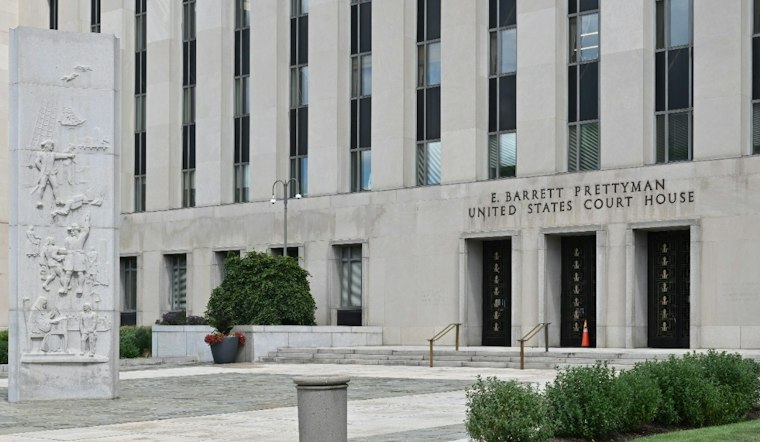
A federal judge in Washington has cleared the way for the family of 15-year-old Malki Roth to serve a civil lawsuit on fugitive Sbarro bombing accomplice Ahlam Tamimi by posting court filings on X and emailing them to a Jordanian-Palestinian outlet instructed to forward them to her, since she continues to live openly in Jordan beyond the reach of U.S. extradition efforts. The order, issued Monday, lets Arnold and Frimet Roth pursue their Anti-Terrorism Act case against the woman who helped plan the August 9, 2001 attack that killed their daughter.
According to the Jerusalem Post, attorney Mark Goldfeder said Tamimi had spent 25 years in Amman boasting about killing Roth while believing no American court could ever reach her. The National Jewish Advocacy Center, which brought the case on behalf of Malki Roth's estate, said the U.S. District Court for the District of Columbia granted the Roth family's motion to serve Tamimi through alternative means after traditional service proved impossible.
How Investigators Tracked Down a Way to Reach Her
Because Tamimi resides in Jordan at an unknown address, the court authorized a multi-pronged approach: emailing the Jordanian-Palestinian outlet Etar, which NJAC says employs Tamimi as a regular columnist, and publishing the court filings on X, with Etar instructed to forward the material to her. The plaintiffs were also instructed to email the filings to Tamimi's last-known attorney. The court determined that these combined steps were reasonably calculated to give Tamimi actual notice of the lawsuit.
The underlying case, The Estate of Malka Roth, et al. v. Ahlam Aref Ahmad Al-Tamimi, was filed August 11, 2026, as Case No. 1:26-cv-02836, according to NJAC. The complaint seeks compensatory damages under the Anti-Terrorism Act and requests a jury trial, JNS reports.
A Bombing That Shattered a Jerusalem Pizzeria
Tamimi is wanted for her role as an accomplice in the Sbarro suicide bombing in downtown Jerusalem on August 9, 2001, according to the Jerusalem Post. The attack killed 16 people, including seven children and a pregnant woman; among the dead were American citizens Judith Shoshana Greenbaum and Chana Nachenberg. JNS reports that about 120 others were wounded.
Tamimi scouted the Sbarro location before the bombing and escorted the bomber to the restaurant before leaving ahead of the attack, the Jerusalem Post reports. She pleaded guilty in an Israeli court in 2003 and JNS reports she was sentenced to 16 life terms. Israel released her in October 2011 as part of the prisoner-exchange deal with Hamas that secured the release of Israeli soldier Gilad Shalit, after which she moved to Jordan, according to JNS.
Years of Extradition Efforts Went Nowhere
The United States charged Tamimi in 2013 with conspiring to use a weapon of mass destruction against U.S. nationals outside the country resulting in death, according to JNS. Those charges were unsealed in 2017, when the Justice Department also sought her extradition from Jordan, JNS reports — but Jordan has refused to hand her over. Arnold and Frimet Roth had asked both Washington and Amman to act over the years, per the Jerusalem Post.
Goldfeder told the Jerusalem Post that Congress created the civil remedy under the Anti-Terrorism Act specifically so that justice would not depend on another government's cooperation. The Roth family's case proceeds whether Tamimi appears in court or not, and any resulting judgment would be renewable and would not effectively expire, continuing to follow her wherever she goes, Goldfeder said.
What a Judgment Could Mean for Tamimi's Finances
An Anti-Terrorism Act judgment can include treble damages plus fees and can be registered in any federal district, according to Goldfeder's comments to the Jerusalem Post. He said such a judgment would attach to any of Tamimi's assets or money owed to her that touches the U.S. financial system or jurisdictions that recognize American judgments — a list that includes most of Europe, the United Kingdom, Canada, and Israel, he said. Jordan itself is not expected to enforce the judgment.
Goldfeder said outlets paying Tamimi for her column would effectively be paying a U.S. judgment debtor, and that transfers to her would be traceable, with anyone helping her move assets potentially facing fraudulent-transfer exposure. He added that he hopes the case prompts greater scrutiny of U.S. assistance to Jordan, along with congressional discussion of conditioning Jordan's aid package and rejecting the argument that an unratified extradition treaty excuses inaction. Tamimi's open life in Jordan, Goldfeder said, has been sustained by the absence of any consequences for Jordan's refusal to act.




