

























































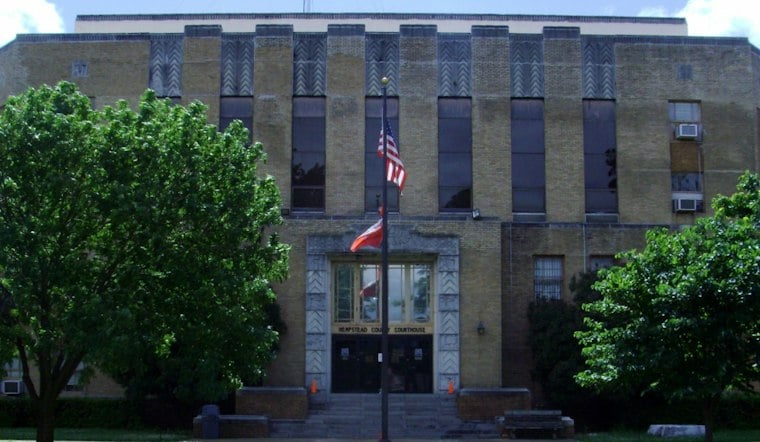
A Fulton woman who leads a regional civic group has sued the town, its mayor and its recorder-treasurer, alleging they stonewalled her requests for records tied to a $3.05 million federal grant meant to replace the town’s crumbling water lines. Sylvia C. Brown filed the Arkansas Freedom of Information Act appeal in Hempstead County Circuit Court, naming Fulton, Mayor Henry Hale III and Recorder-Treasurer Frances Hendrix as defendants in a case that is already testing how far small-town officials must go to open their books.
The case, numbered 29CV-26-423, traces back to May 15, when Brown mailed three letters containing 10 separate public-records requests, according to the complaint detailed by Texarkana Today. She sent two of those letters to Hale in his capacity as records custodian for both the town and Fulton Waterworks, and a third to Hendrix seeking ordinances, resolutions, minutes and membership lists tied to the water system’s nonresident advisory board.
Brown’s requests sought a sweeping range of material: the mayor’s correspondence with Spears Engineering Company and the U.S. Environmental Protection Agency, documents tied to the federal grant earmark including reports and work plans, and Spears Engineering’s own project records. Her lawyers, Badria Mryyan and Connor Thompson of Mryyan Thompson PLLC in Little Rock, say the town eventually produced an 89-page response that only partially answered three of her 10 requests.
What the Town Handed Over — and What It Didn't
According to the complaint, the town’s production included the grant work plan, a preliminary engineering report, an environmental checklist, consultation letters sent to state agencies and six tribes, the signed federal application, and roughly a dozen pages of EPA emails. But the filing says it did not include correspondence between the mayor and Spears Engineering or the EPA, advisory board records, or anything responsive to the letter sent to Hendrix.
The complaint also lists specific records Brown says were never produced: the grant award itself, the town’s cost-share waiver application and approval, the engineering contract, a request for qualifications, an EPA map file sent to the Osage Nation, and Spears Engineering’s written replies to EPA questions. Her attorneys argue the town failed to give the written response required under Arkansas law when records do not exist, are exempt, or belong to someone else, and they contend that council minutes and ordinances should exist in other copies even if originals are missing.
A Disputed Meeting at a Hope Print Shop
The complaint lays out a timeline of back-and-forth contact between Brown and the two officials in the weeks after her letters went out. On May 20, Hale texted Brown that she could review records and make copies at the Fulton Water Department on May 25, and the filing says he first told her the department had equipment to reproduce records digitally before correcting himself to say it did not, offering instead to let her review materials in person.
Brown says she met Hale on May 26 at Honeycutt Printing in Hope, where she obtained an 89-page PDF that the print shop copied onto a thumb drive she had purchased herself. At that same meeting, per the complaint, Hale refused her request for a map showing the exact project area, citing security issues. A week later, on June 3, Brown says she asked Hendrix about her outstanding request at Cadence Bank in Hope, where Hendrix said she could not comply because the records were with the auditor — a position the complaint pushes back on, arguing that an auditor holding records does not make the auditor their custodian. Brown says she heard nothing further from either official.
The Grant at the Center of the Dispute
The underlying $3.05 million grant is meant to replace Fulton’s leaking water lines, and the money covers 100 percent of the project cost after the town obtained a waiver of the usual local-match requirement, per the work plan described in the complaint. About $2.83 million of the budget is earmarked for replacing water lines, valves and hydrants, with another $219,000 set aside to rebuild the sewage pump station at the city park. The grant period runs from January 26, 2026, through June 26, 2027.
Fulton’s water system dates to 1973 and currently serves 134 customers from two wells and a 50,000-gallon elevated tank, according to the same account. The Osage Nation’s historic preservation office asked the EPA in January for a cultural resources survey before construction begins.
Brown is asking the court for a hearing within seven days and an order requiring the town to respond in writing, search its files thoroughly, and provide digital copies of the outstanding records. She is also seeking judicial review of any records the town claims are exempt, along with attorney’s fees. As of Tuesday afternoon, the town of Fulton had filed no response, per the report.
Advisory Board Rules and the Broader Civic Push
Brown’s request to Hendrix for advisory-board records touches on a separate Arkansas requirement: state law calls for a municipal water provider to create a nonvoting advisory committee, with two reserved seats for customers living outside town boundaries, once at least 20 percent of a system’s customer base lives beyond municipal limits. The Arkansas Department of Agriculture outlines that threshold, though available evidence does not establish whether Fulton’s system actually meets it.
Brown leads a group called VOTE SoAR, which stands for Visibility Outreach Touch Engage South Arkansas and describes itself as a community-led organization working across the region on civic engagement and water issues. She was also a candidate for the Hope school board in 2025. Her lawsuit comes after she separately pursued a federal records request to the EPA, the complaint states, suggesting her effort to trace the grant’s paper trail has run on two tracks at once.




