

























































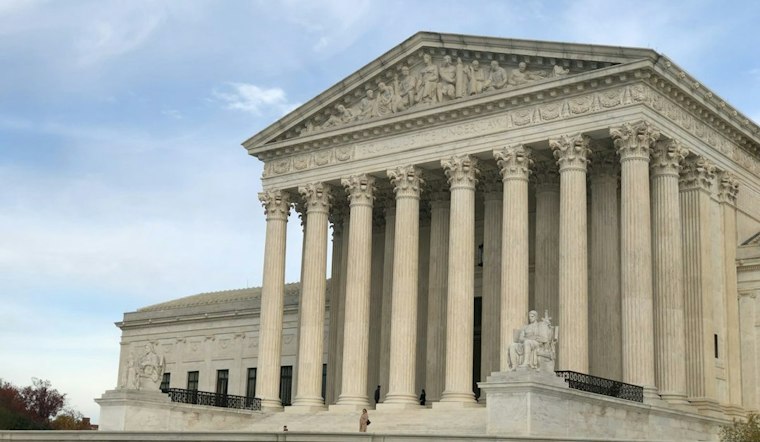
Jasmine Younge says she was fired from a senior post in the Fulton County District Attorney's Office about two weeks after she told her boss, then-District Attorney Paul Howard, that she was pregnant. Now her case has reached the highest court in the land, where the justices appeared divided Monday over whether Howard's former office played by the rules in defeating her lawsuit.
Younge worked as Howard's deputy chief of staff and director of policy and programs, according to seed facts reported by The Atlanta Journal-Constitution. She had been on the job for about two months when she was fired in July 2019, according to SCOTUSblog, which reports that Younge says her dismissal came roughly two weeks after she disclosed her pregnancy to Howard. She alleges that firing her because of her pregnancy violated Title VII of the Civil Rights Act of 1964.
The Cornell Legal Information Institute states that she sued in 2019, and SCOTUSblog says she sued later that year. The Journal-Constitution's reporting names Howard and his office as defendants.
A Defense Raised Late in the Case
At the center of the Supreme Court fight is not whether Younge was pregnant when she was fired, but how the DA's office defended itself in court. The office moved for summary judgment by citing a personal-staff exemption under Title VII, a statutory carve-out that excludes certain high-level personal aides from the law's protections, according to SCOTUSblog. The problem, Younge argues, is that the office never raised that exemption in its original answer to her complaint.
A federal district court sided with the DA's office anyway, and the Eleventh Circuit Court of Appeals affirmed that ruling. The appeals court found that Younge had not been prejudiced by the office's late assertion of the personal-staff exemption, per the same SCOTUSblog account. Younge contends that the office's winning argument simply came too late to count.
Justices Probe the Rules for Late Defenses
The Supreme Court agreed to decide a narrower procedural question with broad implications: whether an affirmative defense left out of an earlier pleading can still be used later as the basis for summary judgment. The justices heard oral arguments Monday, and according to Law360 Employment Authority, the Court closely scrutinized the procedures governing late-raised legal defenses during the session.
The justices appeared divided over whether the Fulton County District Attorney's Office correctly defeated Younge's lawsuit under those procedures. A decision remains pending.
What Remains Unresolved
The outcome could shape how federal courts across the country handle defendants who wait to raise certain defenses until after the initial pleadings are filed.





