

























































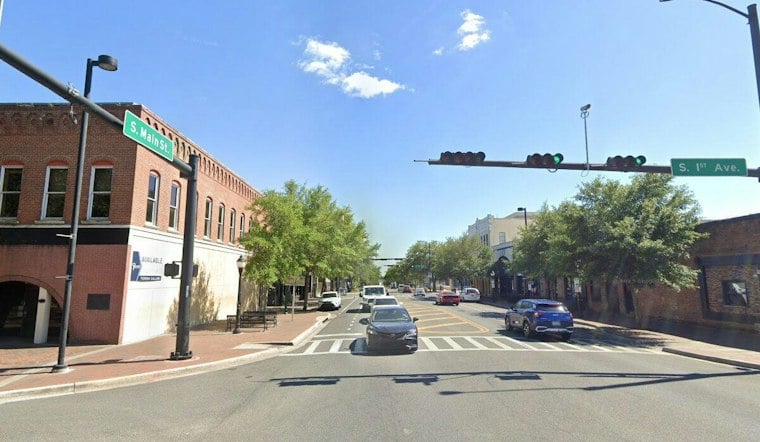
Two blocks of downtown Gainesville are getting their official coming-out party Friday, when the city unveils The Streatery, a reimagined stretch of SW First Avenue built for strolling, dining and shopping rather than driving. The free celebration runs from 5 to 11 p.m. between South Main Street and SW Second Street, with a ribbon-cutting ceremony kicking things off from 5 to 6 p.m.
The grand-opening event will include live music, local food and family activities, according to Main Street Daily News. Gainesville Mayor Harvey Ward, interim City Manager Andrew Persons and Alachua County Commissioner Marihelen Wheeler are scheduled to deliver remarks before the ribbon is cut, the outlet reports. As 352Today notes, the corridor is intended as a walkable dining, shopping and cultural events destination for the city's core.
From Construction Zone to Curbless Plaza
The transformation has been years in the making. Gainesville's City Commission approved a concept plan to remake the two downtown blocks in October 2024, and the $4.5 million construction project itself was approved in March 2026, funded through the Gainesville Community Reinvestment Area and the city's gas tax fund, per the same Main Street Daily News report. The Community Reinvestment Area is a 10-year program running from 2019 to 2029, administered by the city and funded jointly by Gainesville and Alachua County.
Construction broke ground in April 2026 and involved replacing underground electrical, water and stormwater infrastructure beneath the corridor and two intersecting streets, the outlet reported. What emerged is a curbless street featuring brick pavers and historic bricks alongside new outdoor lighting, seating, landscaping and electrical outlets — amenities meant to accommodate outdoor dining, art and music festivals, farmers markets and other community events.
Naming Contest Drew Hundreds of Entries
Before it had a name, the project drew hundreds of Gainesville residents into the process. Nearly 1,000 name suggestions were submitted in April 2025, and more than 800 people voted on the finalists that June, with the City Commission formally approving The Streatery as the name in August 2025, according to the report.
The corridor wasn't fully finished when it first reopened to foot traffic. The fences and barriers around the site came down on Sept. 4, opening the pedestrian space to the public even though work remained unfinished, according to The Alligator. The city also held a soft opening the Friday before Labor Day, nearly five months after construction began, WUFT reported.
Businesses Weathered Months of Construction Noise
The years-long buildout wasn't easy on the merchants lining the corridor. Businesses remained open throughout construction, but one business owner, Hughes, told WUFT that noise and restricted access made it difficult to attract customers during the work.
Downtown Gainesville has also been grappling with broader vacancy issues separate from the Streatery project. A spring 2026 city count found 28 vacant storefronts across roughly 20 core downtown blocks, a 22% vacancy rate, according to The Alligator's reporting. Rick Smith, cited in the WUFT report, said he anticipates events including street markets and farmers markets will now find a home along the renovated corridor, and The Bull's owner told WUFT the business expected increased pedestrian traffic to bring the bar as much as a 25% sales increase.
Gainesville's approach echoes efforts in other Florida cities. West Palm Beach rebuilt seven blocks of its Clematis Street between 2018 and 2020 into a similar curbless flex street, The Alligator noted. For Gainesville, Friday's ribbon-cutting marks the formal close of a process that began with a 2024 commission vote and stretched through infrastructure work, a public naming contest, and months of construction before the corridor's debut as a finished public space.




