

























































Neuron Industries, a Gardena industrial manufacturing startup, has a $10 million seed round behind an attempt to make factory control code less of a specialist's private language. The company announced the financing on Oct. 29, after a public launch in August, and the Los Angeles Business Journal described the round as oversubscribed.
The hardware in question is not glamorous, which is the point. Programmable logic controllers still use sensors, motors and buttons to keep a line in sequence, and the bench of people who can program them is aging. Neuron says engineers can describe machine behavior in plain English, generate readable control code and test it before deployment, with a controller called Cortex planned for the first quarter of 2027. The Los Angeles Business Journal identified the company as a Gardena startup founded by chief technology officer Kenneth Rhee and chief executive Dennis Ren.
Who Co-Led The Round
FCVC and Obvious Ventures co-led. Y Combinator participated, as did Zee Prime Capital, Founder Factor and Thin Line Capital, which is based in Pasadena. Y Combinator is in the round. It is not one of the two firms at the top of it. Pasadena is the one city the announcements attach to an investor.
Mo Islam, a partner at Obvious Ventures, said in a company statement that industrial controls can shorten the path to bringing new manufacturing capacity online and change its economics. The point is the wait. New capacity is a building and a machine, and also the engineering between a decision to add a line and a line that runs. He is arguing that controls can compress that interval and change what it costs.
Plain English, Then A Simulation
A programmable logic controller coordinates the small agreements that make a line run. A sensor reports a state, the controller decides, a motor moves, or a button cuts the sequence short. Neuron is built around that layer, and around how long it takes to program it.
The company says engineers can describe machine behavior and build user interfaces in plain English. Its software then generates control code Neuron calls readable, and the interface simulates commands before they are deployed on a factory floor. That order is the product. Logic nobody can audit, or that can be tried only once the line is already down, does not fix the commissioning problem this startup is describing.
Neuron says the system is already the industrial automation system of record for more than a dozen manufacturing startups, LA Times Studios reported. The installation described in mechanical detail is older than that startup customer set: a wood-products line whose controller dated to 1991.
A 1991 Controller, 189 I/O Points
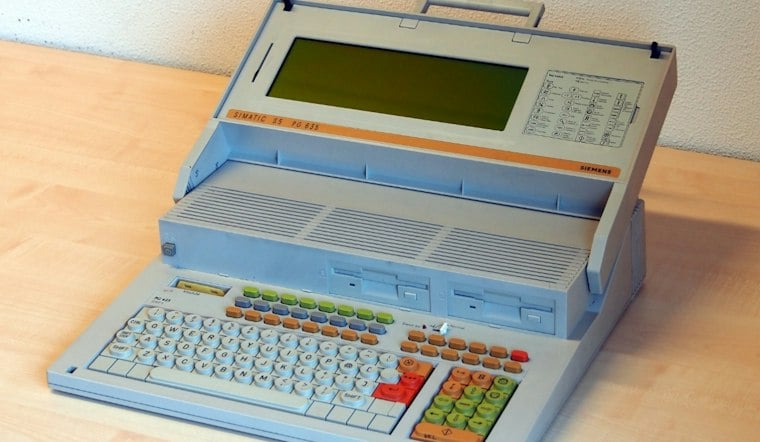
At CureWood Engineered Building Products, Neuron says it replaced a 1991 Siemens S5 controller on a finger-jointing line, where short pieces of wood are joined into longer stock. The controller had 189 hardwired input and output points, each a physical connection the replacement program had to respect.
The company says the project required about three hours of human-agent engineering and only eight hours of downtime. Compared with integrators using conventional technology, Neuron says it delivered the work nearly 10 times faster.
An eight-hour stop is still lost production on a line built to move wood. Neuron's account puts a very short programming window next to that stop and treats the combination as the contrast with conventional integration. The wired points keep the example from floating off into a software demo. Whatever the agent generated, the company says it had to land on a machine that had been running a 1991 controller.
A Trade That Has Stayed Put
"This piece of technology really was a huge bottleneck to engineering productivity," Ren told the Business Journal, referring to legacy programmable logic controllers. He interned at Tesla in 2016 and worked at Apple and Freeform Future Corp. He and Rhee founded Neuron. The résumé runs through those companies. The product is a logic controller.
A 2026 Control Engineering report, cited by the Journal, said the average control engineer is 53 and has not changed companies in more than 10 years. That average describes the profession in the report. It is not a headcount of Neuron's staff.
The Manufacturing Institute estimate Neuron cited is blunter: U.S. manufacturers will need to replace 2.8 million retiring workers by 2033. The Institute also projects that around half of manufacturing positions will likely go unfilled by 2033. A 2024 Institute report said digital tools and technologies emphasize adaptability, problem solving, critical and cross-functional thinking, initiative and leadership.
A plain-English controller is a bet aimed at that skills list, and at a specialty the controls report paints as older and not very mobile. It does not, by itself, replace 2.8 million retiring workers. It proposes to move more of one scarce job toward describing what a machine should do.
Pilots Up, Trust Down
Control Engineering's 2026 research, based on 107 professionals who specify or purchase control systems, catches the trade mid-experiment. Sixty-five percent of surveyed organizations were piloting or evaluating AI and machine learning for automation and controls. Twenty-seven percent said the technology was in full production. Those are separate findings inside that survey, not slices of a national census that can be added into one adoption rate.
Trust is the colder number. Sixty-one percent of those professionals reported low or no trust in AI-driven control systems. Four out of five said AI and machine learning would complement traditional approaches rather than replace them. About 8%, in the controls findings as reported by the Business Journal, believe the technology will fully replace control-engineering jobs. The surveyed group is trying the tools. It is not, on these figures, lining up to abolish the job.
Neuron's next dated step is the box itself. The company plans to release Cortex in the first quarter of 2027 and add U.S. domestic production capacity for the controller shortly afterward. That is a Gardena startup putting hardware on a calendar: software in the first quarter, U.S. production capacity after it, aimed at a profession that is piloting AI and, in the same body of research, still does not much trust an algorithm with the machine.



