

























































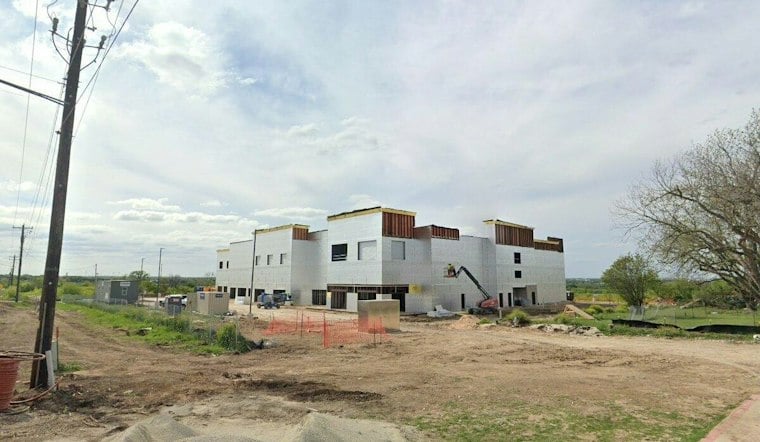
A proposal to build a 68-megawatt data center on the edge of several Georgetown neighborhoods has residents organizing in opposition, with many pointing to years of long and unpredictable power outages as their biggest fear. The project, known as Inner Loop Exchange, would sit near the intersection of Northeast Inner Loop and East University Avenue, and it goes before the city's Planning and Zoning Commission on Tuesday at 6 p.m.
Developers Oakwell Capital Partners and Cawley Partners are behind the proposal, which calls for a 145,000-square-foot data center building with capacity for 68 megawatts of power, according to Connect CRE. The requested zoning change would actually allow a building as large as 290,000 square feet to accommodate future growth, and the outlet reports the project could represent a capital investment approaching $1 billion. Project materials describe the facility as supporting everyday cloud services such as online banking, streaming, and healthcare records, rather than large-scale AI training, according to reporting from FOX 7 Austin.
Neighbors Organize Over Outage Fears
Residents from the Churchill Farms, Riverhill, Carlson Place, and Indian Creek neighborhoods gathered at Perky Beans Coffee to coordinate their response after receiving notifications about the proposed planned unit development two to three weeks earlier, per the same FOX 7 Austin account. Developers requested rezoning the property, currently designated for retail and civic uses, to make way for the data center.
Resident Kirk Cunningham said he has questioned whether the facility could be placed somewhere that doesn't infringe on people's homes. He told FOX 7 Austin that outages in the area have lasted 14 or 15 hours at a time, and sometimes five hours, and he said the data center's power demands could worsen those effects for homeowners who already deal with frequent, prolonged Oncor outages, according to residents. Broader concerns raised among the group include noise pollution, environmental impacts, declining property values, and added strain on the local power grid.
Substation At The Center Of The Dispute
Adding to residents' frustration is the location of a proposed Oncor substation directly adjacent to the northern edge of the site, which would supply electricity to the data center. Resident Boz Sabeti argued that developers are essentially using a substation that was meant to alleviate existing neighborhood problems, the station's report states. Sabeti said the project could prompt residents to sell or move and could deter other, more beneficial development from coming to Georgetown.
Oncor has attributed repeat power interruptions in the area to severe weather, vehicle accidents, wildlife, and equipment issues, according to a 2024 statement cited in the same reporting. The utility said it has upgraded power lines and equipment along Toll Road 130 to improve reliability and has additional upgrades and long-term planning underway.
Developer And Mayor Push Back On Concerns
Oakwell's Phillip Niels said the project includes enforceable protections, telling Connect CRE that “our project sets in place real enforceable guardrails around sound and water and light.” The companies also said water use would go beyond code requirements. Georgetown Mayor Josh Schroeder said in a social media post that the proposed data center uses closed-loop cooling that consumes almost no water, and said he prefers a community with strong economic opportunities over one struggling to attract businesses and jobs. FOX 7 Austin reported it was still awaiting responses from Schroeder and the project's engineering consultant.
A Grid Already Under Pressure
The Georgetown fight is unfolding against a statewide surge in data-center demand. As of mid-2026, large users had submitted more than 438,000 megawatts of proposed demand into ERCOT's connection queue, with nearly 90% of those requests coming from data centers, according to ERCOT. By December 2025, Oncor alone had received 255 gigawatts in data-center applications, as reported by Reuters. ERCOT forecast in December 2025 that the state's summer and winter planning reserve margins would decline through 2030, reaching negative levels by 2028, even as the grid operator advances a $33 billion expansion plan with more than 2,400 miles of new 765-kV transmission lines. Reuters notes those expansions aren't expected to come online until 2030 or later.
Georgetown is far from alone in facing this wave. East Wilco Insider reports at least 20 data-center projects are in the works across the Austin metro area stretching from San Marcos to Georgetown, with current and proposed projects valued at roughly $25 billion according to the Austin Business Journal.
Mixed Outcomes In Other Communities
How these fights resolve varies widely. In Taylor, residents rallied against a Blueprint data-center project at a City Council meeting but were unable to stop it from proceeding, per East Wilco Insider. Near Paducah, Cottle County commissioners unanimously endorsed a special reinvestment zone covering 4,252 acres for a proposed data-center project, even as residents voiced both support and opposition at a hearing, according to The Salt Lake Tribune.
Elsewhere, opposition has succeeded. Salem's zoning board of appeals canceled a permit for a proposed data center amid intense resident pushback, according to The Boston Globe, which also cited S&P Global analyst Kelly Morgan's count of 110 U.S. data-center projects canceled or delayed through October, most scrapped because of citizen opposition. In Brazoria County, Texas, residents living near an existing data center said its constant hum had taken a toll on their quality of life, according to Houston Public Media.
What Happens Next
Georgetown's Planning and Zoning Commission is scheduled to hold a public hearing on the rezoning request Tuesday at 6 p.m. If the commission recommends approval, the proposal would move to the Georgetown City Council for a final decision on December 8. The city's own development rules, per its FAQ page, note that City Council requires two readings of an ordinance before adopting a rezoning, tied to separate public hearings.



