

























































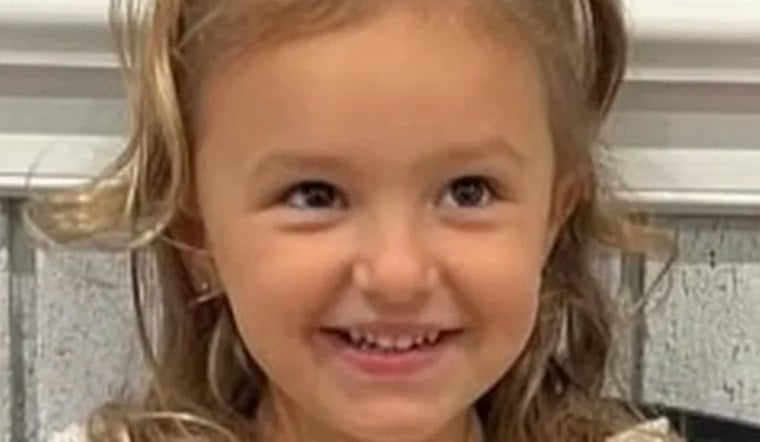
What began as a mild family flu in January 2024 nearly killed 4-year-old Ali Modica, leaving her with heart and kidney failure and a brain injury that, at age 7, still prevents her from walking or talking, according to her father. Joe Modica, now 38, has described how his daughter went into cardiac arrest after the illness progressed into rhabdomyolysis, a rare condition in which muscle tissue breaks down and releases toxic material into the bloodstream.
As reported by the New York Post, Joe Modica said his wife, their two younger sons and Ali all became mildly ill around January 6, 2024, with his 7-month-old son coughing and sneezing before the illness spread through the household. Ali was the last family member to fall sick. The morning her father found her, she couldn't walk, didn't want breakfast, and he noticed her lips had turned purple — prompting him to rush her to the hospital, where she was found to have heart failure.
A Transfer, a Code, and 18 Minutes Without a Pulse
Because the initial hospital lacked pediatric ECMO capability, Ali was transferred by ambulance to a hospital two hours away in Philadelphia. After arriving on the cardiac floor there, she coded — going without a heartbeat for 18 minutes before doctors restored her pulse and connected her to the ECMO machine, according to the same account. Her kidneys, lungs, heart and liver were all failing at the time.
A GoFundMe page set up for the family corroborates the severity of that crisis, stating that “after 18 minutes without oxygen, Ali was placed on ECMO,” and that what started as the flu quickly turned into rhabdomyolysis and sudden cardiac arrest. Ali was kept on a ventilator for several days and received 24-hour dialysis to clean her blood. Her heart fully recovered after five days, but the fundraiser says she was left with spastic quadriplegia, an inability to speak, and the need for a feeding tube.
Life After the ICU
Ali is now seven and, per her father, continues to have a brain injury that prevents her from walking or talking. She requires full-time care along with intensive physical and occupational therapy, and her family pays for that therapy out of pocket because insurance does not cover it. Before she got sick, Joe Modica has said, Ali had potty trained herself at 18 months — a milestone he now points to as a measure of how far her development has been set back; she never reached kindergarten.
The family pursued stem-cell treatments using Ali's saved umbilical cord, traveling to Florida for a treatment round in March 2026. Joe Modica says Ali is gaining strength, initiating steps on her own, and laughing and smiling. He has two other children, sons Joe, 5, and Carmine, 3. The GoFundMe campaign has raised around two-thirds of its $125,000 target.
A Marathon Runner's Death Puts a Spotlight on the Condition
The family's story has drawn renewed attention alongside the death of Rachel Apa, a 24-year-old former college athlete who died from rhabdomyolysis after collapsing during the New York City Marathon on November 1, 2026. An Associated Press report confirmed that a marathon runner died in Central Park roughly two miles from the finish line, though the AP material does not independently detail the runner's identity or cause of death beyond that account. Rhabdomyolysis is often brought on by overexertion, which can make it a hazard for endurance athletes as well as for children recovering from viral illness.
Joe Modica has said he had never heard of rhabdomyolysis before his daughter developed it, and he's calling for more awareness of the condition among athletes, families, medical staff and marathon organizers. He has said a viral infection can trigger rhabdomyolysis, and that early warning signs in children can include an inability to walk or complaints of leg pain. His advice to other parents and athletes alike: keep hydrating.
What the Research Shows About Pediatric Cases
Ali's case lines up with broader patterns identified in recent pediatric research. A 2025 systematic review of 15 studies covering 10,514 children, published by link.springer.com, found that infections were the most predominant identified cause of pediatric rhabdomyolysis, accounting for 40.6% of cases. The same review reported that acute kidney injury occurred in 21.3% of pediatric cases and chronic kidney disease in 1.1%, with a pooled mortality rate of 4.5% among children with the condition.
A separate 2025 case series from frontiersin.org described four healthy pediatric patients with virus-induced rhabdomyolysis, with outcomes ranging widely. Two of the cases involved influenza A infections, one involved a parainfluenza and enterovirus coinfection, and one involved a primary cytomegalovirus infection. In one of those cases, a 7-year-old boy with influenza A-associated rhabdomyolysis and acute renal failure improved with hyperhydration and was discharged in good condition after two weeks; in another, an 8-year-old girl with the same viral trigger developed acute kidney and progressive liver failure and died from complications including hepatic encephalopathy, according to the case series.
A separate PubMed-indexed study found that from 2006 to 2016, 8,599 children were hospitalized nationally with a primary diagnosis of rhabdomyolysis, and that such hospitalizations have been increasing over time — though that figure carries lower confidence than the other research cited. Together, the data underscore what the Modica family has been living through for nearly three years: a condition few parents have heard of until it strikes close to home.


