

























































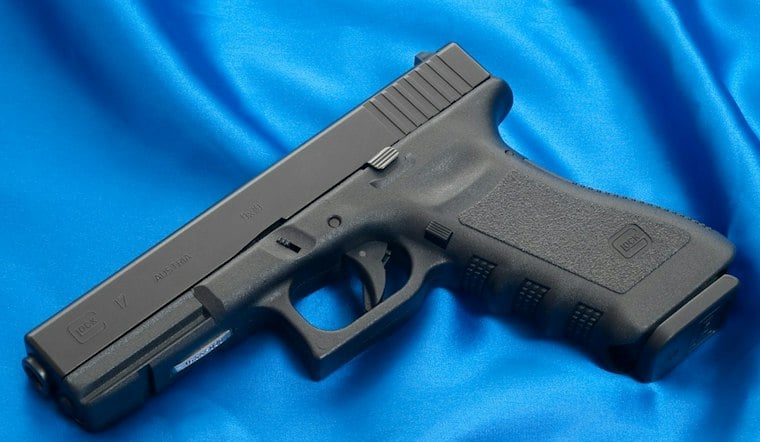
Glock and a coalition of fellow firearm manufacturers filed a federal lawsuit against Maryland's attorney general and state police superintendent on November 20, challenging a new state law that bans the sale of pistols with a trigger design that can be converted into machine guns. The Austrian gun company argues the ban, set to take effect January 1, 2027, violates the Second Amendment both on its face and as applied to the popular cruciform-trigger handguns it and its co-plaintiffs manufacture.
Who Joined the Lawsuit and What It Targets
The suit was filed in U.S. District Court for Maryland by Glock alongside the National Shooting Sports Foundation and several gun-making competitors, according to finance.yahoo.com. NSSF said it was joined by GLOCK, Inc., Shadow Systems LLC, Sturm, Ruger & Co., Inc., Derya USA, Palmetto State Armory, LLC and Fred's Outdoors, LLC. The defendants are Maryland Attorney General Anthony Brown and State Police Superintendent Michael Jackson, as reported by the Maryland Daily Record, with the case assigned to U.S. District Judge James K. Bredar per that same report.
At issue is Senate Bill 334, passed by Maryland lawmakers earlier in 2026, which bans the manufacture, sale, purchase or receipt of semiautomatic pistols with cruciform trigger bars that can readily be converted into machine guns using a Glock switch, per the Daily Record's reporting. Those switches are tiny, often 3D-printed devices that turn a semiautomatic handgun into a fully automatic weapon, and they are already prohibited under both federal and state law, the Daily Record notes. CBS Baltimore reports the law does not prohibit Marylanders from keeping pistols they already own, only the manufacture, sale, offer for sale, purchase, receipt or transfer of newly covered models going forward, according to cbsnews.com.
A Judge Already Said No to Blocking the Law
This is not the plaintiffs' first swing at Maryland's ban. A separate challenge, Bathras v. Moore, was filed by the Second Amendment Foundation in May 2026 immediately after Gov. Wes Moore signed Senate Bill 334 into law, according to saf.org. SAF and its partners filed a reply brief supporting their request for a preliminary injunction on September 22, the group said.
In September, U.S. District Judge Richard D. Bennett declined to grant a preliminary injunction blocking the law's implementation, according to the Daily Record. CBS Baltimore separately reported that Bennett heard arguments and denied the plaintiffs' injunction motions through an oral ruling, meaning the law stays in place while the broader case moves forward. Attorney General Brown said Maryland has the right to protect communities from weapons that can be rapidly turned into machine guns, the Daily Record reported.
Plaintiffs Say the Judge Got the Legal Test Wrong
The plaintiffs in the new suit argue Bennett's September ruling misapplied the Second Amendment framework. They said the judge failed to follow the U.S. Supreme Court's admonition in a 2026 decision addressing a Hawaii gun law and the Second Amendment's plain text, and that he mistakenly relied on historical laws concerning rioting and gunpowder aggregation to justify the ban, according to the Daily Record. The plaintiffs also said no historical analogue has been identified for Senate Bill 334's complete ban on firearms they describe as safe, legal and popular, simply because criminals can illegally transform and misuse them.
The lawsuit also raises financial stakes for one of the plaintiffs. Shadow Systems alleges that a similar convertible-pistol ban in California forced the company to cease operations there, costing it nearly $3.8 million in annual revenue tied to business that made up 11 percent of its overall sales, per the plaintiffs' claims in the Daily Record's account. Spokespeople for Brown and Jackson did not immediately return requests for comment, the Daily Record reported. The article was authored by Dan Belson.
Part of a Wider Legal Fight Across States
Maryland is not fighting this battle alone. Courthouse News Service reported that New York, Maryland and California have all enacted similar cruciform-trigger pistol bans over the past year, while the Daily Caller counts Connecticut among four states that have passed bans on the Glock pistol. The U.S. Department of Justice has also sued California over its own convertible-pistol law, though a federal judge there declined to issue a preliminary injunction against that state's ban, according to the Daily Record.
Connecticut's version of the law met a different fate. A federal judge there temporarily blocked that state's ban just hours before it was set to take effect, according to courthousenews.com. U.S. District Judge Kari Dooley sided with Glock and several gun groups, finding the state's ban likely violates the Second Amendment because Connecticut failed to prove the handguns are dangerous at the point of sale without the illegal attachment, the outlet reported. That ruling applies to two consolidated lawsuits challenging Connecticut's law, Courthouse News Service noted.
Elsewhere, the fight has taken a different shape. The Daily Caller reported that Delaware sued Glock directly, alleging the company failed to take measures preventing criminals from converting its pistols, even though the same complaint acknowledged that third parties manufactured and distributed the conversion devices. With Maryland's ban still on track to take effect January 1 and Glock's new federal case now underway, the legal questions over cruciform-trigger pistols remain unresolved heading into the new year.





