

























































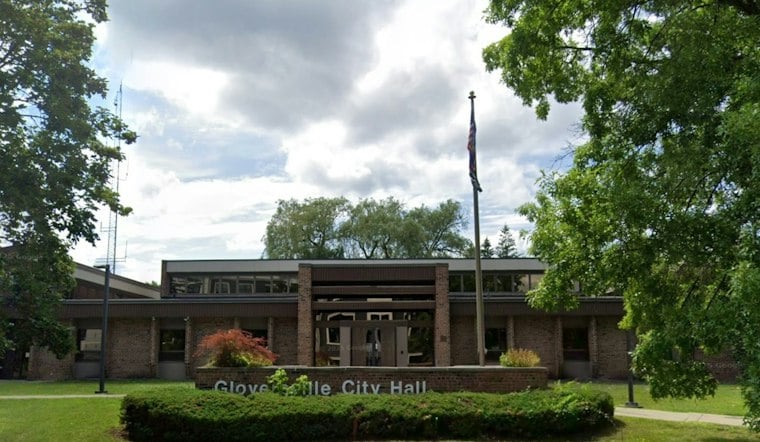
Gloversville has not banned kratom. Its Common Council has, unanimously, decided the city should hold a public hearing before it decides whether to.
That hearing is set for Nov. 24, The Leader-Herald reported. City Attorney John Clo introduced the proposed law as his first action in the job. The draft would prohibit kratom sales and possession with intent to sell. A unanimous vote to schedule a hearing is not a unanimous vote to outlaw the product.
The Label Can Be the Offense
The draft also reaches products that merely say the word. It would prohibit the sale of anything labeled as kratom even if it contains no kratom, The Leader-Herald reported. A bottle could fail the law on typography alone.
The draft states that prohibiting sales and possession for sale is appropriate to protect public health, safety and welfare. That is the law's stated justification, not a finding that a ban has already been adopted.
Kratom products are often sold at convenience stores as dietary or herbal supplements, the paper reported. New York already treats them as a regulated retail item rather than an ordinary grocery staple: the state prohibits sales to people under 21 and requires a warning on packages. The Recorder tied the age rule to a state law passed in March 2024. The governor's office said legislation S4552A/A2340A will prohibit sales of kratom products to people under 21. An age check and a package warning are not the same thing as taking the product off the shelf.
Jail, Then a Fine for Each Day
The local penalty schedule is built for sellers, not for a casual possession case. A first violation would be punishable by a fine of $250 to $500 and up to 15 days in jail. A subsequent violation within five years would bring $500 to $1,000. Each day a business or seller remains in violation may constitute a separate violation.
The exemptions are narrow and institutional. Police and other public officials would be exempt from the possession prohibition when acting professionally. Laboratories would be exempt when testing or identifying the substance for evidentiary purposes. An FDA-approved kratom product would be exempt if lawfully prescribed or dispensed.
If the council adopts the proposal after the Nov. 24 hearing, it would take effect 30 days after filing with the state Department of State. Until that filing happens, the hearing is a date on a calendar, not a closed store.
Counties That Already Voted
Saratoga County has already gone past the hearing stage. Its Board of Supervisors passed a law in October prohibiting the sale and distribution of kratom products countywide, 17-4, with two supervisors absent, the Daily Gazette reported. The county measure covers natural-leaf kratom and synthetic, semi-synthetic, chemically altered, or otherwise modified kratom-derived products.
Albany and Rensselaer counties have also adopted kratom bans, The Leader-Herald reported. St. Peter's Health Partners has urged the state to ban kratom.
The Town of Amsterdam is closer to Gloversville's stage than to Saratoga's. A proposed local law would prohibit the sale and distribution of kratom and kratom-derived products, with a public hearing at 5:55 p.m. Nov. 18, The Recorder reported. Montgomery County Executive Pete Vroman said the county is monitoring the issue and would consider more if local communities warrant it. "If it becomes a concern in our communities, we'll take a closer look and determine whether additional action is needed."
Ulster County is drawing a narrower line. Its legislature scheduled a Nov. 17 public hearing on legislation that would prohibit sales of synthetic 7-hydroxymitragynine, or 7-OH, kratom products, Mid Hudson News reported. Gloversville's draft is not limited to that synthetic compound.
The Health Record Beside the Draft
The National Institute on Drug Abuse has reported that kratom can have opioid-like and stimulant effects, The Leader-Herald reported. Use can cause nausea and constipation, neurological symptoms including tremors and seizures, and heart, lung and liver problems. Kratom has also been linked to some deaths.
In 2024, a Ballston Spa man's son died after taking kratom to self-treat insomnia, the paper reported.
National exposure reports have climbed with the retail footprint. U.S. poison control centers received 14,449 kratom-related calls from 2015 through 2025, including 3,434 in 2025, the Los Angeles Times reported. That was a more than 1,200% increase from 258 calls in 2015. Hospitalizations of adults reporting adverse effects after taking kratom alone rose from 43 in 2015 to 538 in 2025. Hospitalizations involving kratom taken with another substance rose from 40 to 549.
None of that decides the Nov. 24 hearing. What the hearing can decide is whether Gloversville replaces the state's age-and-warning rules with a local sales ban, a label ban, and a penalty that can restart every day a seller remains open. If the council adopts the draft afterward, the practical start date is still 30 days after the filing in Albany.





