

























































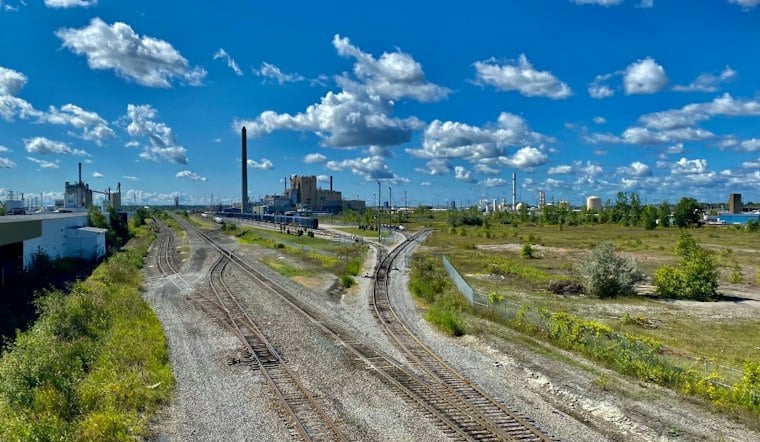
Goodyear is closing out its chemical manufacturing business for good, approving a plan on Sept. 29 to shut down its remaining chemical plants in Niagara Falls, New York, and Bayport, Texas, a move that will eliminate roughly 85 jobs. The Niagara Falls facility, known as the 56th Street plant, is scheduled to close Dec. 30, with 51 of its 56 employees expected to lose their jobs.
The Niagara Falls closure plan was confirmed in a Worker Adjustment and Retraining Notification filing, according to Yahoo News, which reported that employees there were notified of the closure on Oct. 1 and are represented by the United Steelworkers union. Goodyear filed its broader plan to close both chemical plants with the U.S. Securities and Exchange Commission, and the company has told regulators it expects to complete the shutdowns by the end of 2027, according to the Akron Beacon Journal. The Texas facility sits in the Bayport Industrial District spanning Pasadena and La Porte, per a Goodyear spokesperson cited by the Beacon Journal.
Why Goodyear Is Walking Away From Chemicals
The closures mark the end of a retreat from chemicals manufacturing that began in 2025, when Goodyear completed the sale of the bulk of that business. An affiliate of Gemspring Capital finished acquiring Goodyear's polymer chemicals business on Nov. 3, 2025, picking up manufacturing plants in Houston and Beaumont, Texas, along with a research and development facility in Akron, Ohio, according to Gemspring Capital. As part of that deal, Goodyear kept its Niagara Falls and Bayport, Texas sites — the same two plants it is now shutting down entirely.
A Goodyear spokesperson said the company decided to fully exit the chemicals business to focus on its core products and services, according to the Beacon Journal. WAMC reported the company's reasoning in similar terms, noting that following the sale of the majority of its chemical business in 2025, Goodyear made the decision to fully exit the business to focus on its core products and services. The same spokesperson said Goodyear is committed to treating impacted associates fairly and providing comprehensive transition support, per the Beacon Journal.
The Financial Math Behind the Shutdowns
Goodyear expects the closures to boost annual Americas segment operating income by $15 million to $20 million starting in 2027, a projection company President and CEO Mark Stewart tied to the strategy during the company's presentation. Bloomberg Law reported that the company estimated total pretax closure charges of $55 million to $75 million, with about $30 million of that in cash charges covering plant decommissioning, employee-related costs and other exit expenses, according to Bloomberg Law. The outlet reported the company expects roughly $35 million of those charges to hit the third quarter of 2026, with about $15 million more recorded over the rest of the year.
Earnings Call Puts the Closures in Context
The closure plan surfaced the same week Goodyear reported its third-quarter 2026 results, which the company posted after market close on Nov. 4. Goodyear reported segment operating income of $174 million for the quarter, down from $287 million a year earlier, with the Americas segment alone posting a $110 million year-over-year decline to $96 million, according to the Beacon Journal. Europe, the Middle East and Africa contributed $12 million in segment operating income, while Asia Pacific brought in $66 million.
Goodyear's segment operating income climbed through the year, reaching $174 million in the third quarter compared with $36 million in the second quarter and $95 million in the first, according to The Motley Fool's transcript of the company's Nov. 5 earnings call. Net sales for the quarter came in at $4.5 billion, down from the prior year, and the company posted an adjusted loss per share of 11 cents, missing the 5-cent per-share profit that S&P analysts had estimated, per the Beacon Journal.
Stewart said Goodyear is shoring up free cash flow and must generate sustainable positive free cash flow through varied industry conditions, according to the Beacon Journal's account of the call. He also pointed to the company's product mix as evidence its broader strategy is working, noting that tires with 18-inch-and-above rims made up 44% of Goodyear's consumer portfolio in the third quarter, up from 39% a year earlier — a five-percentage-point increase Stewart said demonstrates the strategy's advancement.
Rising Costs and a Leadership Change
Interim Chief Financial Officer Scott Deakin, who began serving in that role on July 1, said natural rubber prices rebounded to near-term highs early in October and that petroleum-derived raw material prices rose earlier in the third quarter and remain elevated, per the Beacon Journal. The company spent $29 million on raw materials in the third quarter and absorbed $69 million in inflation costs and $8 million in tariff expenses, and it expects raw materials to remain a roughly $170 million headwind to segment operating income in the fourth quarter.
Goodyear also announced a CFO transition during the same reporting period: Jerome J. Rouquet, currently senior vice president and chief financial officer of Visteon Corporation, will succeed Deakin as Goodyear's executive vice president and CFO effective Dec. 1. Goodyear shares closed at $4.45 on Nov. 5, down 10 cents, or 2.20%, on the day, according to the Beacon Journal.




