

























































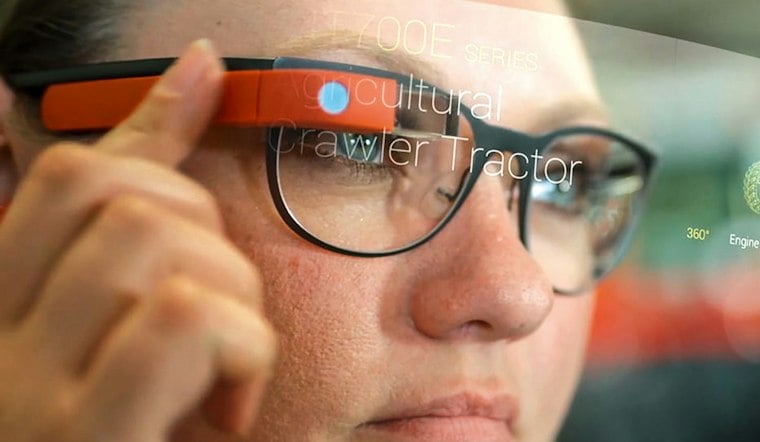
Google and Samsung are about to put artificial intelligence on people's faces nationwide. Preorders are open now for a new line of smart glasses sold through Warby Parker and Gentle Monster, with the eyewear set to hit stores and websites on December 10. Prices start at $395 for Warby Parker's three styles and $449 for Gentle Monster's six designs, giving shoppers nine total frame options loaded with Google's Gemini assistant.
Nine Styles, Two Brands, One Operating System
According to Google, the glasses will be available to purchase in stores and online starting December 10, with preorders already live at both eyewear retailers. The frames come in multiple colors with clear or tinted lenses, and shoppers can order through each brand's website and retail locations, though Google itself will not sell the glasses directly at launch, according to The Seattle Times. Google stores will offer demos at select locations for anyone who wants to try a pair before committing.
Every pair was manufactured by Samsung and runs Google's Android XR operating system, with Gemini built directly into the hardware, as The Verge reported after going hands-on with the collection. The glasses weigh around 41 grams, per the Seattle Times account of Google's own blog post, and are compatible with iPhones as well as select Google and Samsung Android phones — with Google saying it aimed for feature parity across both mobile platforms.
What the Camera and Gemini Can Actually Do
The headline feature is a 12-megapixel ultra-wide camera built into the frames, which Google says captures stills and video in high dynamic range while giving Gemini a first-person view of whatever the wearer is looking at. Users wake the assistant by saying “Hey Gemini” or tapping and holding a spot on the temple, the same mechanism Google describes in its own announcement. From there, Gemini can add calendar entries, suggest meals, navigate, translate conversations in real time, reply to messages and even answer calls, while the glasses' microphones record binaural spatial audio and play music back at a moderate volume.
Battery life tops out at nine hours per charge, and the included charging case can recharge the glasses up to seven times before it needs a plug itself. That math could matter for anyone weighing Google's hardware against rival options, since the battery and weight figures are the kind of day-to-day details that separate a gadget people actually wear from one that sits in a drawer.
Google's Privacy Pitch Ahead of a Crowded Field
Google has spent the run-up to launch highlighting privacy safeguards, telling CNN that camera visuals processed by Gemini are not saved in Gemini History and are not used to train AI models or target ads. The company also says nearby faces are redacted before images reach Gemini for a query — though that protection applies only to Gemini inquiries, not to photos or videos a wearer saves outright. Recording is designed to stop if the indicator light is covered or disabled, and Gemini is built to focus on the wearer's voice by default rather than picking up other people nearby.
Shahram Izadi, Google's vice president and general manager of its XR unit, told CNN that Google has no plans to add facial recognition to the glasses now or in the future. Izadi said the goal is to build glasses experiences that protect both wearers and bystanders, adding that Google intends to keep working on that front with privacy experts and others across the industry. Google's rules also require users to agree not to record others without permission or in sensitive locations, and the company says it can disable a pair of glasses if someone violates those terms — backed by Google Play guidelines that bar apps from using the camera for livestreaming or real-time facial identification, plus Google Shopping and Ads policies that prohibit selling accessories designed to hide the recording light.
A Market Meta Still Dominates
Google's launch arrives into a smart-glasses market that is growing fast and still tilted heavily toward one competitor. Global shipments jumped 139% year over year in the second half of 2025, with AI-enabled models making up 88% of that total and North America accounting for the largest regional share at 37%, according to Counterpoint Research. CNN separately cited IDC data showing shipments rose another 54% year over year in the second quarter of 2026, and noted that EssilorLuxottica sold 7 million pairs of its AI glasses in 2025 alone.
Meta still towers over the category, with Counterpoint putting its market share at 82% in the second half of last year. The company has also been expanding its own lineup and marketing its privacy protections throughout 2026, and in September it introduced the Ray-Ban Meta Audio — a camera-free pair starting at $349 that weighs 43 grams and offers up to 12 hours of battery life, or 48 hours with its charging case, according to TechCrunch. Those audio-only glasses let wearers stream music and podcasts, take calls, translate speech and talk to Meta's Muse assistant without a lens capturing anything at all. Google's entry, with its camera built in from the start, still represents a notable challenge to the category leader as the two companies compete for the same wrists — or in this case, faces.




