

























































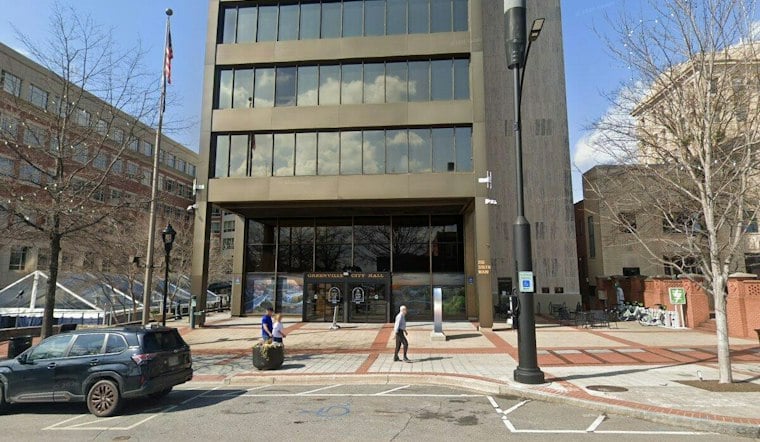
Greenville and the Parker Sewer and Fire Subdistrict have put an end to a dispute that dragged on for years over annexations, tax revenue and fire coverage along the city's northern and western edges. The two sides signed a 30-year annexation plan in September that lays out how Greenville will compensate Parker as the city absorbs more of the district's land, and this month the city council approved the money to make good on past annexations.
A Settlement Years in the Making
Greenville City Council approved the second reading of a revised ordinance appropriating $786,350 from the city's capital projects fund toward a settlement payment to the Parker Sewer and Fire Subdistrict, according to Greenville Journal. The city will cover the rest of the $1.57 million settlement using previously appropriated contingency funds from the general fund, the outlet reported. A separate account from Citizen Portal describes an earlier council action in which an amendment changed the funding source for the $1,572,700 appropriation from capital projects reserves to the city manager's economic development and contingency accounts.
The payment settles what Greenville agreed to pay Parker for annexations in 2023, 2024 and 2025: more than $1.5 million total, under the terms reported by the Post and Courier. Under the newly signed plan, Greenville must pay Parker the property taxes the district would have received for one year after each annexation, followed by decreasing payments over the next seven years based on an agreed formula. Greenville Chief Financial Officer Patricia Dennis has pointed to the city's existing arrangement with the Wade Hampton Fire District as a model for how such agreements can work.
Years of Friction Over Growth
The fight traces back to the end of a previous Greenville-Parker agreement in 2021, after which the two sides failed to reach terms and formed a three-person mediation committee that met earlier this year before the deal was finalized. Parker District Commission Chair Wayne Moore said the negotiations lasted three years and called the resulting plan workable, while Greenville Mayor Knox White described the talks as cordial and professional and said the agreement works for the city. Moore and White's characterizations of the deal mark the official end of a dispute that had played out publicly as Greenville continued annexing property near Parker's boundaries.
Parker, a special purpose district formed in 1934 along Greenville's northern and western edges, had publicly contested the city's annexations in the years before the settlement. The district is responsible for four fire stations and carries roughly $3 million in debt. In 2024, Greenville annexed properties including the Cherrydale shopping complex, Judson Mill and Monaghan Mill, moves that shifted tax revenue from the annexed land to the city while reducing Parker's revenue. During the Cherrydale fight specifically, Parker officials said the city's 2024 annexation there removed a revenue source worth as much as $500,000, according to the Post and Courier's earlier reporting on the dispute.
Competing Arguments Over Fire Coverage
When Greenville first moved to annex the Cherrydale area, Parker argued its station was closer and already serving the neighborhood. ‘We're already there, we're already providing the service, and we're much closer,’ a Parker representative told the Post and Courier at the time. Commissioner Sarah Franco said the Cherrydale annexation alone could cost the department about $500,000 in revenue. Greenville countered that it would gain property-tax, business and stormwater-fee revenue from the area and that it could provide adequate fire protection; former Greenville Fire Chief Brian Horton said the city's Rutherford Road station met or exceeded national fire-protection and ISO first-response standards for Cherrydale, Pleasantburg and Rutherford Road addresses.
Under the newly signed annexation plan, Greenville begins providing city services immediately after annexing a property, though Parker may still respond to incidents depending on the type. The two fire departments have agreed to coordinate training and responses. If Greenville eventually annexes 75 percent of Parker's district by land area or property value, the city will begin providing service to the entire remaining district and may take over Parker's assets. White said he anticipates the annexations will continue incrementally rather than all at once.
County Still Weighing Broader Consolidation
South Carolina law requires cities to have an agreement in place before annexing properties inside a special purpose district, and those districts, created under state law to provide services such as fire protection or sewer lines, can levy taxes and have boards of commissioners that function much like local government bodies. Greenville has framed annexation as a way for residents to gain access to city services including trash pickup, police response, sidewalks and speed bumps, with property taxes sometimes decreasing once an area enters the city. Property owners, White has said, also want access to the city's development rules and expertise.
While the Greenville-Parker dispute has been resolved, a separate countywide question remains open. Greenville County Council voted 8-3 to commission a study of possible fire-service consolidation, with three members voting against it, and the county is still awaiting results. Council Chairman Benton Blount opposes consolidation and has said his constituents are satisfied with their current fire service and oppose changing it, though he has said he expects the issue to resurface and called it one of the hardest the county will have to work through. The study was initially expected to be presented this month but has been delayed, a move Blount said allows more time to gather accurate data, according to WSPA. The station reported Blount has said the study is costing taxpayers around $150,000, and that the county has more than two dozen fire districts, a figure Parker Commissioner Sarah Franco has separately put at more than 30 special-purpose and fire districts countywide.
A 2022 Greenville County Council resolution had already staked out a position on the broader consolidation question, expressing support for the fire districts' continued independence and stating the council had no present intent to consolidate them. The resolution notes that the five districts were created by acts of the South Carolina General Assembly before Home Rule was adopted and are governed by commissioners who live in and are elected by the communities they serve, according to the Greenville County Council resolution. For now, the Greenville-Parker settlement closes one chapter of the fight even as the larger question of how the county's patchwork of fire districts should operate remains unresolved.




