

























































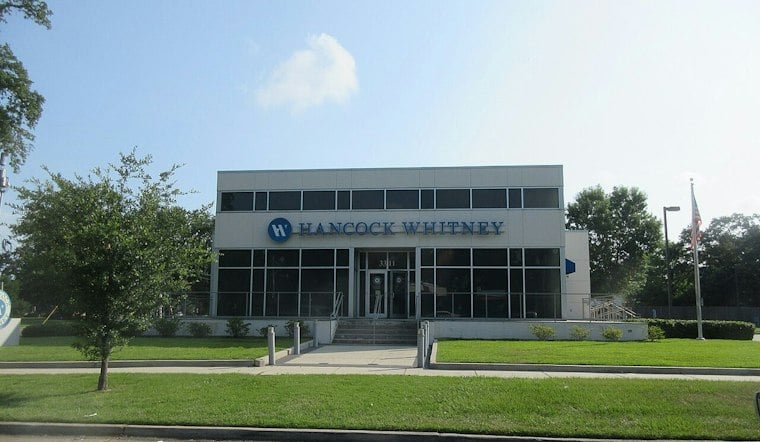
Hancock Whitney has agreed to merge Trustmark into the bank in an all-stock deal worth roughly $3.2 billion. The companies say the combination would create a Gulf South franchise with about $58 billion in assets and operations across six Southeastern states.
The definitive agreement was announced Thursday from Mississippi, with Hancock Whitney the surviving regional lender and Trustmark the smaller peer. Reuters, via the Charlotte Observer, reported the exchange terms, the first stock reaction, and the banks' estimate that the deal would add roughly 7% to Hancock Whitney's 2028 profit per share.
What Each Share Is Worth
Hancock Whitney would issue 0.7463 of its common shares for every Trustmark share, TipRanks reported from the announcement. InsideArbitrage put the implied value at $54.02 a share, an 18.57% premium to Trustmark's last close.
On those terms, Hancock Whitney shareholders would own about 65% of the combined company and Trustmark shareholders about 35%. Trustmark's Form 8-K describes the same structure: Trustmark merges into Hancock Whitney, which continues as the surviving corporation, subject to the agreement's terms and conditions.
The premium is the seller's number. Dilution is the buyer's. Completion still depends on regulatory and shareholder approvals and other customary conditions.
A Premium On One Ticker, A Drop On The Other
The stocks split immediately. Hancock Whitney shares slipped 10% in premarket trading, while Trustmark shares rose 5.5% in light-volume trading.
Stephens analyst Matt Olney called the timing somewhat surprising. Hancock Whitney had just closed its acquisition of One Florida Bank and had already put considerable excess capital to work. A second all-stock deal, this one for a peer rather than leftover cash, is a different use of the balance sheet.
The Franchise Management Is Selling
Chief executive John Hairston said the combination would enhance the platform, expand growth opportunities, strengthen the core deposit franchise, and broaden what the bank can offer consumer and business clients. Hancock Whitney also said the deal would strengthen its presence across the Southeastern states.
Goldman Sachs is advising Trustmark. Raymond James & Associates is advising Hancock Whitney. The public case, then, is scale and deposits, not a new name on the door: Hancock Whitney remains the buyer, and Trustmark is the bank being merged in.
A Year When Bank Deals Already Piled Up
A regional combination of this size fits a longer pattern in the U.S. mid-tier, Newsquawk noted, and 2026 has not been a quiet year for closings. Skadden said announced U.S. bank deals in 2025 already exceeded 2024 totals, with aggregate transaction value moving decisively higher. The firm expects a steady flow of strategic transactions in 2026, especially among community and regional banks, and points to aging leadership teams and more vocal shareholders as frequent catalysts.
Finantrix, citing FDIC records, counted 103 bank mergers closed from January 1 through October 24. That is more than double the 46 closings in the same months of 2024 and above the 93 of 2025. The account tied part of the wave to a funding gap: over the past year, smaller banks grew deposits more slowly than larger ones. Santander's acquisition of Webster Bank, closed on August 20, is one of the larger deals already finished.
Banking executives told Reuters that a Democratic midterm sweep could encourage more agreements if boardrooms read the regulatory climate as friendlier. This transaction still has to clear its own shareholders and regulators.
The Figure That Has To Wait
The banks estimate the combination would lift Hancock Whitney's 2028 profit per share by roughly 7%, if it closes on the announced terms. That figure sits on the far side of the votes.
What shareholders can price today is narrower: 0.7463 shares, a $54.02 implied value, and a combined company that would still be about two-thirds Hancock Whitney's.