

























































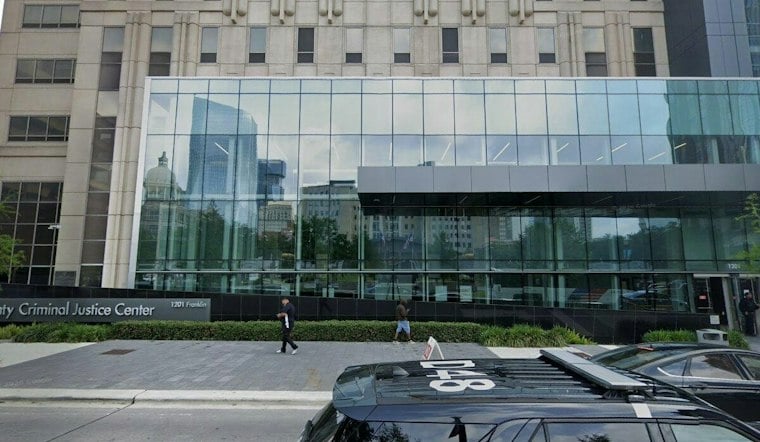
A Harris County man accused of family violence multiple times over more than a decade had his charges dismissed three separate times after agreeing to take anger-management or parenting classes — and his final charge was only dropped after he died this summer. Atamvir Singh's case is one of several Harris County prosecutors used to explain how so-called alternative resolution agreements work, deals that let defendants walk away from domestic violence charges by completing a class or making a charitable donation instead of facing trial.
Singh was first arrested for injury to a child in 2012, and that charge was dismissed after he agreed to take a parenting class, according to ABC13. He was charged with family assault in 2017 and with continuous violence against family in 2025, and both of those charges were also dismissed after he agreed to take anger-management classes. Months after completing his last class, he was charged again with continuous family violence. In May 2026, Harris County Sheriff's deputies served that warrant on Singh after a lengthy standoff. That charge was ultimately dismissed when he died this summer, the station reported.
Singh's case was not isolated. ABC13's reporting found that in 2025, 6% of all resolved domestic violence cases in Harris County ended in alternative resolution agreements, and that 713 domestic violence charges were dropped that year specifically because of those deals.
Dismissals Stretch Far Beyond Class-Based Deals
The class-and-donation agreements represent just a slice of a much larger pattern of dismissals in Harris County domestic violence cases. Last year, 69% of all resolved domestic violence cases were dismissed outright. Of those, prosecutors said they could not prove guilt in 26% of the cases, and another 14% were dropped at the request of the complaining witness, per the station's report.
Two other cases illustrate how the class-based agreements play out. Cyera Hardeman had her family violence charge dismissed after agreeing to take two classes — one for anger management, the other for decision-making. Shane Garrett had a family-member assault charge dismissed in exchange for donating to the Houston Food Bank, only to be charged with assault on a family member again just months later, the same account notes.
Prosecutors Point to Evidentiary Hurdles
Harris County District Attorney Sean Teare said each domestic violence case is different and that outcomes depend heavily on the specifics in front of prosecutors. He called domestic violence cases among the most difficult his office prosecutes. Teare said prosecutors often cannot move forward when a complainant will not participate and there is no admissible 911 call or photographs of injuries to rely on instead, according to the outlet's reporting.
Prosecutors told the station they required the Batterer's Intervention Program in some of the cases they reviewed. But advocate Amy Smith said anger management is the wrong class for people who commit partner violence, identifying the Batterer's Intervention Program as the more appropriate option. Defense attorney Jed Silverman offered a different read, saying some of the dismissed cases likely would have been dropped regardless of the agreements, and arguing that getting a person to take a class is better than getting nothing at all.
What's Actually Inside the Classes
The Harris County District Attorney's Office said it obtains the courses through a company called National Online Training, but ABC13 said it was unable to get copies of those specific courses to review. The station did obtain course materials for a separate anger-management class designed for substance abusers, which advised students to monitor their anger with an anger meter, build an anger-control plan that includes taking a timeout and talking to a friend, and complete a muscle relaxation exercise.
Statewide Numbers Underscore the Stakes
The scale of the problem extends well beyond individual case files. Texas recorded 160 intimate partner homicide victims in 2025, most of them women, according to the Texas Council on Family Violence's annual report cited by Spectrum News. That same report counted 240,000 family violence offenses statewide. Harris County led the state in intimate partner homicides, with 26 victims.
From 2021 to 2023, roughly two-thirds of resolved domestic violence cases in Harris County were dismissed, with 14% of those dismissals made at the victim's request, figures that closely track the more recent numbers the DA's office released for 2025. Anyone in Harris County needing help can reach the Houston Area Women's Center's 24/7 domestic violence hotline at 713-528-2121, or contact its online chat with an advocate; people who are deaf or hard of hearing can call 713-528-3625. AVDA can also be reached at 713-224-9911 for domestic violence assistance.





